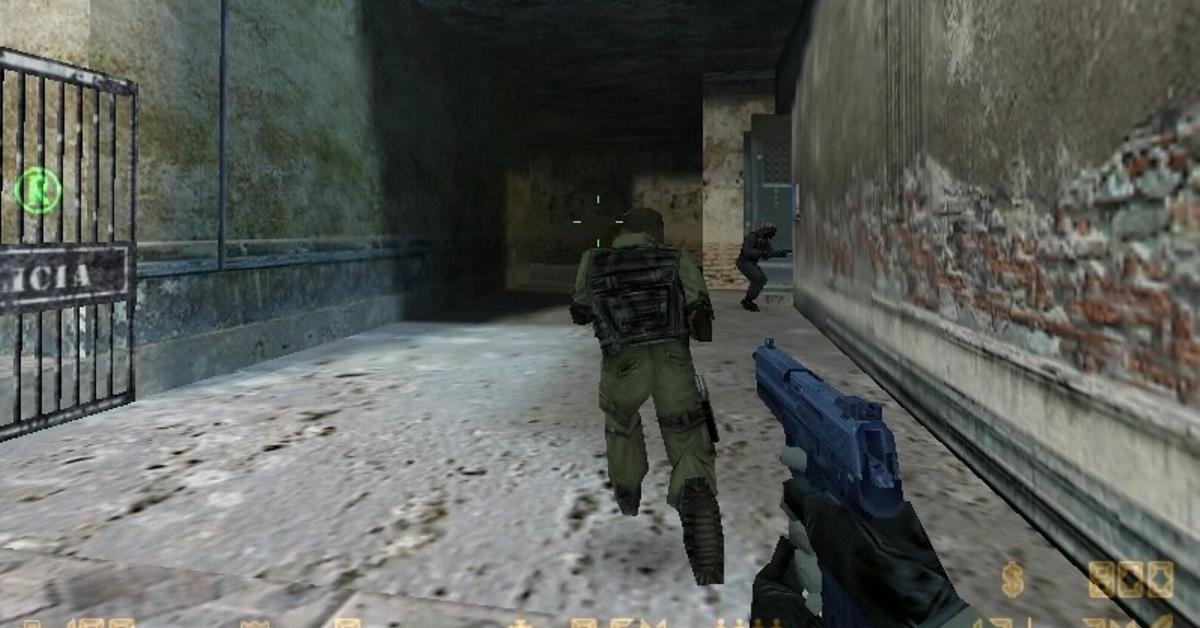
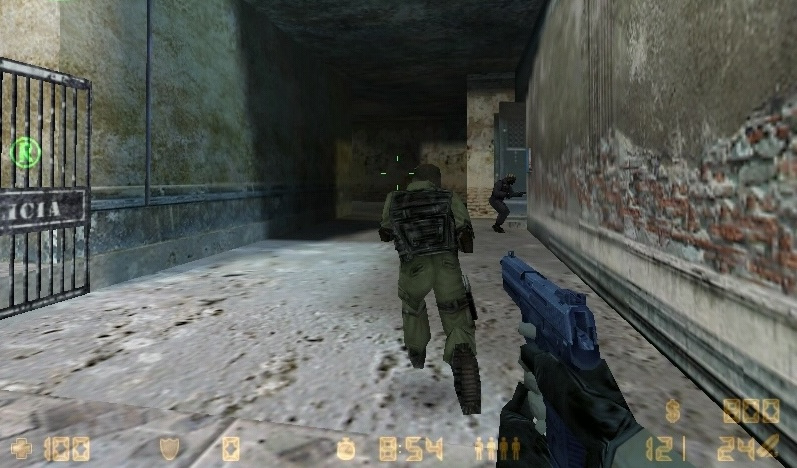
Sometime between 2003 and 2006, a Cuban teenager sitting in front of a tube monitor at a Joven Computer Club loaded a map called cs_havana. What appeared on the screen was a pixelated version of his own neighborhood: colonial arches, old cars parked on the street, peeling walls with graffiti reading “Long live Fidel” next to the Cuban flag. The game was Counter-Strike, the map had been designed by Americans who had probably never visited the Island, and the boy was playing it on a computer that was fifteen years behind technologically. The scene is somewhat absurd and somewhat poetic, and it pretty much sums up what cs_havana meant to an entire generation of gamers.
What the industry built with borrowed textures
According to the technical documentation collected in the Counter Strike Wikics_havana appeared with version 1.4 of the original game, not with Condition Zero as is often repeated. The map was the work of Chris Ashton and Kristen Perry, with the participation of Ritual Entertainment and Turtle Rock Studios, within a development process that went through at least four studios before reaching the public. The setting: Old Havana. Terrorists hold political hostages in a colonial mansion while a SEAL Team 6 team attempts the rescue through narrow streets.
What the player received was a maze of four infiltration routes, three rescue zones, and a system of doors that changed state between rounds, open in one, closed in the next. In Counter-Strike: Source, that mechanism became dynamic: windows and accesses mutated randomly, making Havana one of the most difficult maps to master. It was also one of the least played. The balance brutally favored the terrorist side, the long corridors offered no cover, and in public servants of twelve against twelve the experience was more chaotic than tactical.
None of that mattered much. What mattered was the atmosphere.
Fake almendrones, real Havana
The designers got the thick visual markers right: American cars from the 1950s parked as permanent furniture, interior patios open to the sky, posters of Che Guevara on interior walls, graffiti with the Fidelista slogan next to the flag. A hidden Easter egg showed a truck with a real map of Havana taped to the cab. These elements are recognizable to any Cuban who has walked through Obispo or Plaza Vieja.
But the fine details give away the map’s origin. A level designer who tried to port it to CS:GO years later pointed out on Reddit that the textures reused assets from Dust-type desert maps, designed for the Middle East. Another user commented directly: “Looks too much Arabic to me.” The neon fences, the interior of the mansion with European tile floors, the garbage in the streets in the style of a ghetto movie: all of this corresponds less to Old Havana and more to a collage of stereotypes that a team from Texas put together with what they had on hand in 2003. Cuba seen from outside the embargo, by people who knew the Island through movies and not flights.
Today cs_havana no longer exists in the active Counter-Strike circuit. The hostage rescue mode was displaced by the bomb disposal mode, which is easier to balance for tournaments. CS2, the current version of the game, functions as a competitive industry where hundreds of organizations compete on maps calibrated to the millimeter; just check the rankings of CS2 teams to measure the distance between that improvised Havana and today’s professional ecosystem. What remains of cs_havana are ports made by enthusiasts in the Steam Workshop: handcrafted copies trying to keep a relic alive.
What a Cuban really played
The experience of playing Counter-Strike in Cuba was never like what the rest of the world took for granted. There were no stores, there was no Amazon, there was no stable internet connection. The games arrived through the weekly package, that informal distribution chain where someone downloaded a file, copied it to a USB and the USB passed from copy bank to copy bank until it reached any corner of the country. Piracy was not a marginal option; As one Cuban content creator explained, “in Cuba, piracy is not for the poor, but for everyone.”
The Young Computer Clubs were the most common access point: state premises with obsolete machines where the original StarCraft or World of Warcraft was played years behind schedule. Anyone who did not have access to a Youth Club rented a PlayStation 2 for an hour, thirty minutes of which were spent transporting the console back and forth. In 14ymedio has already been explored how different companies have used Cuba as a setting for their games; What is rarely told is under what conditions the Cubans themselves accessed those games.
Cuba as a setting: from caricature to carbon copy
cs_havana was not the first nor the last attempt to put Cuba on a screen. The Tropico series turned the Island into a Caribbean dictatorship simulator where the player balances between the KGB and the CIA while building sugar factories: geopolitics turned satire. Grand Theft Auto: Vice City Stories located in 1984 a neighborhood called Little Havana within Vice City, its fictional version of Miami, where the Cuban emigrated community fights gang wars against the Cholos for control of the territory: Cuba seen from the diaspora, not from the Island.
The most recent leap was Far Cry 6, where Ubisoft created Yara, a fictional island that openly copies late-Castro Havana: isolation, dictatorship, gray economy, insurgency. Each of these games captured a fragment of the Cuban imagination filtered by the entertainment industry. cs_havana was the earliest link in that chain, the one that fixed in the memory of millions of players a Havana made of borrowed textures and reasonable assumptions.
The copy survived the original
There is something uncomfortable about comparing cs_havana with the real Havana of 2025 and 2026. On the game map the neon fences glow, there is electricity, the almendrones are whole. In the real city, blackouts are permanent, the buildings of Old Havana collapse due to lack of cement, and the classic cars that serve as eternal cover in the game have been without gas for months to start. The 2003 digital version, with all its inaccuracies and recycled Dust textures, preserves a more functional city than the one that exists off-screen today.
It’s not nostalgia. It’s a fact. A copy made by Americans who never set foot in Cuba, with materials designed for another geography, ended up being an involuntary archive of a time when Havana still had light.