While the attention international focuses on the day’s sporting events, the South American region suffers the impact of a 7.2 magnitude earthquake, followed almost immediately by a second 7.5 magnitude event.
The simultaneity and force Both events arouse confusion among the civilian population, motivating the intervention of international scientific organizations to clarify the causes of this manifestation of the earth’s crust.

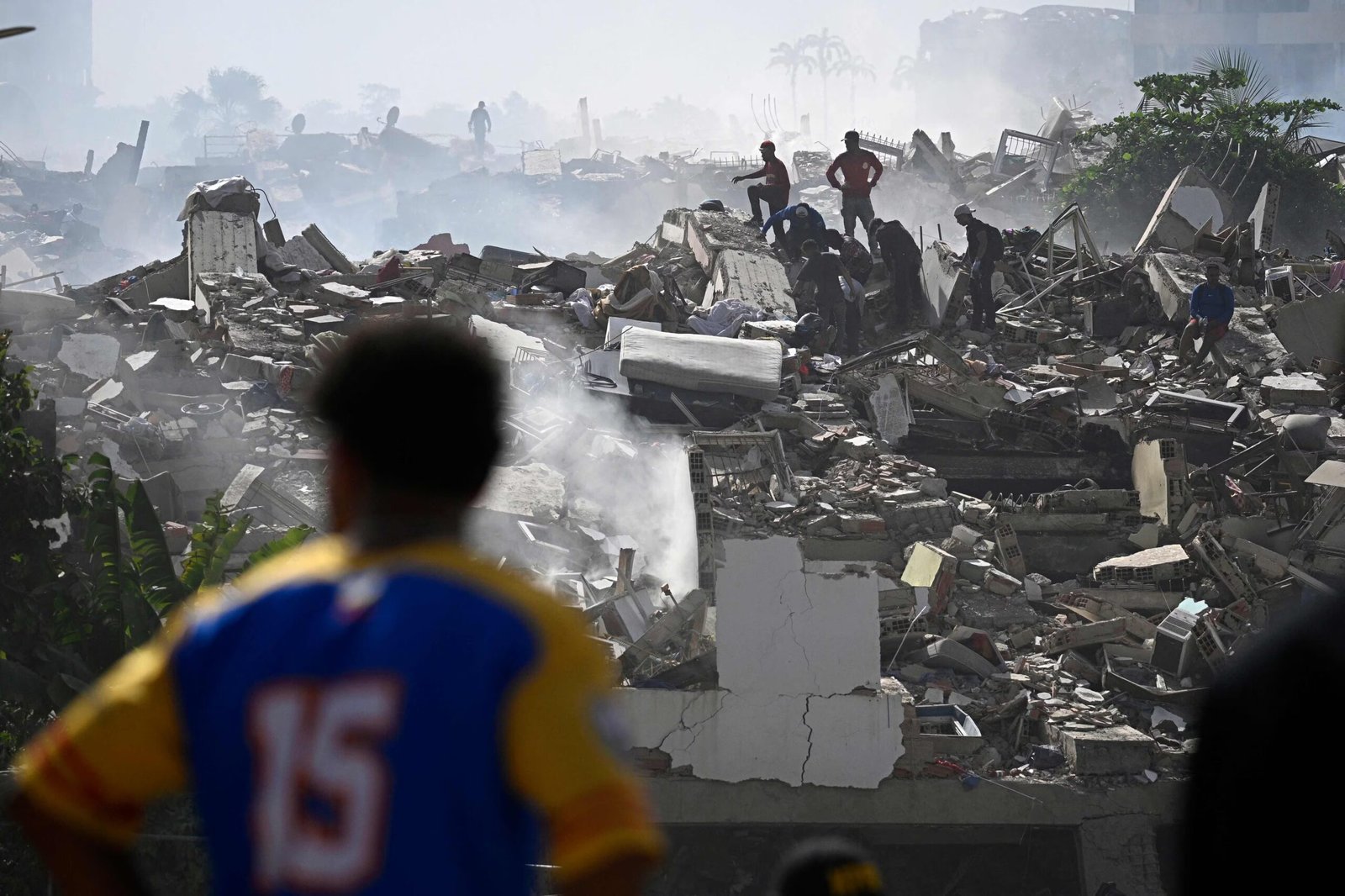
Residents and rescuers search through the rubble of a building that collapsed during an earthquake in Caracas. PHOTO: ARIANA CUBILLOS. AP
Read also: VIDEO: Little dog is rescued from rubble after earthquakes in Venezuela; images move Internet users
According to the preliminary technical reports issued by the Foundation Venezuelan of Seismological Research (FUNVISIS) (a body specialized in the evaluation of tectonic activity in said country), the release of energy occurs in fault zones highly active geological.
The data show that this is not the classic pattern of a main earthquake followed by movements minors, but of a complex event of magnitudes almost identical that requires a detailed reading from the Earth sciences.
According to the records and research of the American Geophysical Union (AGU) (an international scientific association dedicated to the dissemination of studies of the Earth and space), this event was classify formally under the category of “doublet earthquake”.
This condition is distinguished because the two major earthquakes present almost identical characteristics in terms of their magnitude, being also located in very close geographical areas and developing in an extremely long time interval. shortwhich can vary from a few hours to a few days.
The key difference between this freak and a conventional earthquake lies in the origin of the energy. According to the geological analysis publications of the United States Geological Survey (USGS) (an international reference scientific institution on the subject), in a doublet earthquake the second movement is not a replica caused by the reset of the original fault.
Instead, the first big earthquake generates a transfer of such severe tension in the Earth’s crust that it ends up activating immediate an adjacent section of the fault or a neighboring tectonic structure which is already at the limit of its resistance.

Photo: Image created with AI
The study of these seismic twins It is a priority for civil protection teams and structural engineers due to the cumulative impact they have on urban buildings. Seismology experts from the Institute of Geophysics of the National Autonomous University of Mexico (UNAM) point out the following scientific aspects about the behavior of these events:
- Cumulative structural damage: The first earthquake weakens the foundations and walls of the buildings, which causes the second movement (maintaining an almost identical magnitude) to be much more destructive for the previously affected infrastructure.
- Difficulty in alert systems: The networks of monitoring Automated systems face complications in processing signals independently due to the superimposition of elastic waves in such a short period of time.
- Activation of secondary faults: The massive release of energy alters the balance of regional tectonic blocks, extending the risk of landslides in mountainous areas.
You will also be interested in:
5 plants that help scare away cockroaches; easy to care for and very effective
Join our channelEL UNIVERSAL is now on Whatsapp! From your mobile device, find out about the most relevant news of the day, opinion articles, entertainment, trends and more.
aov