
The presidential second round on Sunday, June 21, left a fact that at first glance would seem like a kind of paradox in numbers. The elected president Abelardo de la Espriella won in more municipalities and territories counted —758 compared to 431— while Iván Cepeda won in more departments —19 compared to 15—.
READ ALSO

Seen another way: the official candidate who won in 19 of the 34 constituencies of the country, including Bogotá, lost the Presidency against the candidate for Defenders of the Homeland, who won the majority of the 1,189 municipalities.
The final difference was 250,830 votes, 0.96 percentage pointsthe closest since Colombia voted in the second round 32 years ago.
The history of the second rounds Photo:
This is confirmed in the bulletin 66 of the Registry with the 99.99 percent of tables informed in the pre-count.
A result that repeats the geographical division of elections recent, with wider margins at each end. Cepeda won in the Pacific, the Caribbean, the Amazon and Bogotá. De la Espriella won in Antioquia, Santanderes, the Coffee Axis, the Llanos and the vote from abroad. The sum, however, leaned towards the Defenders of the Homeland candidate.
A review of the EL TIEMPO Data Unit shows that the small municipalities of Antioquia, Santander and Norte de Santandermany and of right-wing majoritythey explained the municipal advantage of De la Espriellawhile the major capitals of the Pacific and the Caribbeanthe Cepeda departmental advantage.
Antioquia, the Santanderes and the Axishe De la Espriella block
De la Espriella built his majority on three blocks inside. The first was Antiochwhich explains a good part of the final result. Over there won with 64.41 percent compared to 33.41 percent of Cepeda, 31 percentage points differenceand got 1,052,153 net votes —margin of difference between candidates, measure with which the Data Unit carried out this analysis—, their greater regional reach.
The department brings together the 12.9 percent of the national vote. If Bogotá is omitted, Medellín was the municipality that gave him the most votes to the candidate throughout the country, 819,285which represented the 64.45 percentand that of more net votes, 397,446.
He Aburrá Valley confirmed that information. Envigado voted 76.31 percent for De la Espriella, Sabaneta 73.26 percentItagüí 64.86 percent and Bello 60.96 percent. Rionegro added 49,172 net votes with 73.22 percent.
READ ALSO
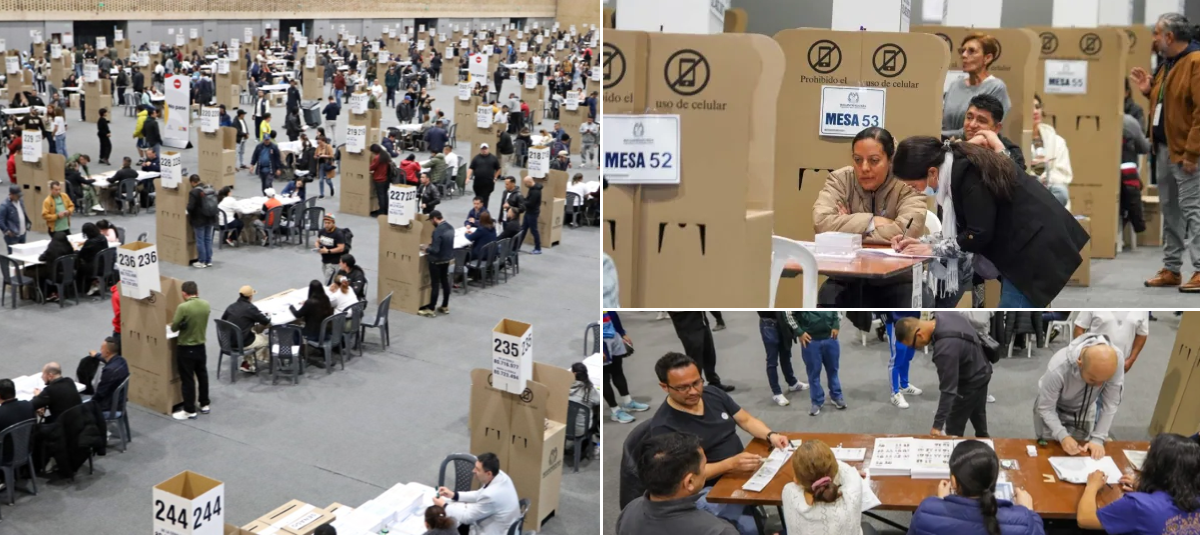
He second block were the two Santandereswhere it marked its broadest differences between large departments. Norte de Santander gave 76.54 percent, 54 points on Cepedaand Santander 64.58 percenta contribution from 819,541 net votes.
Cúcuta supported him with 79.05 percent and 230,467 net votesalmost 60 points difference and the second biggest municipal advantage of the country after Medellín. Bucaramanga voted 64.93 percent for De la Espriella and gave him 111,956 votes.
In Norte de Santander the higher national percentages of De la Espriella: Herrán with 94.74 percent, Silos with 94.50 percent and Lourdes with 93.86 percent.
READ ALSO
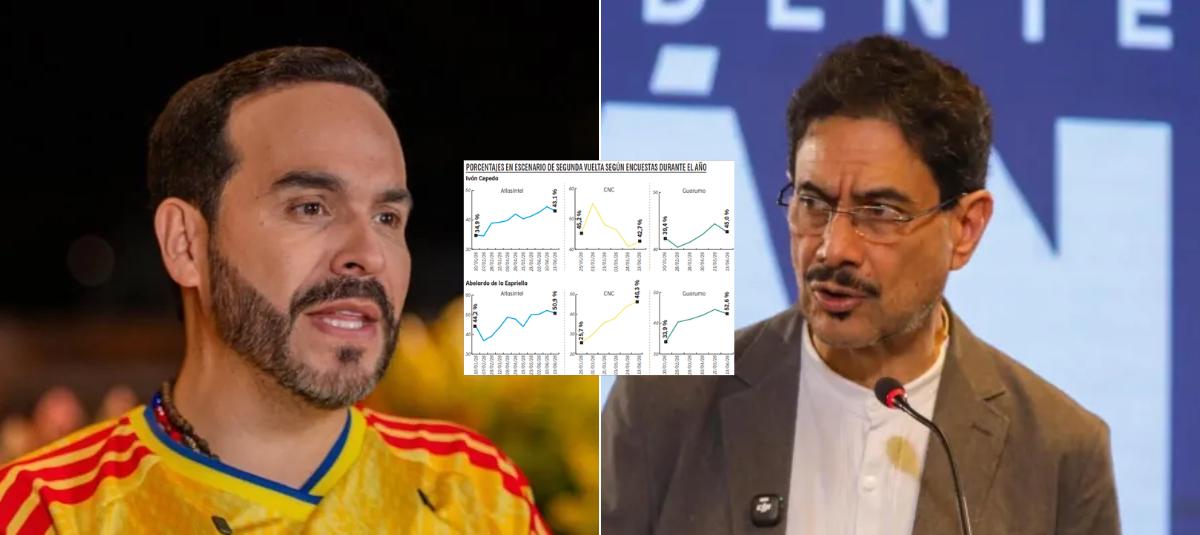
He third block was the Coffee Axis. Caldas gave 58.76 percent to De la Espriella, Quindío 58.33 percent and Risaralda 53.73 percenta contribution from 211,581 net votes.
Manizales voted 53.99 percent, Armenia 58.51 percent and Pereira 54.26 percent by the same candidate. To these three blocks were added the Llanos and the Orinoquíawhere Meta, Casanare, Arauca, Vichada, Guainía and Guaviare voted 60.18 percent by De la Espriellawith 220,177 net votes.
Casanare was the second department with the greatest support for the right throughout the country, with 69.09 percent, almost 40 points difference.
READ ALSO

Pacific and Caribbeanwhere Iván Cepeda won
He Cepeda’s vote was concentrated on the two coasts. He Pacific block —Chocó, Valle del Cauca, Cauca and Nariño—gave him the 67.82 percent compared to 30.80 percent of De la Espriella, a difference of 37 points that translated into 1,525,195 net votes, the largest of any region for either candidate.
Within the Pacific, the Margins were among the widest in the country. Chocó voted 81.37 percent for Cepeda, Nariño 76.73 percent and Cauca 75.64 percent, with differences of between 53 and 64 points. Tumaco gave 88.93 percent and 67,488 net votes, and Buenaventura 85.48 percent and 82,032.
Cali, second city in the country in votingbacked it up with the 59.64 percent compared to 38.73 percent of De la Espriella, 20.9 points differenceand left him 239,119 net voteshe second highest number at the municipal level of the election.
Iván Cepeda prevailed on the coasts. Photo:Andrea Moreno. THE TIME
He Caribbean was Cepeda’s second supportwith more moderate margins. Atlántico, Bolívar, Córdoba, Sucre, Magdalena, Cesar, La Guajira and San Andrés gave him the 57.85 percent compared to 41.11 percent of the president-elect, a difference of 17 points and a contribution of 851,173 net votes.
Cartagena supported him with 65.24 percent and 158,074 net votes, almost 32 points ahead. Soledad voted 67.41 percent for CepedaSincelejo 61.73 percent and Santa Marta 59.10 percent.
Barranquilla, the coastal city with the highest votessupported him with 54.18 percent compared to 44.72 for De la Espriella, nine points differenceand 65,526 net votes for Cepeda.
READ ALSO

In that way, the Pacific and Caribbean left Cepeda more than 2.37 million net votes. His disadvantageaccording to the electoral map, was concentrated in the center and northwest of the country.
The bid for Bogotá and the andean center
Bogotá was the largest plaza of Iván Cepeda and, at the same time, one of the most disputed. The capital supported him 52.47 percent compared to the 45.37 percent obtained by De la Espriella, a difference of 7.1 percentage points.
It’s a narrow margin for a city where the left usually wins, which left it among the most contested territories in the countryto the Cundinamarca level and below the distance that Cepeda took in the Pacific or the Caribbean.
Even with that tight margin, Bogotá was decisive due to size. He gave Cepeda 302,271 net voteshis highest municipal balance throughout the country.
Soacha also contributed with 64.89 percent and 84,738 net votes.
READ ALSO
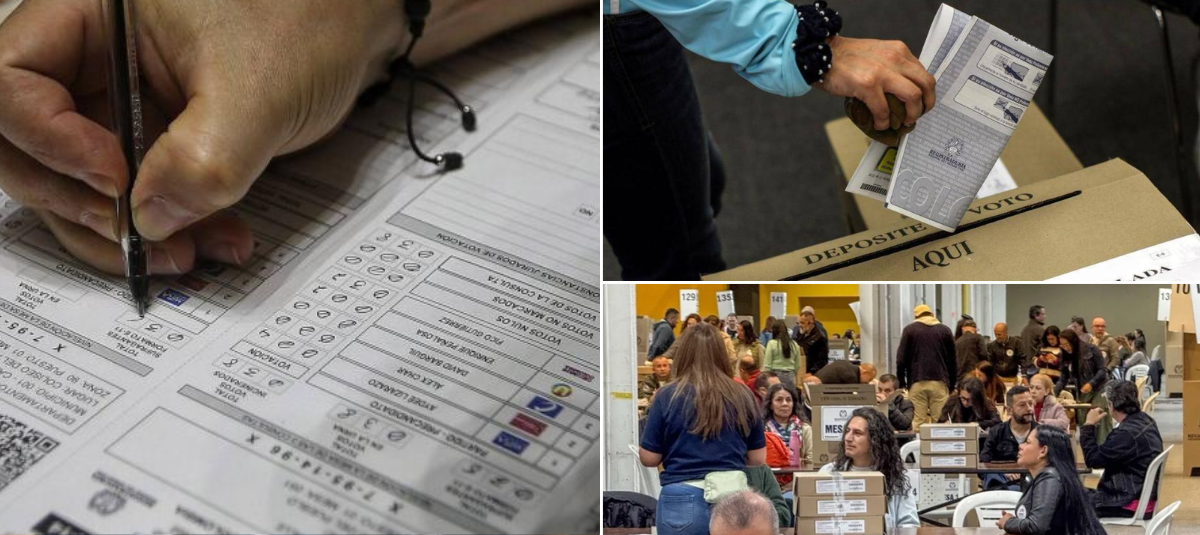
However, the Cepeda’s triumph in Bogotá did not extend to more interior departments. Cundinamarca leaned 52.90 percent toward De la Espriella, Boyacá 60.21 percent, Huila 61.12 percent and Tolima 57.83 percent.
Ibagué voted 54.83 percent for De la Espriella, Neiva 52.38 percent and Villavicencio 60.82 percent.
He andean centeradded, remained 50.66 percent for De la Espriella and 47.43 percent for Cepeda, a difference of 3.2 points, the most disputed region in the country.
where did it go wider and where closer between From Espriella and Cepeda?
The election revealed two visions of countries. The greatest differences were at the geographical extremes. For Cepeda, the department that voted for him the most was Chocó, with 63.6 points advantage (81.37 percent to 17.78 percent), followed by Vaupés (62.8), Putumayo (58.3), Nariño (54.5) and Cauca (52.8). For De la Espriella, the most extensive was Norte de Santander, with 54.4 points (76.54 percent to 22.12 percent), followed by Casanare (39.7), Antioch (31.0) and Santander (30.7).
In the municipal detail the extremes reach almost to the edge. He The highest percentage of Cepeda was that of El Litoral del San Juan (Chocó), 98.18 percenta difference of 96.5 pointsalong with Mosquera (Nariño), 97.97 percent, and Roberto Payán, 97.79 percent. He De la Espriella’s oldest was Herrán (Norte de Santander), 94.74 percent, 90.6 points differencefollowed by Silos (94.50 percent) and Lourdes (93.86 percent).
Abelardo de la Espriella was the candidate with the most votes in the second round. Photo:THE TIME
For its part, it The closest was concentrated in the center of the country. The department with closest vote was Caquetá, won by Cepeda by 0.33 points698 votes; then, Cesar, also for Cepeda, for 2.90 points, and Bogotá, by 7.1.
Among the municipalities, the the closer it was Puerto Nare, in Antioquia, where De la Espriella won by three votes out of 6,601, a difference of 0.05 points. Ambalema, in Tolima, went to Cepeda by four votes; El Castillo, in Meta, for seven; Piedras (Tolima) for 11, and Momil (Córdoba) for 20.
Among the large municipalities, the closest was Duitama. The city of Boyacá gathered 71,431 votes and left with De la Espriella for 599, 0.82 points difference. They were followed by Mompós (Bolívar), which Cepeda won by 2.65 points, and Sevilla and Sogamoso, where De la Espriella won by less than four points.
READ ALSO
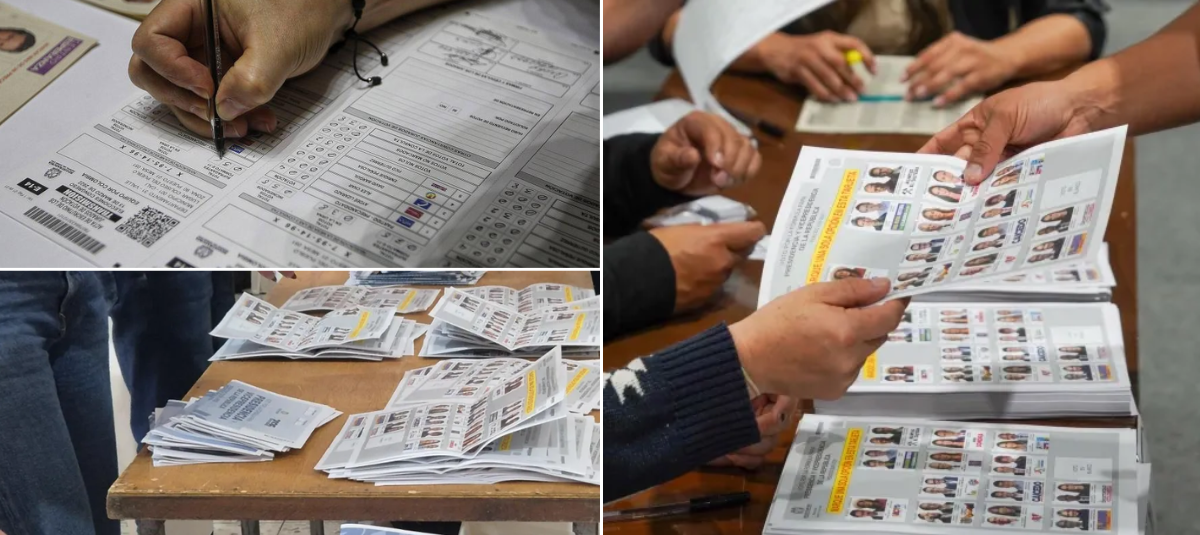
He vote abroad HE inclined towards De la Espriella
He vote abroad leaned towards Abelardo de la Espriella. The 67 consulates added 604,089 votes and they shared 63.76 percent for him and 34.76 percent for Iván Cepeda, 29 points difference and a net contribution of 177,809 votesequivalent to that of a medium-sized apartment.
The United States concentrated that result. With 220,983 votesthe largest center abroad, voted 80.6 percent by De la Espriella and left him 138,699 net voteshe third largest municipal balance of the country after Medellín and Bogotá. Venezuela (79.7 percent), Mexico (66.9 percent) and Canada (61.2 percent) followed the same line. Cepeda won in a group of consulates from Europe and the south of the continent, including Germany (65.0 percent), France (62.0 percent), Australia (56.1 percent) and Argentina (53.1 percent).
And as for the consulate of Spain, second in diaspora voting, It went to Cepeda by 1,519 votes over more than 132,000.
DAVID ALEJANDRO LÓPEZ BERMÚDEZ AND SABRINA BASTIDAS IGUARÁN
DATA UNIT – TIME
berdav@eltiempo.com