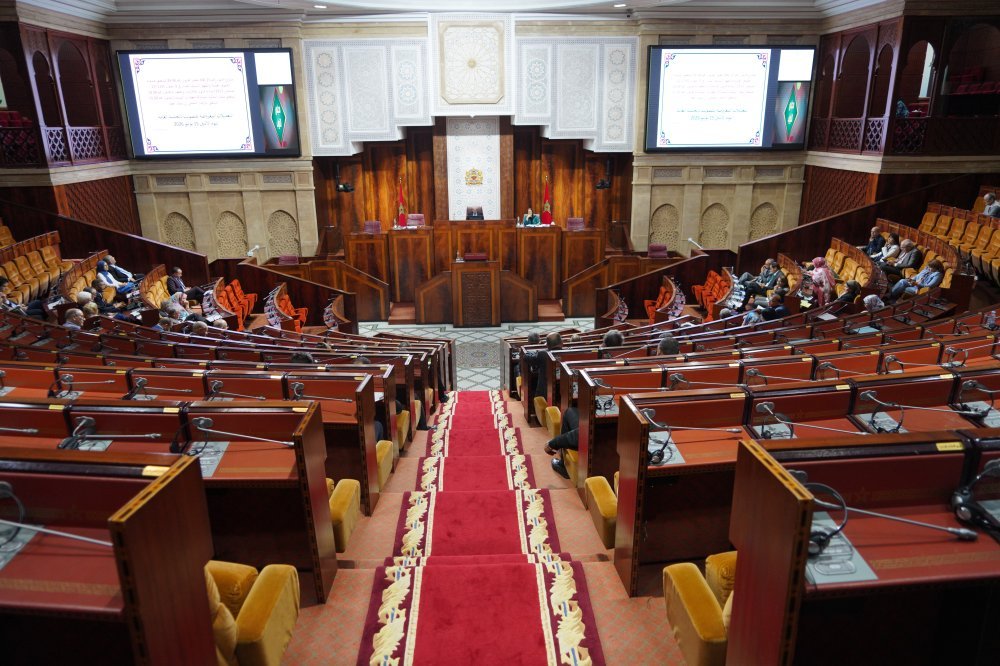
The file does not arrive at Parliament as an entirely new subject. It had already given rise to several control initiatives, between requests for commission of inquiry and exploratory mission project to the House of Representatives. But its return changes scope: this time the initiative comes from groups belonging to the majority.
Its political significance is also due to the position of National Rally of Independents (RNI). The party of the Head of Government, which is not among the signatories, explained in a press release, dated June 23, 2026, its refusal to join the process. This choice is not enough to conclude that there is a rupture within the government alliance. However, it questions its cohesion in the face of a matter directly relating to the action of the Executive and opens, beyond the sectoral controversy, a debate on the transparency of public spending and the exercise of parliamentary control.

An initiative born in the majority
It is this origin which modifies the reading of the file. The initiative does not come only from the opposition, but from groups belonging to the majority, who wish to submit for examination a subject relating to current government management. In their correspondence addressed to opposition groups, the Authenticity and Modernity Party (PAM)L’Istiqlal and theConstitutional Union say they want to “establish the truth” and “enlighten national public opinion” on a subject which has fueled a wide debate in the country. The issue is sensitive: it concerns public aid, imports, meat prices and the state of the national herd. By calling the opposition groups to a joint meeting, the signatories also seek to give their initiative a broader base. The approach retains a political scope, but it is presented first and foremost as an exercise in parliamentary clarification on a file directly linked to the action of the Executive.
The RNI absent, the cohesion of the majority in question
The group first invokes a precedent: this initiative would have already been carried out by the same actors without bringing together the legal quorum necessary for the creation of a commission of inquirybefore an exploratory mission proposed by the majority groups did not succeed either. He also highlights the proximity of the end of the legislature, which would no longer make it possible, according to him, to respect the constitutional and procedural deadlines necessary for the creation of the commission and the accomplishment of its mission.
The RNI also considers that the subject does not, despite its importance, fall under exceptional cases having justified the use of commissions of inquiry, historically associated, according to it, with major national questions of an urgent nature or of particular current affairs. On the political level, the group reaffirms its attachment to Majority Charterwhich it presents as a framework of coherence in the implementation of the government program. While refusing to be associated with the initiative, it claims to retain its control prerogatives within the framework provided for by the Constitution and the internal regulations of the House of Representatives.
An economic issue that has become a matter of public trust
Faced with this situation, the State has mobilized several mechanisms to support supplies and contain the effects of the crisis. It remains to measure its real effectiveness: has the aid provided relief to the consumer? Did they benefit the targeted actors? Have the exemptions and facilities granted been reflected in prices? And according to what criteria were the beneficiaries identified? It is in this area that the file goes beyond the budgetary reading alone. It affects the readability of public action, the traceability of support mechanisms and the capacity of public authorities to demonstrate that the effort made has produced the expected effects.
Parliament facing its control mission
The response of RNI however, introduces another reading of this same institutional dimension. The group does not say it places itself outside parliamentary control; he contests the appropriateness of resorting to a commission of inquiry at this stage of the legislature, given the time required for its constitution and the accomplishment of its mission. If it sees the light of day, the commission will have to clarify specific facts. Its effectiveness will depend on the precision of its scope: nature of the aid concerned, periods examined, categories of beneficiaries, volumes imported, amounts committed, exemptions granted, control mechanisms and effects on prices.
The points that the investigation should clarify
The commission will finally have to look at the other end of the chain: the consumer. The debate on livestock support only takes on its full meaning if it is related to its final objective: protecting supplies, preserving the purchasing power and stabilize a market subject to strong tensions. In this matter, transparency is no longer just a political matter. It concerns the use of public support mechanisms, their targeting, their cost and their real effects on the market. It is on these elements that any control initiative, whatever its form, will be judged.