- Sophia (35) lost her husband Mantega (39) in a surfing accident in Portugal on February 23, 2026 and returned home a widow with an urn and a one-and-a-half-year-old daughter.
- Since then, as a single parent, she has struggled with grief, sleep disorders, physical exhaustion and financial worries.
- As an empowerment coach, she wants to remove taboos about grief and continue her life according to Mantega’s motto “sem medo – without fear”.
“We went on vacation as a happy family and I came home with an urn.” When Sophia says this sentence, it suddenly becomes clear how much a single day can change a life. Three months ago, the 35-year-old from Germany lost her husband Mantega (39) in a surfing accident in Portugal. Since then she has been a widow – and a single mother of a one-and-a-half-year-old daughter.
It’s not just sadness and memories that remain. Sleep disorders, physical exhaustion, financial worries and the challenge of raising her daughter alone shape her everyday life. In the conversation, Sophia explains how she experienced the loss of her partner and, despite everything, gained new courage step by step.
The moment that changed everything
It was a sunny Monday in Portugal when a police officer suddenly appeared in the garden: “I’m sorry to tell you, Mantega died.” What happened next is burned into her memory. «I had a million thoughts at the same time and not a single one. My world stopped at that moment.” She didn’t have time to collapse. “I just knew: I had to get myself and my child home safely.”
On February 23, 2026, a fatal surfing accident occurred at Praia do Canal near Aljezur in Portugal. According to the international surfing magazine “Surfer,” Mantega was in the water with a friend when he got into trouble. According to local media, he was pulled out of the water by his friend after a few minutes. Despite rescue measures and attempts at resuscitation that were immediately initiated, it was no longer possible to help him. He was pronounced dead at the scene.
Back in Germany, the real reality of loss began. “Brutal,” is how Sophia describes the first days after the accident. “It felt like I almost died too.” Her body reacted to the shock with exhaustion and lack of strength. The greatest fear, however, was “falling into a black hole and no longer being able to offer my child a happy childhood.” From one day to the next she was a single parent – with a broken heart and financial worries.
“I survived my husband’s death”
As an empowerment coach, Sophia knows how important it is to overcome crises step by step. After her husband’s death, she was dependent on support herself. Family and friends were there to support her at all times. “I received a lot of attention and help that no one actually wants. And I accepted it. Every time I had to swallow my pride and say: Yes, I’ll accept the help.” Nevertheless, she often felt lonely.
Family and friends of Sophia and Mantega are having a fundraiser for them on the platform “Go Fund Me” started.
Today she describes her situation in a few words: “I survived. I survived my husband’s death.” Some images would have been burned in forever: the paddle-out ceremony at the scene of the accident, the moment when a police officer handed her his personal belongings, and the final farewell to Mantega. “I immediately felt that he wasn’t there anymore.”
Mantega (39): “Many would describe him as an artist of life”
Mantega was a surfer, circus performer and globetrotter. Born in Brazil, he lived an unconventional life between travel, creativity and freedom. He spoke five languages without ever having attended university. He spent his time in the twenties as a punk in squats, among other things. “He always made decisions as if his life were a better story in a book,” says Sophia.
«He loved surfing. The sea was his element. He was so vibrant and led a very inspiring life.” But it was his fate to die on this day, place and in this way.
To her, he was a wild yet sensitive man – someone who could laugh, cry and feel without holding back. “He was very strong and at the same time incredibly sensitive.”

This mixture of adventure and care was also evident in their relationship. “He carried my suitcase halfway around the world – and my worries with him.” After the birth of their daughter, he took five months to spend with the family. “He always said: I have found the right mother for my child.”
Each of his voicemails ended with the same words: “I love you.”
“Positive, constructive and creative”
Over time, everyday life returned. “I have trained for years to observe my thoughts and to be able to consciously decide how I want to behave.” She tries to live according to a motto from a circus artist friend: “positive, constructive and creative.”
Exercise, time in nature, conversations with her therapist, writing, painting and music give her strength. «What gives me the most strength is our wonderful daughter and everything I learned from Mantega. He lived his motto ‘sem medo – without fear’. That’s exactly how I want to continue.”
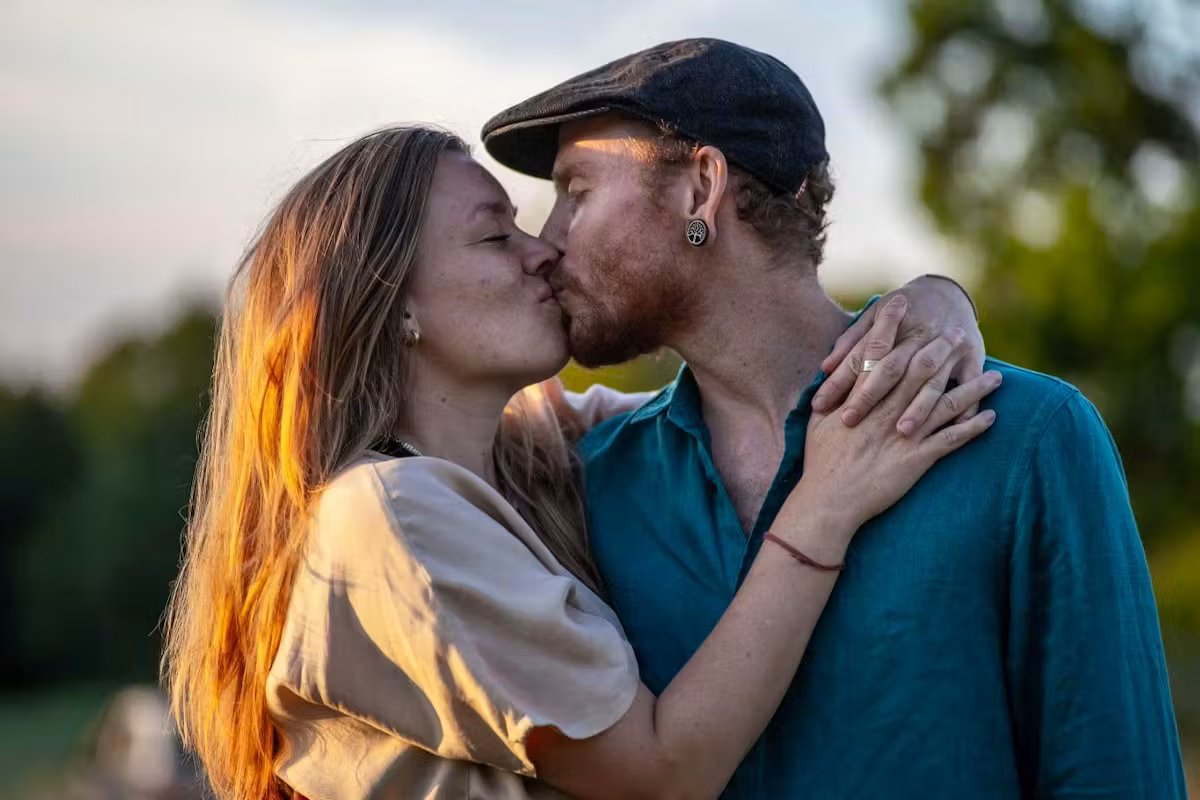
She especially misses being able to model the love of her parents for her daughter. “We always kissed in front of her and showed her how we celebrate our love.” Her husband always encouraged her to be independent. “If I could tell him that I was giving this interview today, I know exactly what he would say: ‘Jiiihaaa. Give them hell, baby!›»
“Death is part of life, we must not ignore grief”
«I am the widow of Mantega. I show myself and boldly go out into the world.” With this attitude, Sophia today shares her story on social media. «I want to make the best of what happened to me. That’s just my fate.”
With her openness, she wants to remove taboos about grief. «Death is part of life. If we ignore grief, it doesn’t go away.” At the same time, she learned how much strength she has within her. “Now it’s time for me to believe in myself.”
How do you feel about people talking openly about their grief like Sophia does?
That’s why the comment field was deactivated

Selina Keller (sec) has been working at 20 Minuten since 2025 and is an editor in the Community department