BETTER INTEGRATED:
Overemphasis on the AI industry will not hit Taiwan like the natural gas boom did to the Netherlands, the central bank said in a quarterly report
While Taiwan’s technology sector remains the primary driver of economic growth, exports from traditional industries have shown signs of recovery, the nation’s central bank said last week.
In a report released following its quarterly policymaking meeting on Thursday, the central bank said that while Taiwan’s information and communications technology (ICT) sector and broader economy have benefited significantly from booming global demand for artificial intelligence (AI) related products, many traditional manufacturers have integrated into the AI supply chain through technology upgrades and product diversification.
Nan Ya Plastics Corp (南亞塑膠) has stepped up production of materials such as glass fiber cloth used in AI-related applications, helping boost its exports by 13.04 percent in the first five months of this year, data from by the Taiwan Stock Exchange showed.
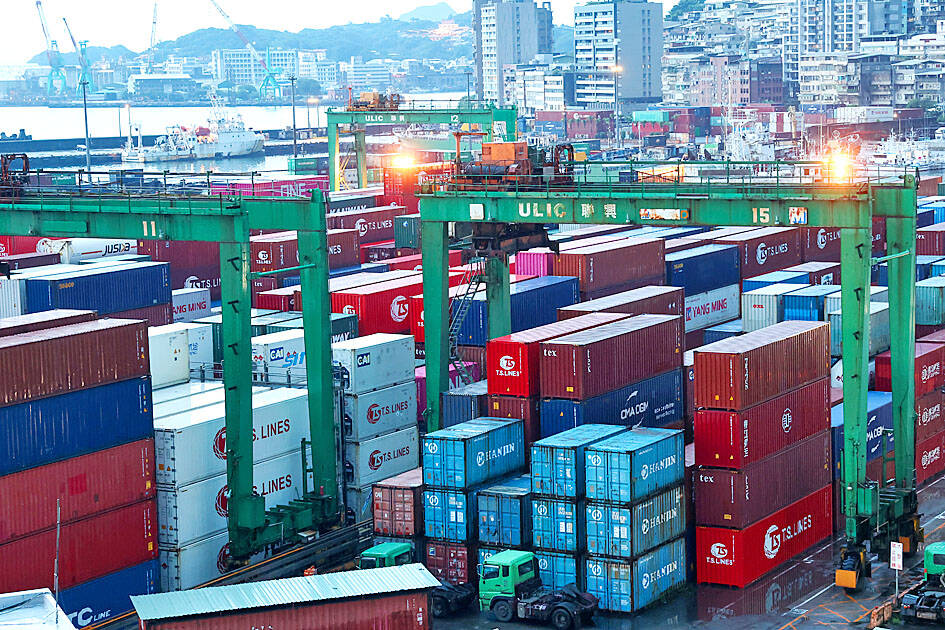
Photo: CNA
Addressing concerns that Taiwan could be vulnerable to a form of “Dutch disease,” where rapid AI-driven growth crowds out other sectors of the economy, the central bank argued that the country’s situation differs significantly from that of the Netherlands in the 1960s.
The bank said Dutch manufacturing had limited links to the country’s natural gas industry, reducing opportunities for technology spillovers.
By contrast, “Taiwan’s traditional manufacturing industries have continuously enhanced their competitiveness and increased value-added production by integrating into the AI ecosystem,” the central bank said.
For example, makers of precision instruments have entered the semiconductor equipment market, suppliers of chemical materials have expanded into production of specialty chemicals and the power equipment and metal processing industries have entered the AI server cooling and infrastructure supply chain, it said.
“Taiwan’s economic development bears no resemblance to the phenomenon known as ‘Dutch disease,’” the central bank added.
Despite external headwinds, including Chinese dumping practices and US tariffs, exports from Taiwan’s traditional industries rose 7.7 percent year-on-year in the first five months of this year, indicating a recovery from previous weakness, the central bank said.
During the quarterly policymaking meeting, the central bank raised its forecast of Taiwan’s GDP growth to 9.45 percent for this year, an increase of 2.17 percentage points from the estimate made in March.