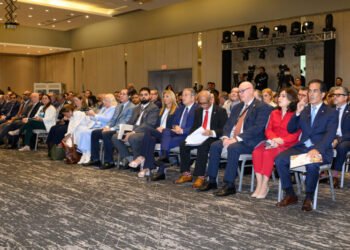
The 56th General Assembly of the Organization of American States (OAS) will be held in the Panamanian capital Panama City from June 22 to 24. This regular meeting looks set to be the most exciting in the organization’s 78-year history. Not only the position of Secretary General Albert Ramdin is under discussion; in particular, there are major concerns about the survival of the OAS. Because, as things stand now, the main sponsor – the United States – will no longer make money available for it from next year.
Text Armand Snijders
Image FB OAS
The Americans are the largest donor to the OAS: this year they will pay no less than 46 million US dollars in contributions, or 49.99 percent of the total budget. For comparison: Suriname contributes ‘only’ 41,000 US dollars. So the organization largely depends on the American contribution. Ramdin must therefore dance to the American tune, it was predicted the True Time even before he took office on May 26, 2025.
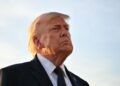
“Trump believes that his country has to pay too much for an organization that in his view is corrupt, money-consuming and politically insufficiently loyal to the interests of Washington”
Liquidity crisis inevitable
But now the US wants to withdraw, as was evident in May from the presented draft budget for the coming year (the so-called FY2027), in which the White House completely zeroed out the contribution to the OAS. If that happens, the organization will immediately run into major financial problems and a liquidity crisis is inevitable.
This threat does not really come as a surprise, because at the behest of its President Donald Trump, America has already withdrawn from 66 international organizations, agencies and treaties since the beginning of 2025. And these are not the least of the institutions; 31 of these fall under the umbrella of the United Nations (UN), including the climate agency, the population fund and UN Women. In addition, there are 35 other international organizations that the US has turned its back on. The argument was that these agencies acted “contrary to U.S. national interests, sovereignty, and economic strength,” without providing any evidence.
Sign of weakness
The fact that the OAS must now also be sacrificed is partly due to Ramdin. Under his predecessor, Uruguayan Luis Almagro, the US often used the organization as a diplomatic weapon against left-wing regimes in Latin America, such as Venezuela and Nicaragua. But since Ramdin took over, he has advocated neutrality, non-intervention and respect for sovereignty.
The Trump administration sees this change of course as a sign of weakness and believes that Ramdin is not taking tough enough action against regimes that the US considers hostile. Trump also believes that his country has to pay too much for an organization that in his view is corrupt, money-consuming and politically insufficiently loyal to the interests of Washington.
Xaviera Jessurun
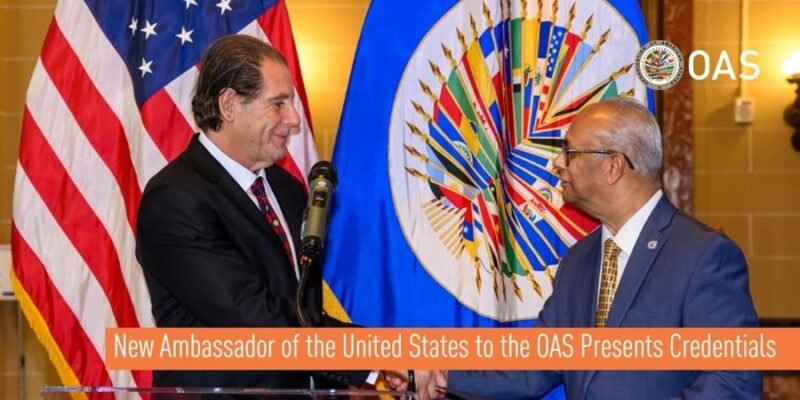
The current vicissitudes will certainly not change this position. Because Ramdin is in hot water with Leandro Rizzuto Jr., the US ambassador and permanent representative to the OAS and Trump’s confidant.
Rizzuto was behind an internal memorandum in which harsh accusations were recently made against Ramdin. And that was also more or less the reason for the revocation of the diplomatic visa of Chief of Staff Xaviera Jessurun, who immediately resigned.
The memorandum also reached the White House, which is now reportedly conducting an independent external investigation into nepotism (cronyism) and financial mismanagement under Ramdin’s leadership and into his alleged disrespect towards member states. All issues that are waved away by the OAS CEO. In short, there are all kinds of tricky agenda items on the plate of the 35 OAS members. It is certain that the ‘zero dollar’ threat from the Americans will certainly not disappear if Ramdin remains in office.
Shift focus
Although things will be tough in Panama from June 22 to 24, according to insiders it will not (yet) have any direct consequences for Ramdin’s position. He is undeterred and tries to maintain control by shifting the focus to major regional crises.
In his view, the OAS’s emphasis should be primarily on the political transition in Venezuela. He has announced that the summit in Panama is the ideal moment to determine how the OAS can support democratic processes there. But whether that is enough to keep attention away from his own performance is questionable.
(read more below the photo)

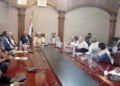
Behind the scenes there is also criticism of the American position. Several diplomatic missions within the OAS experience Rizzuto’s actions as an unprecedented infringement of the autonomy of the Secretary General. Many Latin American and Caribbean countries are also historically allergic to American interference and may support Ramdin to make a stand against Washington.
Minister Melvin Bouva of Foreign Affairs, International Trade and Cooperation says that Suriname still supports Ramdin, but that it is closely monitoring developments surrounding his person. Bouva realizes that if his predecessor has to resign early as OAS boss, this could also damage Suriname’s reputation. “He was nominated by the country and elected on behalf of Caricom,” said the minister, who added that this support “will immediately lapse” if investigation shows that he has actually violated the organization’s integrity codes or procedures.
Fighting for survival
But for the time being, Ramdin is still the boss of one of the powerful organizations in the region and you cannot simply chase them away, even if your name is Donald Trump. However, Ramdin will have to put down a lot of sour wine in Panama and go through a lot of dust to save his life. He will also have to make concessions on independent investigations and drastically adjust his management style, as can be heard within the OAS walls.
If he does not do so and peace does not return or the results of the audit damage him immediately, his position may become untenable in the medium term. In Panama he is expected to have to fight for his survival. But that struggle transcends his personal interests and his own position. After all, the survival of the OAS is at stake and that will always have more weight.