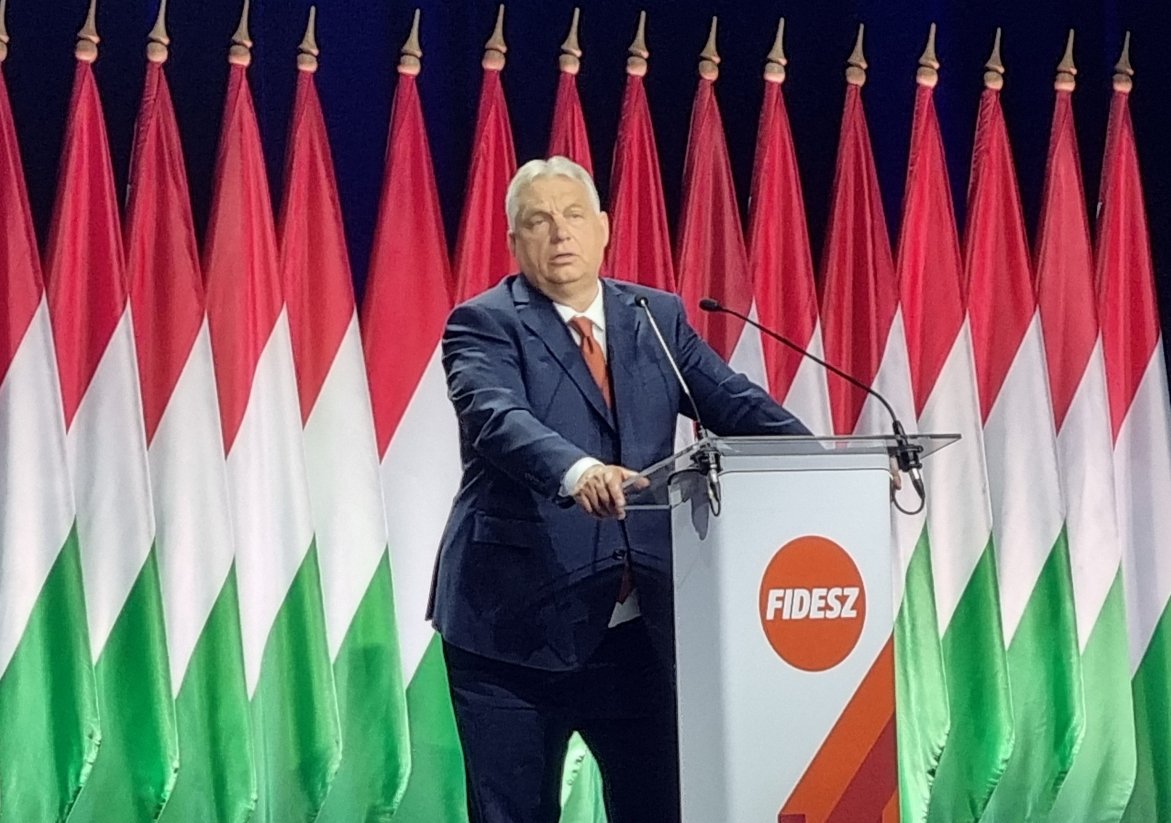

FIDESZ is preparing for one of the most significant organizational restructurings in its history: the focus is on new leaders, strengthened local organizations, and rebuilding its grassroots character. As Tamás Pindroch, senior analyst at the Center for Fundamental Rights sees it, the goal is to create a party structure that is closer to voters, responds more quickly to local issues, and prepares more effectively for the political challenges of the coming years, reports Magyar Nemzet.
FIDESZ is facing a significant organizational transformation, with the goal of bringing the party closer to voters, responding more quickly to local issues, and being well-prepared for the political challenges of the coming years. Based on the speeches delivered at the party congress, it has become clear that the ruling party’s leadership intends to implement this renewal not only at the personnel level but also at the organizational and operational levels.
Tamás Pindroch believes the composition of the new leadership alone signals a significant change. As he put it, the newly formed FIDESZ leadership consists largely of politicians who have not previously held key party positions.
Viktor Orbán’s political career alone proves that FIDESZ and its leader have always been capable of renewal. If this had not been the case, the party would not have been able to remain a key player in Hungarian politics for decades —the analyst emphasized.
One of the most important messages of the congress was the restructuring of the organizational framework. In future, Fidesz will once again rely more heavily on county, city, and municipal organizations, while the previously dominant constituency and regional levels will take a back seat.
Pindroch noted that this is not an unprecedented move in the party’s history.
Fidesz was originally built on a local, territorial organizational structure and only shifted to a constituency-based system following its electoral defeat in 2002.
One of the most important advantages of the new model may be that it shortens the communication chain between voters and the party leadership. Local leaders can establish more direct contact with the people, identify problems more quickly, and ensure that these issues reach decision-makers more easily.

Viktor Orbán FIDESZ 32. congress, Budapest. Photo: Hungary Today
The analyst confirms that the experiences of recent years demonstrate how the demands of governance inevitably push party-building to the background.
By its very nature, the operation of a ruling party differs from that of an opposition organization. When a political community comes to power, a significant portion of its energy is tied up in governing. The people who previously played a key role in party-building often take on tasks within the government, he pointed out. He emphasized that Orbán also stressed in his congressional speech that in recent years, Fidesz had primarily focused on fulfilling governmental tasks, but now greater emphasis is being placed once again on the movement’s character and organizational development.
According to the vision by the party chairman, not every decision and initiative will originate from the central leadership in the future. Local communities and organizations may be granted greater autonomy, which could enable faster and more flexible responses.
Several rural politicians speaking at the convention noted that it has become more difficult in recent times to channel feedback from the public. One of the most important goals of the new organizational model may be to address this very problem. Local leaders will encounter voters’ opinions, criticisms, and suggestions more directly, which could lead to faster problem-solving. In addition, the party’s national leadership will gain a more accurate picture of the mood and expectations of local communities.

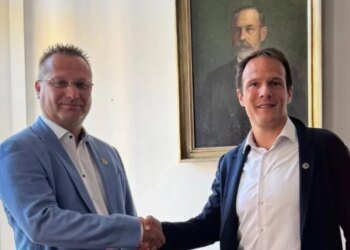
Zsolt Németh, Maciej Szymanowski, Zbigniew Rau, Radoslaw Fogiel, Marek Kuchcinski FIDESZ 32nd congress, Budapest. Photo: Hungary Today
At the congress, Orbán stated that the new organizational structure must be fully operational by the fall. The ruling party’s leadership expects that in the coming period, an increasing number of political conflicts and contentious issues will emerge in public life, requiring swift and effective responses. Pindroch says the coming months will determine how successful the new model proves to be.
Orbán also listed what he believed led to FIDESZ’s election defeat, citing 10 factors:
- Their campaign message was not compelling enough.They failed to recognize their opponent’s advantage in time, which led to a flawed campaign strategy.
- Their forecast regarding voter turnout was inaccurate.
- The opponent’s innovations in mobilization were more successful.
- They had no response to the corruption allegations and the hate campaign.
- They suffered a catastrophic defeat in the digital sphere. They lost the competition for young people’s attention, which he also views as a personal failure. Young people harshly rejected him and his platform.
- Foreign algorithms served the change of government.
- The opponent successfully neutralized the war rhetoric.
- The war and the Brussels sanctions hampered economic performance.
- He did not make unrealistic social and economic promises, whereas TISZA did.
In politics, practice always provides the answer. The effectiveness and impact of the new organizational system will truly become apparent over the next year. However, it is already clear that FIDESZ intends to prepare for the challenges of the coming period by strengthening its local presence and rebuilding its grassroots character—the analyst stated.
Overall, the message of the congress is clear: FIDESZ’s leadership sees renewal not simply in personnel changes, but in a profound transformation of the party’s operations. How effective this strategy will be may be decided by the political developments of the coming months.

Via Magyar Nemzet; Featured image: Hungary Today