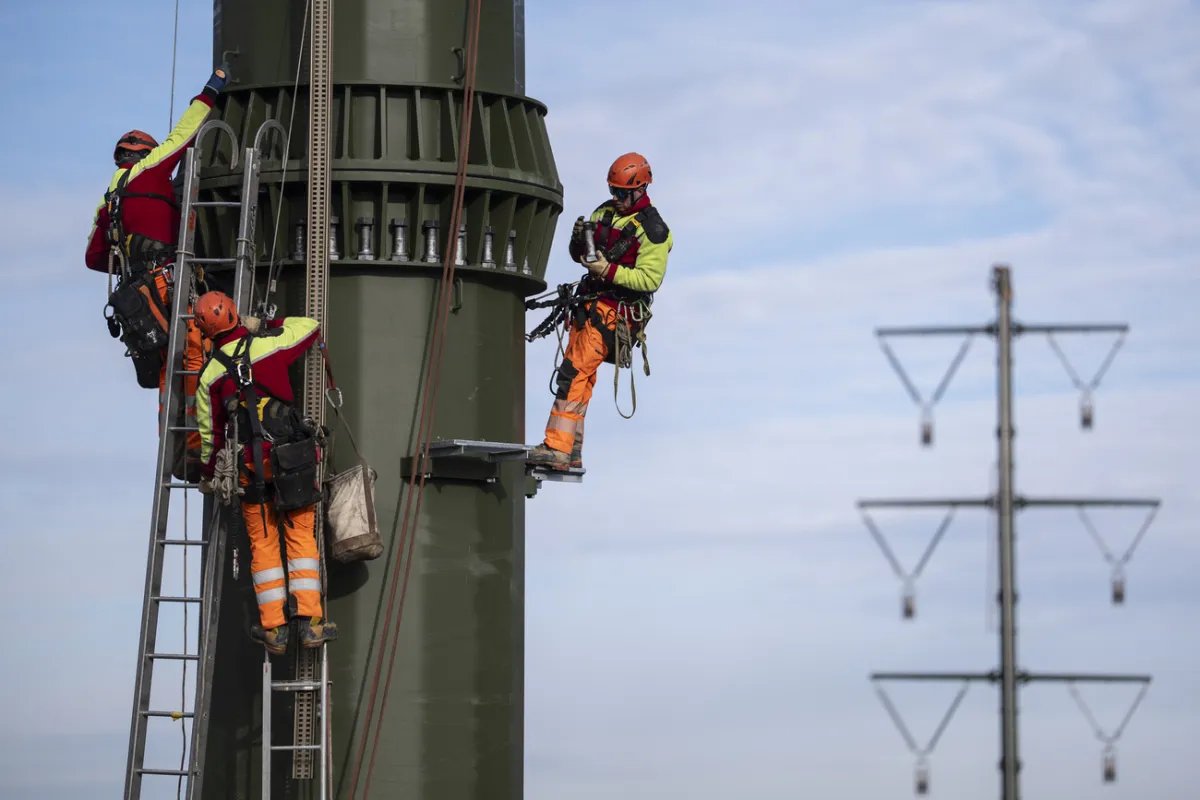

The agreement is intended to allow Swiss providers to participate in the EU internal market.
Keystone / Claudio Thoma
The electricity agreement between Switzerland and the European Union has cleared its first hurdle in the Swiss Parliament. The Senate’s Energy Committee decided to proceed with the bill by 6 votes to 4, with 3 abstentions.
The agreement forms part of the Switzerland–EU package, which the Senate is expected to consider during the autumn session. It is intended to enable Swiss operators – such as Swissgrid – to participate on an equal footing and without hindrance in the European internal electricity market, trading platforms and other European bodies in this sector.
Furthermore, all Swiss end consumers must be able to choose their electricity supplier freely. It will still be possible to remain with the basic supply provider.
According to Parliament services on Tuesday, the committee believes the agreement strengthens security of supply and offers various benefits. The agreement offers the best way to guarantee these imports both now and in the future.
More

More
Switzerland-EU electricity agreement: the key issues it must tackle
Without an agreement, the EU could unilaterally limit cross-border grid capacity to Switzerland, without taking Swiss interests regarding grid stability into account, the committee fears. Furthermore, the agreement governs Switzerland’s participation in the bodies responsible for coordinating the operation of the European electricity grid.
The committee also argues that the agreement guarantees Switzerland direct access to the European electricity market. Given the increasing volatility of electricity generation from renewable energy sources, short-term electricity markets are becoming increasingly important. They enable, for example, operators of Swiss hydroelectric power stations to make the most of this flexibility.
The committee is in favour of the agreement, even though it also requires certain “significant concessions”. It will continue its work to develop “the best possible solutions for implementing the agreement at the national level”. It will then carry out a comprehensive assessment of the agreement and its domestic implementation.
Other possible options
A minority of the committee is opposed, believing that the disadvantages for Switzerland clearly outweigh the benefits. They argue Bern must not commit to adopting new EU legislation across virtually the entire electricity sector.
This mechanism for the dynamic adoption of EU legal acts represents an “unacceptable risk”, as Switzerland could in future be forced to adopt EU provisions in areas of vital interest. The minority therefore fears that Switzerland may lose its sovereignty over its hydroelectric reserves.
It is also concerned that Switzerland will no longer be able to decide independently on the creation of electricity reserves or freely shape its energy policy through subsidies. For the minority, this agreement is not the only option for Switzerland to guarantee security of energy supply.
Translated from French, sub-edited by jdp