International organizations—particularly the United Nations (UN) and the Organization of American States (OAS)—constitute fundamental institutional frameworks for global and regional governance. For medium-sized countries like the Dominican Republic, these entities not only channel technical and financial cooperation, but also provide defense mechanisms against abuse of power, protection of human rights and peaceful resolution of disputes. The dismantling or deliberate erosion of multilateralism by far-right political currents carries concrete risks that require informed public reflection.
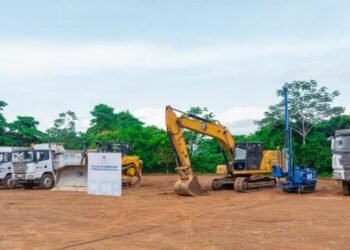
First, the weakening of multilateral institutions reduces counterweights to asymmetric bilateral pressures. Without solid regional frameworks, nations with greater economic or military power can impose agendas through unilateral agreements or credit conditionalities that subordinate local priorities—environmental, labor and development—to external interests (UN, nd). Recent cases in the region show how the absence of multilateral coordination facilitates the negotiation of extractive and infrastructure projects under favorable terms for foreign investors, to the detriment of local communities (Brookings, 2020).
Second, anti-multilateral rhetoric is often linked to domestic authoritarian tendencies. The promise of “recovering sovereignty” frequently serves as an argument to concentrate executive functions, weaken institutional controls, and restrict the space of civil society. Examples in Latin America—countries that reduced regional cooperation or minimized international supervision—exhibit setbacks in transparency, judicial independence, and protection of rights, which reinforces the need for observation mechanisms such as those promoted by the OAS (OAS, sf).
Third, contemporary transnational challenges require effective multilateral responses. The vulnerability of the Dominican Republic to extreme climate events, the management of marine resources and irregular migration demands access to climate financing, technology transfer and regional adaptation plans. The Intergovernmental Panel on Climate Change (IPCC) emphasizes that international cooperation facilitates the mobilization of resources and adaptation strategies for especially vulnerable tropical regions (IPCC, 2022).
Fourth, the absence of multilateral counterweights does not prevent the influence of external powers; transforms it. In contexts of institutional vacuum, geostrategic actors can offer bilateral commitments that, although attractive in the short term, entail technological, economic or political dependence. Analysis by think tanks on small and medium-sized States shows that collective bargaining in multilateral frameworks offers better conditions of protection against foreign interests than isolated bilateral agreements (Belfer Center / Brookings, 2019).
Finally, it is essential to distinguish criticism and reform from outright rejection. Strengthening the UN, the OAS and other mechanisms implies demanding greater efficiency, transparency and representativeness from regional democratic participation. Deliberative reform of multilateralism ensures that small and medium-sized states negotiate from more balanced positions and protect their core interests.
The decision on the international course is not only strategic, but also one of real sovereignty. Defending and improving multilateral institutions constitutes a strategy to protect Dominican autonomy, democratic guarantees and the ability to respond to global risks. Opting for its dismantling is often equivalent to opening the door to practical dependencies on external actors and losing collective protection tools. Citizens and political elites must weigh these consequences before supporting projects that promise strength but that, in practice, reduce the country’s ability to decide freely.
References (selection)
• United Nations Organization. (sf). Official site. https://www.un.org — Legal framework and functions of the UN.
• Organization of American States. (sf). Official site. https://www.oas.org — Documents on democracy, electoral observation and human rights.
• IPCC. (2022). Sixth Assessment Report — Working Group II: Impacts, Adaptation and Vulnerability. https://www.ipcc.ch — Evidence on vulnerability and need for climate cooperation.
• Belfer Center / Brookings Institution. (2019–2020). Studies on small states and geoeconomics. https://www.belfercenter.org; https://www.brookings.edu — Comparative analysis of multilateral negotiation vs. bilateral.
The author is a former diplomat, writer and international analyst