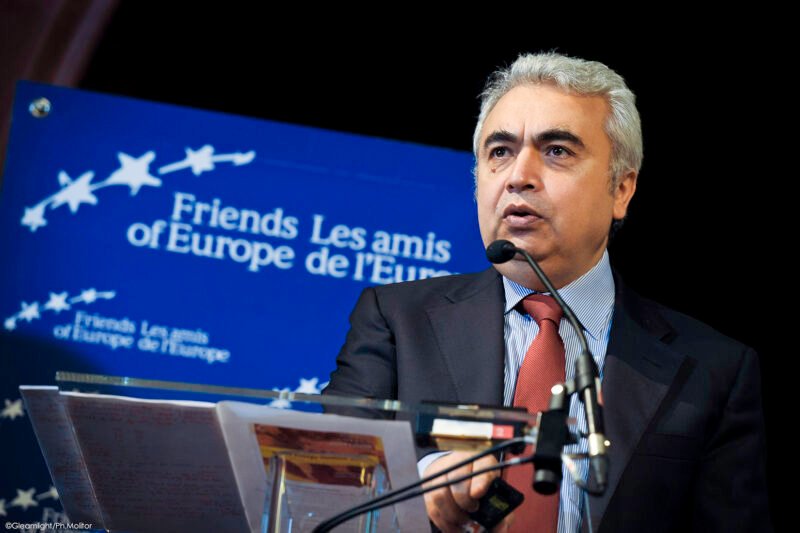
PARIS — Europe still has “maybe about six weeks” of jet fuel, the head of the International Energy Agency (IEA) said in a wide-ranging interview on Thursday. He warned of possible flight cancellations “soon” if oil supplies remain blocked by the war with Iran.
IEA Director Fatih Birol painted a bleak picture of the global fallout from what he called “the biggest energy crisis in history,” caused by the cut off of oil, gas and other vital supplies through the Strait of Hormuz. And the longer it lasts, the worse it will be for economic growth and inflation worldwide,” he told the Associated Press. The consequences will be “higher gasoline prices, higher gas prices and higher electricity prices,” Birol said.
The economic pain will be unevenly distributed and “the countries that will suffer the most will not be the countries whose voices are heard the most. They will mainly be the developing countries. Poorer countries in Asia, Africa and Latin America,” said the Turkish economist and energy expert who has headed the IEA since 2015. But without a solution to the war with Iran that permanently reopens the Strait of Hormuz, “everyone will suffer,” he added. “Some countries may be richer than others. Some countries may have more energy than others, but no country is immune to this crisis,” he said.
‘Slow growth or even recession’
Nearly 20 percent of the world’s traded oil passes through the Strait of Hormuz in peacetime. Birol warned that failure to reopen the waterway within weeks could worsen the impact on global energy supplies.
“In Europe we may have about six weeks of jet fuel left,” he said. “If we cannot open the Strait of Hormuz… we can tell you that we will soon hear the news that some flights between city A and city B may be canceled due to a shortage of jet fuel.” Dutch airline KLM and British budget airline easyJet said on Thursday that they are currently not experiencing fuel shortages, without commenting further on the IEA’s warning.
US airline Delta Air Lines, which regularly flies to destinations across Europe, said it was aware of the “potential jet fuel supply problem” on the continent and was monitoring the situation, although it did not expect any immediate impact. Despite this, all three airlines are among those already experiencing higher costs that have hit a significant portion of their budgets.
KLM will cancel 160 flights to and from Amsterdam’s Schiphol airport next month, which amounts to about 1 percent of the total number of European routes. The airline cited “rising kerosene costs” as the reason and indicated that a limited number of flights “is no longer financially feasible.”
Travelers are already feeling the consequences. In addition to canceled flights, some airlines are increasing ticket prices and surcharges. Birol added: “Many government leaders tell me that if the Strait of Hormuz is not open by the end of May, many countries – starting with the weaker economies – will face enormous challenges. This could lead to high inflation, slowing economic growth or in some cases even a recession.”
Birol spoke out against the so-called “toll system” that Iran applies to some ships, which allows them to sail through the strait for a fee. He said making this system permanent would set a precedent that could then be applied to other waterways, including Asia’s important Strait of Malacca. “Once we change it, it may be difficult to reverse it,” he said. “It will be difficult to have a toll system that applies here but not there.” “I would like to see the oil flow unconditionally from point A to point B,” he said.
Damage to energy installations in the Persian Gulf
More than 110 oil tankers and more than 15 liquefied natural gas tankers are waiting in the Persian Gulf and could ease the energy crisis if they could reach global markets through the Strait of Hormuz, Birol said, adding: “But that is not enough.” Even with a peace deal, war damage to energy facilities means it could take many months for production to return to pre-conflict levels, he said. “More than 80 major installations in the region have been damaged. And of these 80, more than a third have been seriously or very seriously damaged,” he said. “It would be extremely optimistic to think that it will happen very quickly,” Birol said. “It will take gradually, very gradually, up to two years, before we get back to where we were before the war.”
‘Dark shadow’ of geopolitics
Birol said it is incomprehensible that “a few hundred men with guns” – apparently referring to Iranian forces – can hold the global economy hostage. He said his Paris-based agency, which advises governments on energy policy and helped coordinate a record amount of emergency oil releases earlier in the crisis, has been warning for years about the crucial importance of the Strait of Hormuz. The global shock could boost the adoption of other energy technologies, including nuclear power, and “will reshape the global energy map for years to come,” he said.