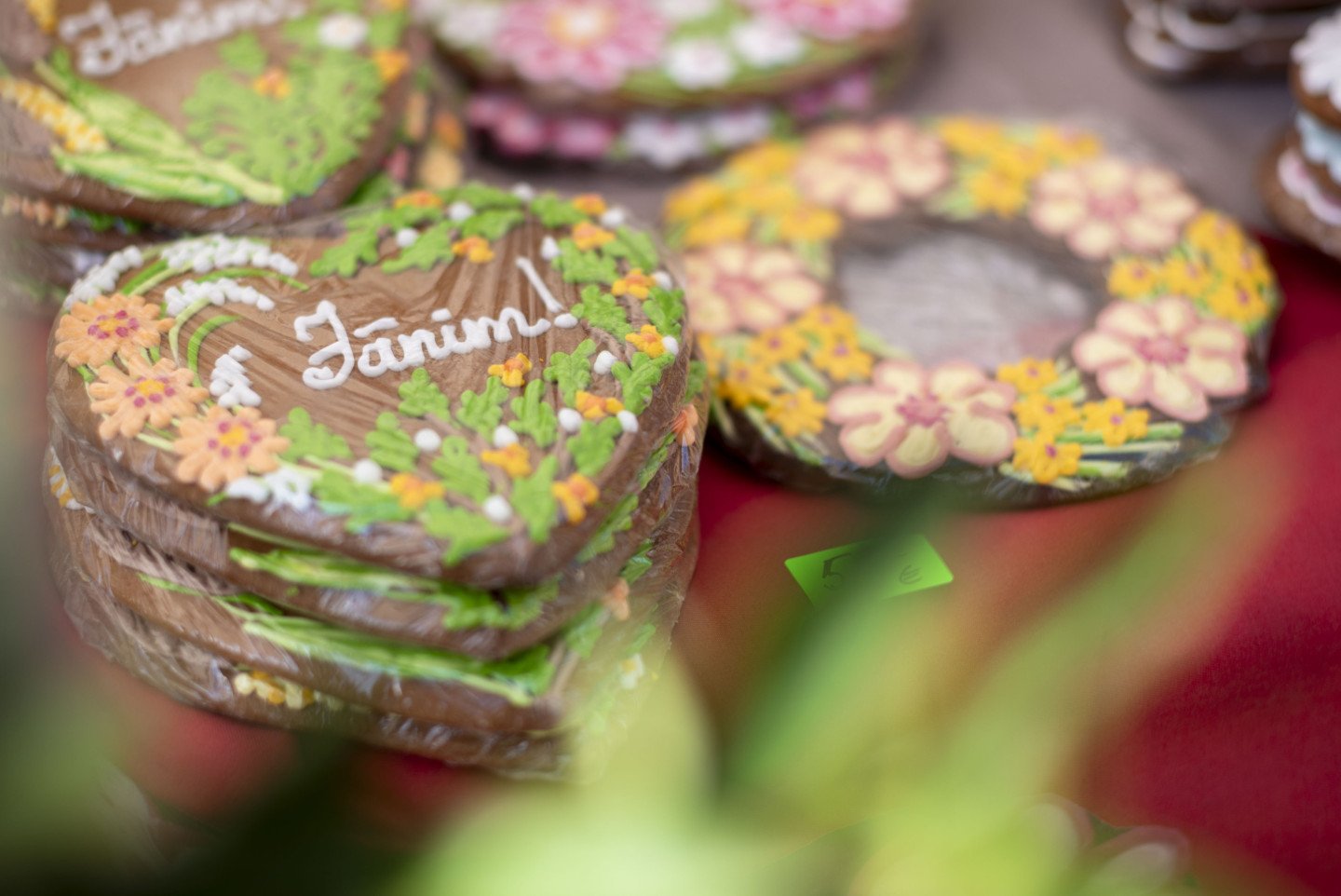
Today in Latvia, St. John’s Day is celebrated, which is traditionally a relaxation after the ritual-rich Midsummer Night’s Eve and St. John’s Night.
The most energetically saturated is the morning of Midsummer’s Day, which is accompanied by such activities as welcoming the sun and washing one’s mouth in the morning dew.
On the morning of Midsummer’s Day, the sun is attributed wonderful properties: it rises silvery or multi-colored and adorns the sky. On the other hand, on Midsummer morning, even before the sun, the owner needs to walk around the fields in black clothes, so that good crops grow.
In many places, it was believed that the morning dew had healing power, so they bathed in it. People waded through the dew, believing that then there would be money in the streets. Women bathed and wallowed in dew to gain beauty. To keep the facial skin white, one must wash in wheat dew. In the morning before the sun rises, also on Midsummer morning, you need to collect dew from the grass, wash the cows’ backs with it – then the cows give a lot of milk.
This time is still suitable for finding a future spouse – the belief says that on the morning of St. John’s Day, the stem of the fern should be cut at the very base. What letter will be visible on the cut, the name of the future husband or wife will begin with that letter.
Also, the belief says that St. John’s Day should be celebrated with songs. In some regions, it was on St. John’s Day that they went to sing to their neighbors. In the past, only when the tracks of the witches were no longer visible in the dewy grass, the cows were driven to the pasture for a short time without being milked. The horses were led to lie down and swim. John’s wort was given to cows to make them more milky.
Wreaths of flowers and oak branches woven around Midsummer should be kept until the next Midsummer, then burned in the Midsummer bonfire. A decoction of St. John’s wreaths was given to cows during calving.
On the other hand, the Catholic Church celebrates today the birthday of St. John the Baptist, the harbinger of Jesus Christ.