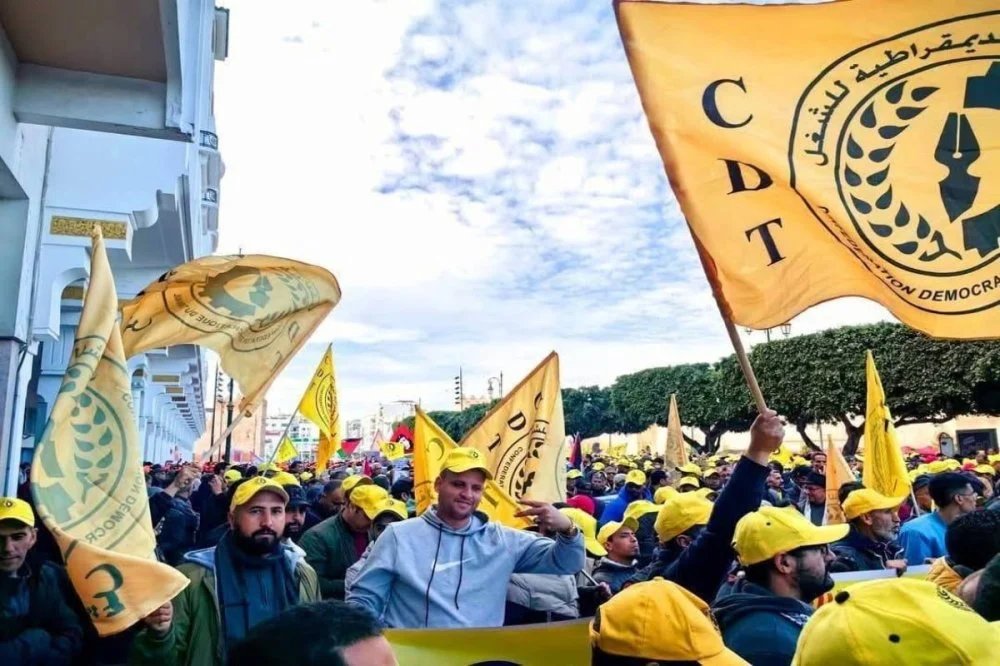
Gathered on June 17 at Casablancathe executive office of the CDT decided to make June 28 a new stage of the union protest. In a press release published at the end of his work, he affirmed that the country is going through a context marked by “the continued high cost of living”, “the deterioration of purchasing power” and “the worsening of social tensions”, while reproaching the Executive for making “the cost of the crisis» to employees and popular categories. THE union believes that the government continues to manage the social dialogue in a “logic of imposition and manipulation” rather than within the framework of an institutional mechanism capable of producing concerted solutions. He also criticizes it for not responding to the “just and legitimate” demands of workers and for compromising the emergence of “a new social horizon based on equity, dignity and social and territorial justice”.
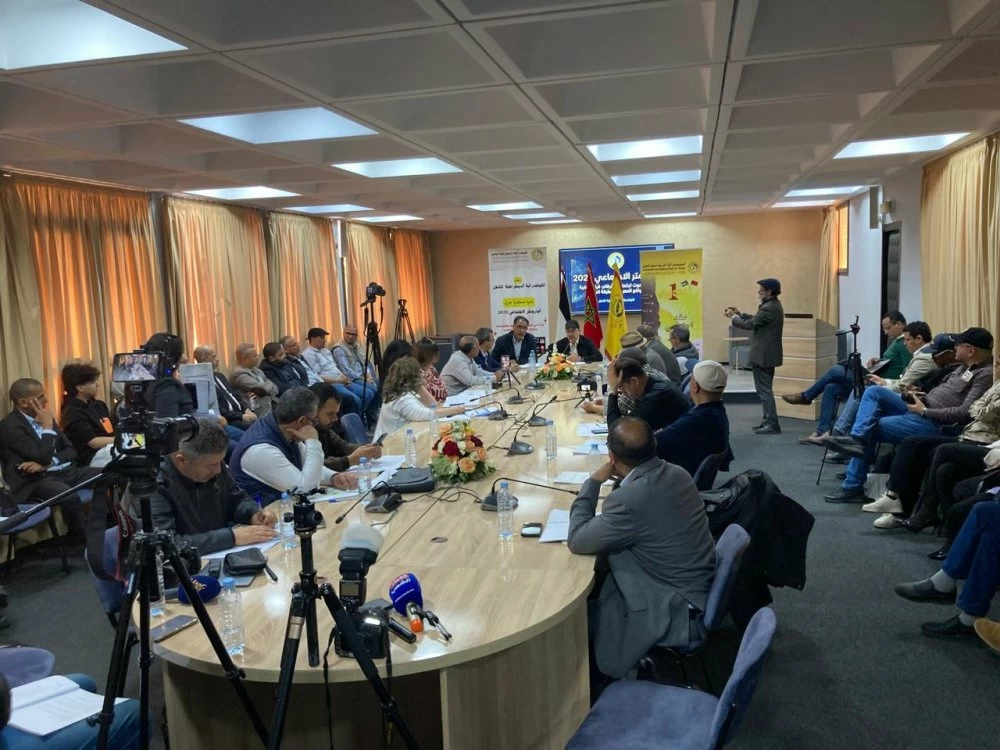
For the CDT, the failure of the April cycle of social dialogue and the regional demonstrations organized on May 17 justify the move to a new phase of mobilization. The center explains that it wants to put pressure on the application of agreements already concluded, the improvement of workers’ living conditions, an end to attacks on trade union freedoms and the opening of a dialogue fully involving representative organizations, particularly on the bill relating to the right to strike.
The executive office thus decided the organization of “a national protest march» on Sunday June 28 in Casablanca. This mobilization aims to obtain “a general increase in salaries and pensions”, to protect incomes in the face of the rising cost of living, to enforce previous social commitments and to defend “trade union freedoms and the right to strike“. The press release also calls for preserving pension gains and opening up new employment prospects for young people who are unemployed. The CDT also asks the government “to assume its political and social responsibilities” by relaunching a social dialogue “real, productive, responsible and binding”. According to her, this approach should lead to “practical and urgent measures”, including salary increasesthere protection of purchasing powerthe execution of previous commitments and compliance with social agreements concluded with union partners.
Trade union freedoms and the right to strike
In this context, the center welcomes the opinion rendered by the International Court of Justice regarding the right to strike. This confirms, according to her, that this right is protected by Convention No. 87 of the International Labor Organization relating to freedom of association and the protection of the right to organize. The CDT sees in this decision “a historic victory for the international trade union movement” and “a clear message addressed to all governments” on the need to respect this right. She recalls that the strike constitutes, in her eyes, “a universal right” and “an inseparable component of freedom of association, collective bargaining and the defense of rights”. On this occasion, the center asks the Moroccan government to ratify ILO Convention No. 87.
THE executive office also calls on all local structures of the CDT to commemorate the 45th anniversary of the events of June 20, 1981. Presented as a founding date in Moroccan trade union memory, this commemoration should give rise to meetings and awareness-raising activities intended to pay tribute to the victims of this period and to renew attachment to the values of “dignity, freedom and social justice”. The text underlines that this anniversary constitutes a moment of fidelity to the heritage of social struggles and of preparation for the national mobilization of June 28.
Fuels, Samir and social precariousness
On the economic front, the CDT strongly criticizes the rejection of two legislative proposals tabled by its parliamentary group in the House of Advisors. The first aimed to cap the fuel prices. The second proposed the nationalization of Samir. The executive office believes that the rejection of these two initiatives reflects “a clear alignment with hydrocarbon lobbies and private interests” to the detriment of citizens. On the contrary, he considers that the relaunch of Samir responds to the imperatives of energy sovereignty, security of supply and protection of the national economy.
The center finally draws attention to the persistence of situations that it considers worrying in several sectors. She cites in particular private security agents, cleaning workers, primary education staff as well as agricultural workers. These categories continue, according to the press release, to suffer from “low wages”, professional instability and the absence of sufficient social guarantees.
In conclusion, the CDT calls on all of its structures to fully engage in the preparation of the June 28 march in order to make it “a stage of strong struggle” and a collective expression of defense of “dignity, rights, freedoms, social achievements and social and territorial justice”.