124 years after the founding of the Republic of Cuba, under a scheme of incomplete sovereignty, the United States once again imposes its terms on the island’s historical experience. What has been announced in recent weeks, something that in Miami is celebrated as a liberation and in Havana is denounced as an attack, resembles the rough trial of a business merger.
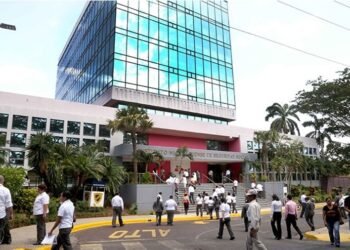
The military consortium Grupo de Gestión Empresarial SA (Gaesa) – a holding company created in the 90s under the control of the Army and today extended to tourism, imports, telecommunications and free zones – is, in practice, the economic core of the Cuban State. That is why Washington’s most recent sanctions have targeted him. These also point to 11 Cuban government officials and the family of President Miguel Díaz-Canel, and to them is added the indictment of Raúl Castro by the Federal Prosecutor’s Office of South Florida, accused of the downing, 30 years ago, of two small planes belonging to the Brothers to the Rescue organization. These are charges whose political instrumentalization is evident, with a very real coercive effect on Havana, especially after the capture of Nicolás Maduro in the presidential residence itself.
However, this battery of measures does not seek so much the annihilation of that elite – which is neither small nor easily replaceable – as the absorption or integration of at least a part of it in a scheme of investments and credits from the United States, with a strong weight of Cuban-American capital. This is suggested by the hermetic and inconclusive conversations between both governments: in them, the Cuban side has shown interest in direct investments, of 100% private capital, in ports, mining, tourism, energy and banking. Punitive pressure and negotiation are, in that sense, two sides of the same process.
The attack on the areas controlled by Gaesa, together with the country’s energy paralysis, has been producing a successive breakup of companies associated with the conglomerate. After the Canadian mining company Sherritt, the hotel chains Iberostar, Meliá and Blue Diamond, as well as the multinationals Visa and Mastercard, have announced their departure, with which more than half of the tourist emporium of Gaviota, one of Gaesa’s tentacles, is immobilized. Tourism, the main source of income for the Cuban economy, which in 2025 had already fallen 55%, could decline by more than 70% at the end of this year.
The neutralization of tourism and remittances completes the oil siege against an increasingly dependent and unproductive economy. The United States has been exercising, de facto, energy control over Cuba for five months. Following the executive order of January 29, 2026, Washington has managed to prevent the regular entry of oil to the island from Mexico or Russia. In turn, the United States enabled a kind of parallel energy channel: the authorization of certain oil and gas exports to Cuba exclusively for private companies and individuals, under the so-called SCP License Exception, which expressly excludes any transaction involving the Cuban government or its institutions. That is, Donald Trump’s government designed a strategy that bypasses to the Cuban State and directly feeds the private sector. In practice, the United States could thus become the main obstructor and supplier of the little energy that reaches the exhausted Cuban population. It is also, in fact, the main seller of medicines and food, and surpasses by far the amounts of humanitarian aid that arrive from China, Russia, Spain, Mexico, Brazil, Colombia or Uruguay.
Raúl Castro is 95 years old and since the succession that left Miguel Díaz-Canel in the Presidency was completed, he has not held formal positions in the State, the government or the party. His successor is a politician born after the 1959 Revolution who came to power along with the new Constitution of 2019. However, that succession has never been fully credible either inside or outside the island.
The tension is linked to the conservative ideology of Cuban power. The succession occurred, but the greatest decision-making capacity was concentrated in a new military, business and bureaucratic elite that emerged from two institutions controlled for decades by Raúl Castro: the Communist Party and the Revolutionary Armed Forces (FAR). This cupular reproduction was reinforced by the continuity discourse – “we are continuity,” Díaz-Canel proudly repeated – of his successor himself.
The official Cuban ideology not only preserved intact the story of the validity of the Revolution, but has reinforced it to the point of exhaustion in recent years. Above a reality that is falling apart, a symbolic plot was woven that attempted to revive Fidel Castro and present his brother Raúl as a different politician from the one he was in office. His attempts at reform between 2011 and 2013 and his diplomatic normalization with Barack Obama between 2014 and 2016 were overshadowed by that continuity narrative.
While the irreversible depression of all economic and social indicators starting in 2018 took its toll on the Díaz-Canel government, it appeared increasingly repressive and intolerant of popular protests, artistic and intellectual dissidence, women’s activism, LGBTI+ or Afro-descendant communities, and voices in favor of a certain openness within power, in a counter-reformist turn that coincided with the emergence of Trumpism in the United States.
The criminal accusation of Raúl Castro occurs within the framework of the collapse of the island, its energy siege, its factual dependence on the United States and the rearmament of hemispheric interventionism in Washington, based on the updating of the Monroe Doctrine (or Donroe, as it is called in reference to Donald Trump). After the capture of Maduro and his judicial prosecution in New York, the dismantling of the Bolivarian bloc only left Cuba standing, which lacked a transition project.
The paralysis of the island, recognized by the Díaz-Canel government itself, opened the possibility of a negotiation between Washington and Havana. Representatives of both governments have met at least three times between February and May 2026. With the sanctions against Gaesa and the case opened against Raúl Castro, the point of maximum pressure is reached, prior to the consummation of the pact or a greater and irremediable escalation in the Caribbean.
The United States’ bet is none other than to enroll Cuba in a large network of Caribbean extractivism. Trump makes this clear by encouraging the sale of the assets of the Canadian mining company Sherritt – which has been exploiting nickel and cobalt in Cuba since the 1990s – to Gillon Capital, an investment fund linked to Ray Washburne, a former official in his own administration. If the operation goes through and Sherritt becomes majority-owned by the United States, the company could request a special permit from the Office of Foreign Assets Control to operate on the island, something viable in the case of strategic minerals such as nickel and cobalt. The blockade would not be repealed: it would simply stop applying to new owners. What for decades was an instrument of political pressure would become, through deeds, a lever of preferential access for American capital.
On the Cuban side, the presence of Raúl Castro’s grandson, Raúl Guillermo Rodríguez Castro, popularly known as “El Cangrejo”, in several of the attempts at dialogue between the governments of the United States and Cuba in recent months makes clear the dynastic tendency of the regime. For years, the island’s government has denied the existence of a family clan and has insisted on the weight of its institutions. But Rodríguez Castro’s prominence in this entire process seems to function as a confirmation of family power. It remains to be seen whether these negotiations constitute a distracting resource, allowing the island’s government to gain time without making decisive concessions, or the starting point of a true commitment, the outcome of which could be the managerial coupling that is hinted at in the negotiations.
For the moment, nothing seems to be able to stop a US recolonization of Cuba, after the island’s long periods of historical dependence on the Soviet Union and the Bolivarian bloc. The only thing that could contain the current oligarchic tendencies would be what no actor involved contemplates as an outcome: a true citizenship of the Republic, a rescue of the original sovereignty of the Cuban people or a peaceful transition to a democratic system. Something that requires the active participation of a society dismantled by six decades of nationalization of social life, exhausted by an endless crisis and without confidence in the future.
*This article was originally published in New Society.