

Around a hundred visitors attended the Sloart gallery’s spring auction. Photo: Sloart Gallery and Auction House
Twelve thousand for the works of Drago Tršar and Matej Sternen
Auctions of works of art are still the exception rather than the rule here. At the auction organized by the Sloart gallery on Saturday, works by Slovenian artists of various periods and styles were offered for purchase. Although there were quite a few famous names among them, there was no interest in many works: 20 of the 57 works of art were sold, and a total of 94,200 euros were collected.
Saturday’s spring auction of the Sloart gallery was attended by about a hundred visitors, among whom were approximately 30 bidders, including a collector from Italy. Most of the offers were submitted in writing, but some buyers also participated online. The total value of all 57 works offered at the auction was estimated at approximately 400,000 euros.
Recognized Slovenian authors
Among the artists whose works were offered for sale were well-known names of Slovenian fine art, such as Janez Bernik, Jože Ciuha, Gustav Gnamuš, Božidar Jakac, Rihard Jakopič, Tone Kralj, Metka Krašovec, Ivan Napotnik, Veno Pilon and others. Despite the eminent authors, there was no interest in all the works of art; the auctioneers paid the most attention to the untitled work by Tone Kralj, for which four bidders competed, while there was also a lot of interest in the works of Jože Tisnikar.
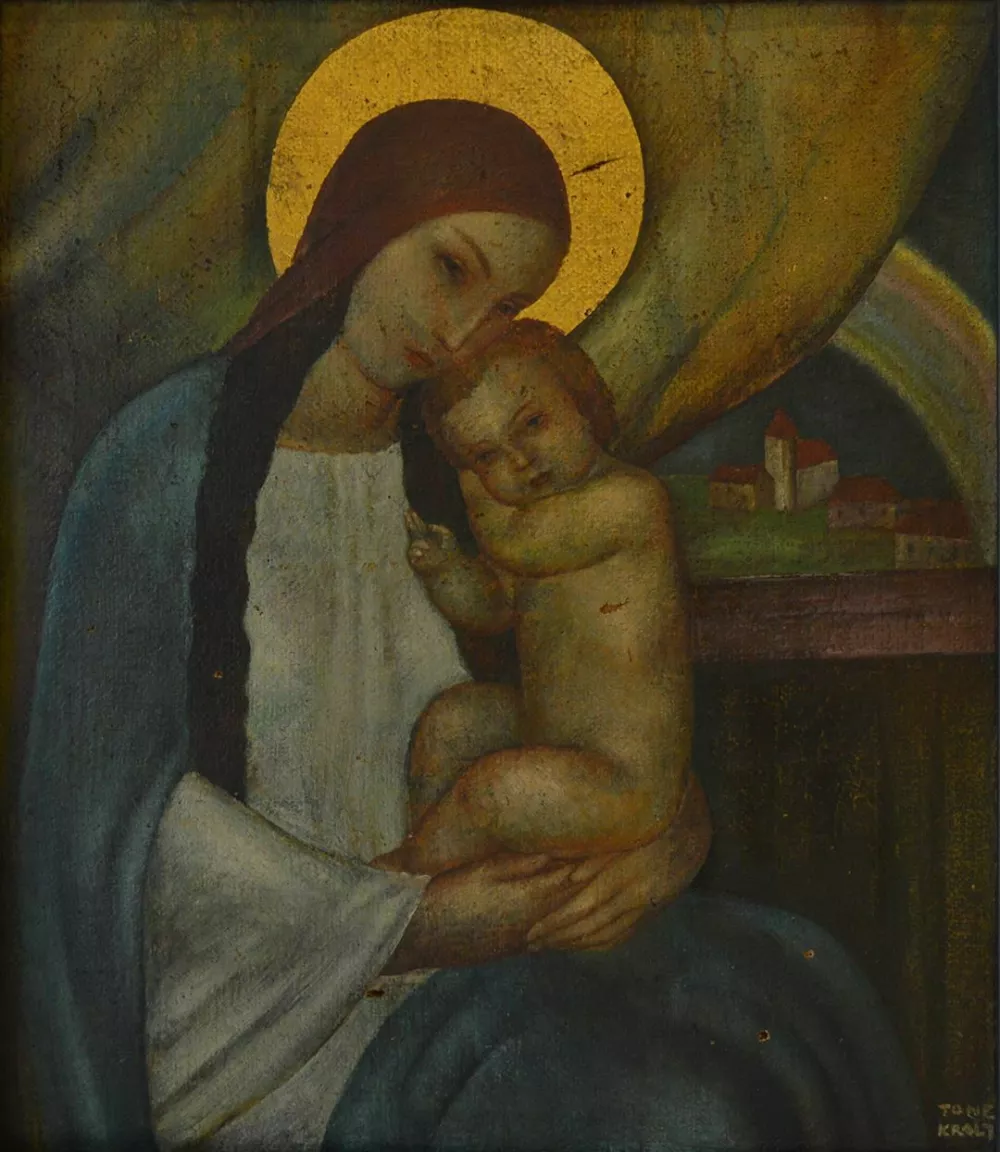
The highest price was achieved by an untitled bronze statue of Drago Tršar and a portrait of dr. Fran Windischer, painted by Matej Sternen. Both parts reached a price of 12,000 euros. The aforementioned work by Tone Kralje followed with a price of 11,280 euros and Self-portrait with a raven Jože Tisnikar, which was sold for 10,800 euros. Also sold were works by Ivan Napotnik, Saša Šantlo, Albert Sirek, Rik Debenjak and Stanet Kregar, two works each by Metka Krašovec and Safet Zec, and four more paintings by Tisnikar.

The Sloart gallery has traditionally included nine works of art by contemporary artists in the spring auction, with the aim of stimulating the development of the contemporary art market and attracting young collectors to the auction. The asking price for all works was 1,000 euros. Among those sold were works by Patrik Dvorščak (2,640 euros), Ira Marušič (1,560 euros) and Matej Čepin (1,200 euros).
Auctions are not yet customary
As the director of the gallery said Damjan Kosecthis time the turnover was slightly higher than at previous auctions. “Like the last two or three auctions, I could say that we are moderately satisfied. We sold something. However, since it is essentially a novelty anyway, it will take a few more years for participation in such events to become normal for most people. Some people are still embarrassed to come,” he explained after the end of the auction.
As before every serious auction, the authenticity of the works was carefully checked this time as well. As Kosec pointed out, all works are first checked internally, and before the auction, the authenticity of the works was confirmed by a four-member committee, which consisted of renowned experts Aleksander Bassin, Brane Kovič, Nada Mađarac and Ferdinand Šerbelj. “They did not eliminate any work at this auction, but at the previous ones there were some. We also have a guarantee on all the works that are auctioned, and if in the future it might turn out that one of the purchased works is not authentic, the buyer can enforce it.”
Chaotic situation on the market
Kosec says that the Slovenian art market has been in a kind of chaotic decline for the last few years, mainly due to the shadow economy and a large number of forgeries. “It is estimated that somewhere between 60 and 80 percent of fakes appear in the country. In all this, nothing is done to prosecute these people, there is no case law, there are no positively solved cases. Even the financial administration and others in the area of the shadow economy do nothing, the courts do not punish fraudsters, and this erosion also affects the art market. Of course, external factors, such as the geopolitical situation, also have effects on the art market,” Kosec outlines the situation, adding that this is precisely why they decided to try to reposition the art market. “We only do business with invoices, we also started organizing auctions, mainly so that the prices would balance and stabilize, and then I hope that the Slovenian art market will also see a certain growth.”
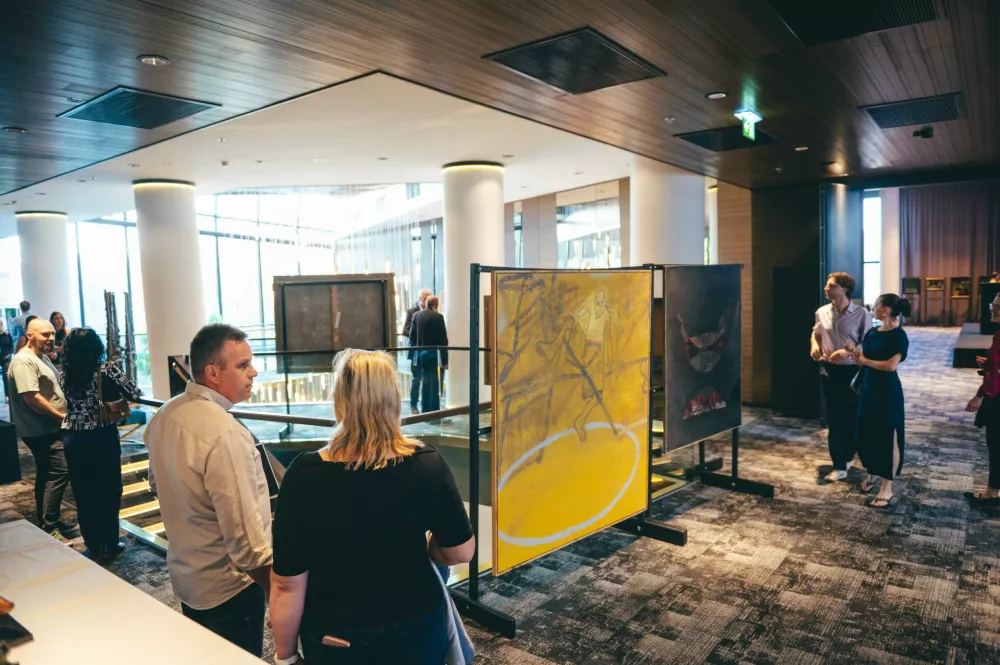
Auctions should be a kind of indicator of what price an individual author can achieve. But Kosec believes that this is not yet the case here, as time and a larger number of auctions are needed. “As auctions become commonplace and collectors flock to them, the prices that individual authors achieve at auction will also become more relevant. The price may now be an indication of how much the individual works could be worth, but for the time being the auction cannot be an indicator of the actual value.” The Sloart gallery therefore wants to establish a tradition of two public auctions a year; as Kosec adds, the goal here is not just the sale of works of art, but the long-term development of the secondary art market, which will be based on professionalism, trust and publicly available results.