The isotonic and rehydrating drinks They stopped being exclusive for athletes. Today they are part of the daily routine of consumers seeking physical recovery, well-being or simply staying hydrated during the day. This is revealed by the most recent study by Arellano Consultoría para Crecer on the category, which also shows a strong dispute between Sporade, Gatorade and Powerade for leading the recall and preference of Peruvians.
According to the report, the penetration of the category currently reaches 27% at the national level, although with important regional differences: in Lima it reaches 32%, while in the provinces it is 19%.
“This category continues to grow. If only 27% consume it, it still has a lot of room to grow,” explains Jorge Rubiños, commercial manager of Arellano Consultoría. He adds that growth no longer responds only to sports practice, but also to daily habits associated with fatigue, recovery or well-being.
“Before, they were categories closely associated with sports, but today we believe that they are now more linked to people’s daily activities,” he said.

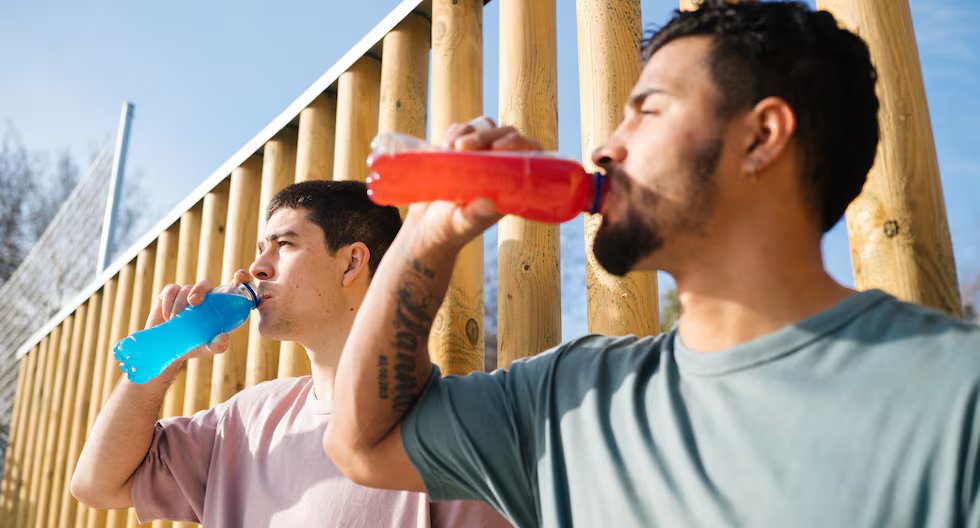
Isotonic and rehydrating drinks are no longer exclusive for athletes.
The study shows that Sporade leads the ‘top of mind’ (TOM) recall, that is, the first brand that comes to the consumer’s mind when they think of isotonic drinks. The AJE brand gets 39% mentions, followed by Gatorade with 35% and Powerade with 11%.
In spontaneous recall—when asking what other brands the consumer remembers—Gatorade leads with 78%, just three points above Sporade (75%), while Powerade reaches 49%.
For Rafael Vega, Country Manager of AJE Peru, this positioning responds to a strategy sustained for years. “Sporade was born with a clear philosophy: to offer quality hydration within everyone’s reach, accompanying people in their daily lives and in every moment of effort,” he says.
The executive highlighted that the brand managed to consolidate itself thanks to a combination of competitive price, national coverage and connection with Peruvian sports. “Sporade has managed to position itself as a brand linked to performance, perseverance and effort,” he says.

Isotonic and rehydrating drinks are no longer exclusive for athletes. (IStock)
/ Capuski
In addition, he details that the brand has been reinforcing formats and presence on different channels. Among the recent initiatives he mentioned the 625 ml bottle with a sports cap and the 1.5 liter presentation for shared consumption. It also highlights the brand’s commitment to women’s sports and the sponsorship of the Peruvian Women’s Volleyball League, in addition to its presence in League 1, League 2 and the Women’s Soccer League.
The research also reveals that Sporade leads in purchase frequency with 36%, compared to 30% for Gatorade. However, when asking which brand is the consumer’s favorite, both practically tie: Gatorade reaches 34% and Sporade 33%.
For Rubiños, this difference reflects a problem of accessibility rather than preference. “Perhaps when the consumer goes to the point of sale they cannot find Gatorade or it seems too expensive to buy it more frequently,” he explains.
From cbc Perú, a company that markets Gatorade, they highlight that the brand’s positioning responds to a consistent strategy focused on sports hydration and closeness to the consumer.
“The positioning responds to the consistency of the brand over time, supported by our functional sports hydration proposal and by our proximity to different disciplines, athletes and sporting events,” says Alessandra Medina, marketing manager of cbc Peru.

Isotonic and rehydrating drinks are no longer exclusive for athletes.
The executive adds that the company has prioritized expanding contact points and strengthening its presence in traditional channels to get closer to the consumer. “Today consumers are looking for greater variety, practicality and accessible options. We are constantly working to diversify our portfolio and strengthen our presence in different sales channels,” he comments.
Likewise, he maintains that the brand’s objective will be to continue consolidating the link with younger and more active consumers, both in physical and digital channels. “We will continue to focus on initiatives linked to sport, hydration and well-being,” he indicates.
Although further back in recall and preference, Powerade appears as the third strongest brand in the category. Coca-Cola assures that the growth responds to a strategy focused on expanding consumption beyond the professional athlete.
“With the ‘Pause is Power’ platform, we bring the message of recovery to a more diverse audience,” says Maricruz Gonzáles, senior director of Marketing at Coca-Cola for Peru.
The executive also highlights the renewal of formulas and the link with international sporting events such as the 2026 FIFA World Cup.
In parallel, Powerade has been reinforcing formats, flavors and coverage in traditional channels.

Isotonic and rehydrating drinks are no longer exclusive for athletes. (Photo: iStock)
/ Oscar Lopera Martos
One of the most important findings of the study is the change in the attributes valued by the consumer. The main selection factor is that the drink “hydrates well and helps recovery after physical exertion”, followed by “has a pleasant taste” and “is low in sugar and calories”.
“The perception of effectiveness continues to be one of the main drivers of choice,” explains Rubiños. He adds that today the consumer seeks practicality, well-being and a feeling of recovery even outside of intense sporting activities.
The trend also opens opportunities for new brands and categories linked to functional hydration and serums. Brands such as Electrolife, SueroX and Life SOS appear in the study, although still with smaller participations. “Serums are going to continue rising,” anticipates Rubiños.
For the Arellano executive, the growth of the category still has a long way to go in the Peruvian market, driven by consumers who prioritize well-being, energy and active lifestyles. “The category has important opportunities to innovate in new flavors, sugar reduction and proposals more aligned with nutrition and well-being,” he concludes.