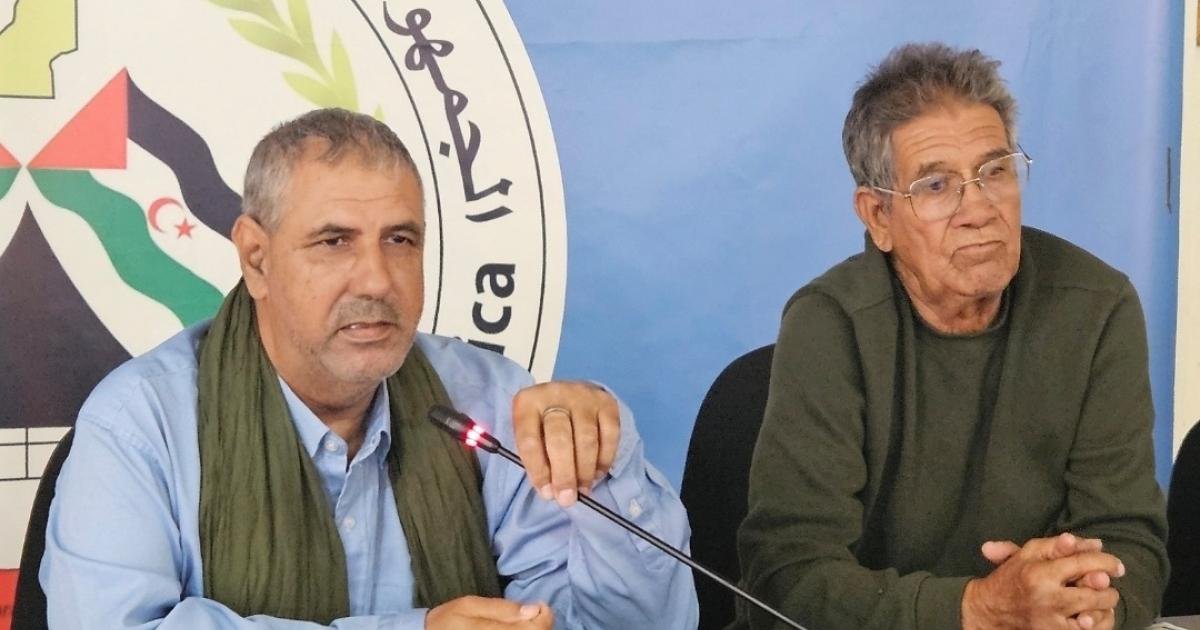
Martyr Al-Hafiz, June 21, 2026 (SPS) – Today, Sunday, at the headquarters of the National Council, the Minister of Justice, Mr. Mohamed Embarek Sidi, reviewed the experience of the judicial system and the development of justice in the Sahrawi state.
This was during a lecture during the spring session of the National Council, in the presence of a member of the National Secretariat, President of the National Council, Mr. Al-Bashir Mustafa Al-Sayyid, and members of the National Council.
During which the Minister of Justice highlighted the elements of building the Sahrawi judicial system and its development in light of the specificity of the reality in which the Sahrawi state emerged.
In his presentation, the Minister discussed the various stages associated with the establishment and development of the judicial system, stressing that the exceptional reality of the Sahrawi Republic in light of the conditions of asylum and the development of Sahrawi society imposed the need to build a judicial system capable of responding to the requirements of organizing society, resolving disputes, and consolidating the rule of law.
He explained that justice constitutes one of the basic pillars of building institutions, and that the development of the judicial system was linked to the necessity of providing legal mechanisms that regulate relations within society and protect rights and freedoms.
The lecturer also touched on the applications of the law on the reality of life, and the difficulties and challenges facing the justice sector, especially with regard to the necessity of strengthening the culture of resorting to judicial facilities, and addressing the phenomenon of alienation and migration from the judiciary, in a way that ensures citizens’ access to justice and consolidates confidence in institutions.
On the institutional side, the Minister of Justice provided an explanation about the organization of the courts in accordance with what is stipulated in the Constitution, especially Chapter Three related to the judicial authority, explaining the structure of the judicial system and its sequence, starting with the courts of first instance, through the Court of Appeal, all the way to the Supreme Court.
He also discussed the relationship between the Ministry of Justice and judicial institutions, and the role of the Supreme Judicial Council, stressing the importance of the independence of the judiciary as a basic guarantee for achieving justice and applying the law.
The Minister also touched on the organization of the corps of judges, and the conditions and mechanisms related to the qualification of judges and the development of their performance, which contributes to building a judicial apparatus capable of keeping pace with the developments and needs of society.
This lecture comes within the framework of the training program for the spring session of the National Council, which aims to enhance legal culture and exchange knowledge on various issues related to building institutions and the state of law. (SPA)