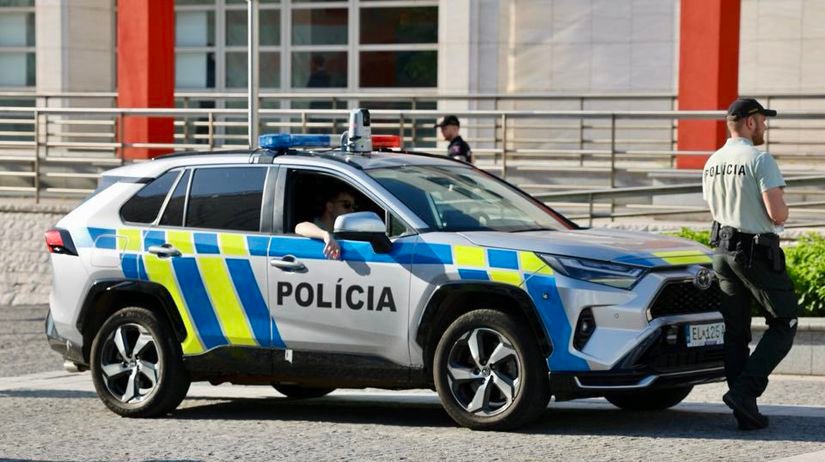
The times, when a minor disturbance or offense could be “ironed out” with a ridiculous block fine, are definitely coming to an end. From July 15, a large-scale amendment to the law on misdemeanors comes into force, bringing a literal earthquake.
If you don’t know how to get into your skin, the state will not only reach much deeper into your pocket, but can even put you in a reflective vest and send you to sweep the streets. Let’s look together at what is changing, what amounts we have to prepare for and why lying to the authorities will no longer be cheap fun.
This time, the legislators decided that gentle warnings and symbolic sanctions no longer work for undisciplined citizens. The announced wording of the amendment to Act No. 372/1990 Coll. on misdemeanors, changes the philosophy of punishing petty crimes. The main motto is: pay as much as you can, and if you don’t have money, work it for the benefit of the community.
End of thirty-euro fines, thousands are coming
At the outset, it is necessary to mention a fundamental change that will be felt by everyone who gets into a crosshair with the law. The general limit of the fine that could be imposed, if another law did not say otherwise, is increased from the original and now laughable 33 euros to 100 euros. However, an even more significant jump occurs in block proceedings. While until now you could get a maximum of 250 euros on the street, now it will be up to 750 euros.
The new paragraph aimed at chronic “problemists” is also an interesting whip. If you commit an offense against civil cohabitation or against property repeatedly within twelve months, the office can impose a liquidation fine of up to 2,000 euros. In block proceedings it will be equal to one thousand and in order proceedings 1,500 euros. The state thus makes it clear that recurrence will no longer be tolerated.
News that will change the streets: Minor municipal works
The most fundamental and most anticipated change, which has been whispered about for months, is the introduction of a completely new type of penalty – minor public works. The creators of the law define it exactly in the statement: “Minor municipal works for the purposes of this law are works carried out in the interest of the municipality, intended mainly for the creation, protection, maintenance and improvement of the environment, care for the protection and preservation of cultural heritage, support for education, development and provision of social services…”

In practice, this means that if you do anything, the administrative authority can order you from 20 to 150 hours of unpaid work. You will have to do it in your free time, personally and for the municipality in which you live. In order for the sanction not to drag on indefinitely, the law stipulates the obligation to work at least ten hours a month, while you must complete the entire “shift” within one year of the decision being valid.
Do you feel like you can just avoid it? A mistake. The amendment goes hand in hand with the amendment of the Criminal Code. If you do not attend municipal works without a serious reason or deliberately sabotage them, you are directly committing a criminal act. This is an extremely tough, but apparently necessary step to ensure that this sanction is not just a scrap of paper.
Work can also be imposed on juvenile offenders (from 10 to 75 hours), but the law remembers their protection. The work must not endanger their health, safety or moral development. Elderly but sick citizens can also breathe a sigh of relief – disabled people and people unable to work for a long time will not be charged with municipal work.
Astronomical sums for road pirates and liars
If you are one of the drivers who make a schedule out of the regulations, pay attention. Driving without a driver’s license, or at the time of its detention or during a ban, will cost you quite a lot. The upper limit of fines in some traffic sections rose from 331 euros to 1,000 euros, and for the most serious offenses it jumped from 3,319 euros to a downright devastating 4,000 euros.
Fraudsters and speculators will also get a hard time. If you intentionally provide incorrect or incomplete information to a state authority or municipality in order to obtain an unauthorized advantage, be prepared for a sanction. Depending on the seriousness of the offense, fines for offenses in the general internal administration section go up to 300, 500, and in some cases up to 1,500 euros.
Did you play a police officer? You will regret it
The new wording of the law also cracked down on people who abuse uniforms. Violation of the ban on using the signs “Police”, “Police”, and even the historical sign “GENDA” or uniforms of the financial administration will cost you from 300 to 1,500 euros. In this way, the state wants to definitively prevent civilians from showing off on the streets in clothes that can be confused with real law enforcement officers, which in the past often led to confusing and dangerous situations.
Photos of rioters publicly on the Internet
From the point of view of an ordinary citizen, the new authority of the police, which concerns the clarification of offences, is also extremely interesting. If someone commits an offense against public order, property, extremism or acts as an aggressive sports spectator, and the police fail to establish his identity in the usual way, public shaming comes into play. The police now have the right to publish your face from the recording for a period of 30 days. Identification of perpetrators using social networks and the public thus received a clear legal framework.
The area of extremism is also regulated. The definition of hate speech is expanded to include sexual orientation, real or perceived origin and skin color. Fines for offenses of extremism have been raised to 1,000 to 1,500 euros. However, the law intelligently protects science and education – the publication of extremist material will not be a criminal offense if it is demonstrably used for research, collection or educational activities.
New rules for modern society
Access to drugs was also revised. The original vague term is changing to a precise definition that includes not only narcotic and psychotropic substances, but also other substances “capable of adversely affecting the human psyche, its control or recognition abilities…” Ecology has not been forgotten either – soil pollution with oils, biocides or fertilizers will cost you 300 euros.