The danger that comes with prosperity is that people gradually forget what it took to achieve the success they are enjoying the fruits of.
Could there be a danger that some Icelanders have less confidence on behalf of their nation now than when less than 100,000 Icelanders lived not only in the most densely populated country in Europe, but also in the poorest? Then the nation was convinced that it could and should be independent, manage its own affairs, rely on itself and take the risks that came with it.
It has now been almost 200 years since Baldvin Einarsson, the Fjölnismen and many other people of our country started a struggle to restore the independence of a nation that counted more than 50 thousand people. A nation that had for centuries primarily fought to survive and was less populated than in the Age of Empire more than 600 summers before.
Jón Sigurðsson followed the struggle of the pioneers with exceptional humor and on the basis of what he believed to be true and right. He did not let what seemed to be the superior power of the bureaucrats and system men in Copenhagen knock him out and he did not fall for their golden messages.
The day today
Today, when we celebrate the birthday of Jón and the Republic, a shadow rests over the celebrations. A shadow of apathy and ingratitude. I am not referring to the degree to which the solemnity of the national holiday has decreased, although that is certainly a cause for concern. In many places, celebrations for the day are barely visible and pale in comparison to how Norwegians celebrate their national holiday. The nation that Icelanders left in order to found a different and better society.
No, the shadow, it could even be called the yoke, which now rests on the joy of the country’s sovereignty is the fact that the nation has been led into internal conflict over the least important thing. A conflict about whether it is right to hold on to the belief that we are best suited and fully capable of managing our own affairs. Or whether there may be more to be gained from relying on the guidance of unelected foreign officials and entrusting them with supreme power in the areas of legislative, executive and judicial power as well as supreme power on our behalf in dealings with other nations.
The experience
This is now happening after the faith that our ancestors had in more difficult conditions than we can imagine has proven itself for more than 100 years. After Iceland went from abject poverty to becoming one of the most prosperous countries in the world in just a few decades. Soon after, the importance of the right to sovereignty has been repeatedly proven in getting Iceland out of trouble and ensuring great progress, including the biggest and fastest economic turnaround that any country has achieved, at least in recent times. This also happens after the European Union has lurched from one crisis to another and is going through what the most ardent integrationists even call an existential crisis.
All of this is justified by a cover-up or a pretense that is so overwhelmingly far-fetched that those who use it should be ashamed.
The propaganda
We are told that if we help the European Union, we can get cheaper pizzas. “Share the sovereignty and get a pizza offer, extra cheese included and do you know how cheap coffee is in Hungary?”“
Unsubstantiated claims about lower food prices (food prices in Sweden and Finland are relatively higher compared to Iceland now than before their EU membership) are never accompanied by a comparison of wages and purchasing power.
The same applies to the promises of lower interest rates and cheaper housing, which have been repeatedly corrected recently. The people who see Icelanders as simpletons who swallow glass beads and wash them down with snake oil just don’t care.
We are dealing with a demagogue with a goal. The goal is to bring Iceland into the European Union, for better or for worse. It does not matter how often they are corrected. The falsehoods and untruths are just repeated all the more often.
The detour
No other European country has had a government that has such a low opinion of its own citizens that they think they can make them believe that applying for membership in the European Union is about something completely different than the will to join the Union. It’s just about looking for offers, seeing what the association offers to give us.
Expectations are created for special exemptions for Iceland, which is a kind of promised country of the EU, regardless of the basic rules of the European Union. As the street vendors say: “Special price for you my friend.“
However, there is no answer to the question: Why should we plunge society into years of conflict and embark on an expensive and time-consuming mission in the hope of obtaining individual, limited exemptions from the EU regulatory framework in order to continue to manage a small part of what we already manage? Yes, and at the same time ceding supreme power in the field of legislative, executive and judicial power to foreigners who work to protect the interests of others than ours.
Work to be done
It is indeed a job to work in the Icelandic Republic. But the tasks are nothing but easy compared to those our ancestors had to solve to build the position we now enjoy.
The foundations are so solid that common sense and logical decisions taken based on Iceland’s position and interests can solve all issues, inflation, interest rates, housing issues, state management, wage issues and any project we face.
As long as we don’t undermine the pillars.
A seat at the table
Then there’s the phrase about “a seat at the table.”“. We already have a seat at the table around the world on our terms. But the most important thing is that we Icelanders have a seat at our own table where we make decisions about our own affairs.
Six seats in the European Parliament (and cheaper goat cheese) are no justification for giving up full control of our affairs (and Icelandic agriculture).
If Iceland were to be included in the EU, we would get six seats in the European Parliament, which would presumably be made up of around 800 representatives with the participation of the poor nations that we would be supposed to support.
The European Parliament is virtually powerless and cannot even submit bills. It shall process what comes from the officials in the commission.
At the National Assembly in 1851, Icelanders were invited to “share the sovereignty.”“ with the Danes and as a result get six seats in the Danish parliament, which was then more powerful than the EU parliament now. The representative of Iceland’s answer, in the words of Jón Sigurðsson, was: “We all protest.”“
Today is truly a reason to celebrate Jón’s birthday and Iceland’s independence.
There will be no less reason to celebrate at the end of August when Icelanders will hopefully have seen through the deception and protest (almost) all.
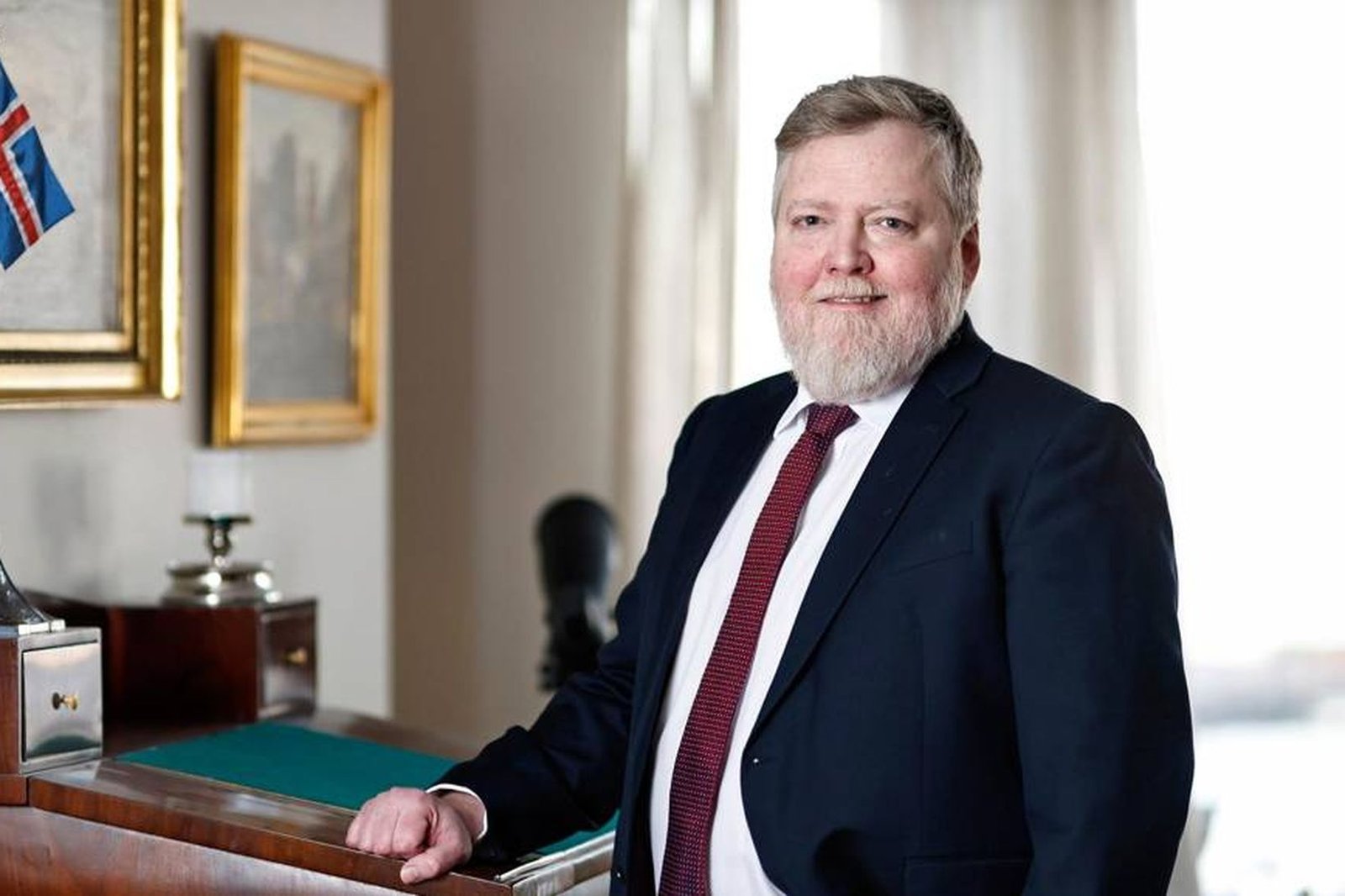
Sigmundur Davíð Gunnlaugsson, chairman of the Center Party.