Frontline health and social care professionals who deal with patients daily have a unique view on how things could be done better.
The HSE’s Spark Innovation Programme taps into this by encouraging them to share and act on ideas for improvement. It began with doctors in 2017 and has since expanded to involve other health and social care workers, including pharmacists.
People tend to talk about “thinking outside the box”, says Anna Marie Kiernan, a Spark nursing and midwifery fellow, but what she loves about innovation is believing that “there isn’t a box… To think freely”. Instead of looking at ways to circumvent barriers, it means starting with the solution and then working backwards to adapt, if necessary, to remaining barriers.
“That’s why this is such a breath of fresh air on the front line, that you’re encouraged to be engaged and involved in what the solution is.”
A day-long Spark summit on June 16th in the Dublin Royal Convention Centre in Dublin 8 will showcase the work of those funded by the Spark programme.
Grants range from up to €5,000 for Spark Seeds, to a maximum €90,000 for Spark Impact. A separate fund offers consultants on the public-only contract €8,000 individually, or up to €50,000 pooled for one project. With the summit, “we’re really trying to highlight that these changes in service are based on what the patient need is”, Kiernan says.
The awards recognise those who are going above and beyond to improve frontline care by pursuing these projects in their spare time. The day also gives others the incentive, she suggests, “to try and transform how we think and how we work, because it’s a very different way of thinking”.
As a Sparks fellow, Kiernan, an advanced nurse practitioner in pain medicine, is working on the development of a mindfulness-based programme that can be delivered through a phone app to give a virtual reality experience to patients in the community with chronic pain.
“Spark are supporting me and looking at how to scale it into other specialities and other areas, like labour and delivery.”
Here we look at just four of this year’s award-winning Spark projects that will feature at the summit.
Children with additional needs
Seeing her son Teddy “able to be a ‘regular’ three-year-old making a beeline to the water” was a special joy for Natasha Boyce.
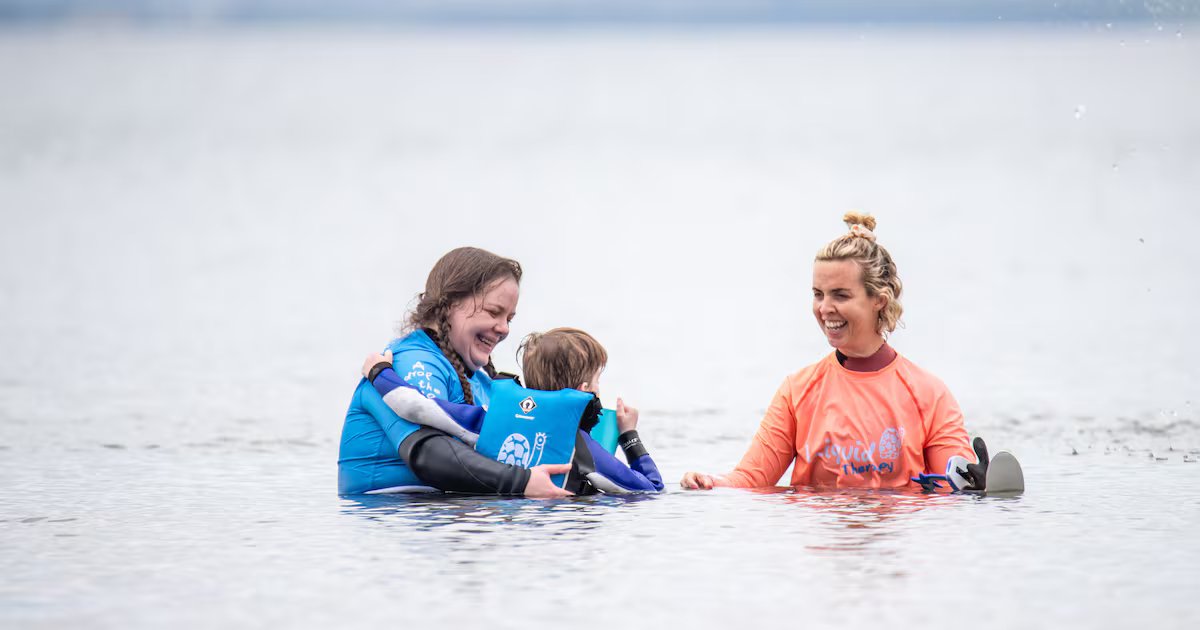
He has spina bifida with hydrocephalus and uses a wheelchair, so a carefree day out at the beach that most families take for granted is normally out of the question. But the Making Waves project in Co Donegal made it possible.
“To the passersby we were just your average Irish family with two kids splashing, jumping, eating sand, drinking sea water and crying when it was time to leave,” she says. “In the water there are no looks of pity, no staring at walkers or splints or wheelchairs. There’s no fumbling through a world that wasn’t built for families like ours.”
Katie Stack, a children’s occupational therapist with the Children’s Disability Network team in Donegal North, says: “Children with complex disabilities have real challenges participating in real-life community activities like going to the beach. We wanted to address that gap.”
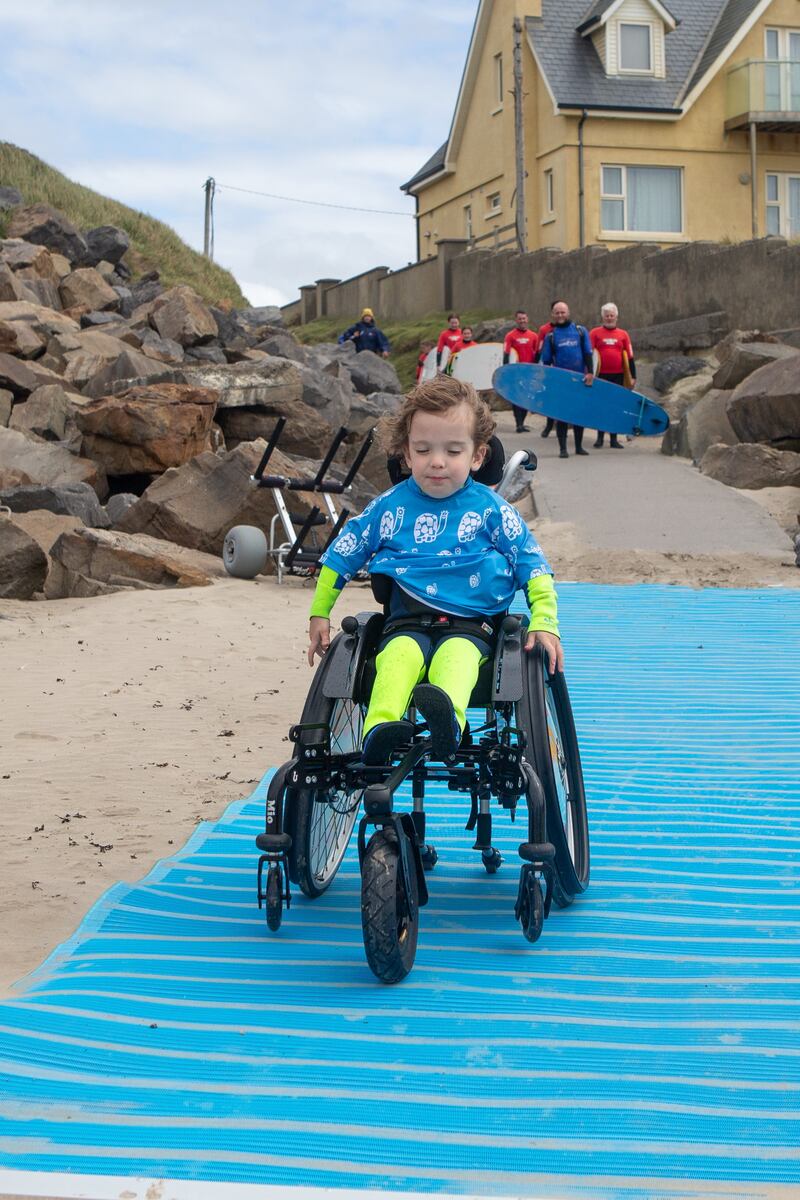
To do that, they co-designed the project with five families and Liquid Therapy, which specialises in inclusive and adaptive surfing. “We didn’t just create a programme between us – we wanted to have a real systems change as well,” says Stack. “We recognised [that] for these families to access the beach, we had to go wider than our team.”
They negotiated with the local authority to provide beach mats for wheelchairs to travel over. Then they organised a team around the child and family. Alongside Liquid Therapy’s surf instructors, there were occupational therapists, physiotherapists, early years specialists and social care workers on the beach.
“We had surf instructors in case discussions, we had clinicians on the beach,” says Stack. “At the heart of all of that was the little one and their family.”
They created beach sessions with therapeutic goals, using adaptive equipment such as the access mats, specialised beach wheelchairs and special surfboards. “We found a way to help them participate and just have fun with their mummies and daddies and their brothers and sisters.”
In doing that, Making Waves took all logistical problems away from the parents. “One of the actually most striking things,” she recalls, “was a mum that said, ‘I got to hold my child’s hand walking alongside them. I didn’t have to push their chair’.”
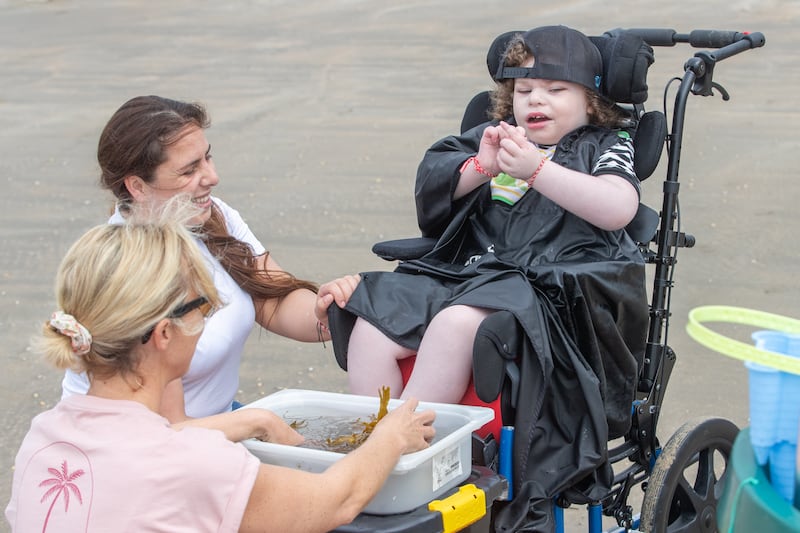
While they were able to bring some children into the ocean, those with the most complex needs had the ocean and beach experience brought to their wheelchairs. They could immerse their feet in trays filled with seawater, sand and seaweed.

The project also created an early-years programme for Liquid Therapy, which previously had been open only to those aged six and over.
The five families involved in the pilot all reported an enhanced sense of wellbeing and bonding through physical activity. It also provided restorative respite.
Funding has been secured to work with another five families this summer, but “for sustainability”, adds Stack, “and to reach more families, we need continued support and funding”.
Neonates
The National Neonatal Transport Programme (NNTP) for the urgent transfer of premature and sick infants to a higher level of care in Dublin or Cork has been running for 24 years. But there was no similar system to move these infants back, once well enough, to a suitable unit for continuing care.
Now an NNTP “Blue” team has been created to do this. The consultant-led, nurse-delivered service not only brings infants to a hospital closer to their home, for the benefit of the whole family, but also frees up space quicker in the country’s most specialised neonatal intensive care units and paediatric cardiac and surgical centres, where beds can be in great demand.
The babies are in those beds when they need them, says Dr Carmel Moore, a consultant neonatologist with the NNTP at the National Maternity Hospital, and then they go back to a different level of care when that is suitable for them. “They are moving to the right place at the right time.”
With babies closer to home, parents are able to spend more time with them, less time travelling, and more time with any other children. As babies are prepared for discharge, they also have a chance to become familiar with the medical and nursing teams that they will see if attending the hospital after going home.

Previous arrangements by the receiving hospitals for moving these infants was technically more resource-intensive, says Moore, and teams were less experienced because they were only sometimes doing it.
The NNTP is staffed through the three Dublin maternity hospitals, and while its red team is on standby 24/7, the blue team covers 8am-8pm, Monday to Friday. If a second emergency arises while the red team responds to a call, the blue team can become another critical care team, with a doctor joining the nurse.
Every request for a blue team transfer goes through a consultant, “so we are taking the clinical responsibility for it when it’s suitable”, says Moore, but it is a nurse who accompanies the baby and provides the physical care. Parents can sometimes travel in the ambulance too.
The team uses specially equipped ambulances that can take two incubators, and they are staffed by emergency medical technicians from the National Ambulance Service Critical Care Retrieval Service in Cherry Orchard, Co Dublin. There is also support from an Air Corps, twin-engine AW139 helicopter in Baldonnel, if available.
There can be long distances involved, because, for instance, moving a baby the 250km from Galway to Letterkenny also involves an ambulance driving 210km from Dublin first, and then 240km home from the Co Donegal hospital.
In the 12 months since starting the service on May 1st last year, the blue team transported 304 babies in 251 shifts. These would include some twins who, depending on their clinical condition, travel in separate incubators in the same ambulance, or together in the same incubator.
Mental health
Few people are immune to the pressures that today’s world inflicts on lifestyles, relationships and sense of equilibrium.
Balancing Stress is a free, online course produced by a group of HSE mental-health colleagues to meet an increasing need for access to “timely, low-cost, evidence-based mental health interventions”, says psychologist Dr Michelle Howard, programme manager, mental health and wellbeing in the HSE. The course gets around barriers such as stigma, travel, work and parental commitments, and other factors that often make it difficult to access care, she says.
The series of six 35-minute sessions was developed by the Health and Wellbeing and Psychology sections of the HSE, with support from the Spark innovation programme for the design elements.
“There’s good evidence for digital mental health programmes, particularly those based on CBT [cognitive behavioural therapy], which Balancing Stress is,” she says. “It was through the design team [that] we were able to ensure that the content was delivered in a way that would be as engaging as possible. We did user-testing throughout that development.”
Each session focuses on a different theme: stress, worry, anxiety, low mood and depression, relationship stress, and then recommendations for balancing stress into the future. HSE psychologist Dr Niamh Clarke presents and is joined at the end by Prof Alan Carr from the School of Psychology at UCD, to provide additional insights.
Howard suggests people take one session a week, picking out exercises they find most helpful. As the series remains online, parts can be revisited at any time.
In its first year of operation from May of last year, Balancing Stress has had more than 130,000 views and 43,000 users. While it has been promoted across GP practices, primary care centres, family resource centres and libraries, the challenge is to raise awareness that this free, evidence-based resource is there for everybody.
Cancer
The need for earlier diagnosis of a blood cancer, multiple myeloma, is driving an award-winning initiative at the Mater Misericordiae University Hospital in Dublin.
The Gemma (Generating early multiple myeloma alert) project is developing a system that could identify early signs of the cancer from routine blood samples such as those taken by GPs at general check-ups.
“We have a problem with late diagnosis because the presenting symptoms are very non-specific,” says consultant haematologist Prof Peter O’Gorman.
Multiple myeloma is an incurable cancer affecting white blood cells which are produced in the bone marrow and play a key part in the immune system. About 380 new cases are identified each year, according to National Cancer Registry of Ireland data.
“About 30 per cent of patients, when they’re diagnosed, already have serious complications like bone fractures, even spinal cord compression,” he explains. “We see kidney failure requiring dialysis. So what we’re trying to do is develop a way of picking it up earlier, even before it becomes symptomatic.”
Currently, the diagnostic test for myeloma is very specific and has to be sent to an immunology lab. Not only is there limited availability for it around the country, but myeloma has to be suspected already to request the test.
The Gemma team are trying to develop an algorithm that would “interrogate data” generated by routine blood tests carried out by GPs to detect this cancer before it is apparent, either by symptoms or in the absence of a specific diagnostic test.
Meanwhile, they have already created an alert system to speed up action on specific diagnostic tests in the Mater’s immunology lab. Whenever there is a positive result for the indicator, serum protein electrophoresis (SPEP), it is communicated to O’Gorman’s myeloma team.
“We will directly triage it even before it gets back to the GP. Then we will fast track patients who are likely to have myeloma directly to [our] myeloma clinic.” A weekly myeloma multidisciplinary meeting reviews results flagged by the lab to determine the level of risk. “Then we will directly contact the GP and the patient.”
With the algorithm, they are hoping to be able to pick up cases in a “transformation window, when myeloma is developing, but before the complications develop, or at least early in that process if possible”. Improved treatments have already pushed a survival rate of just three years one or two decades ago to 10-plus years now.
The Gemma system would not involve any extra patient testing as it would use data already collected through routine blood testing. Education to raise awareness among GPs is another current strand of the project.
The target, O’Gorman adds, “is that within the next six to 12 months we’ll have a useful algorithm”.