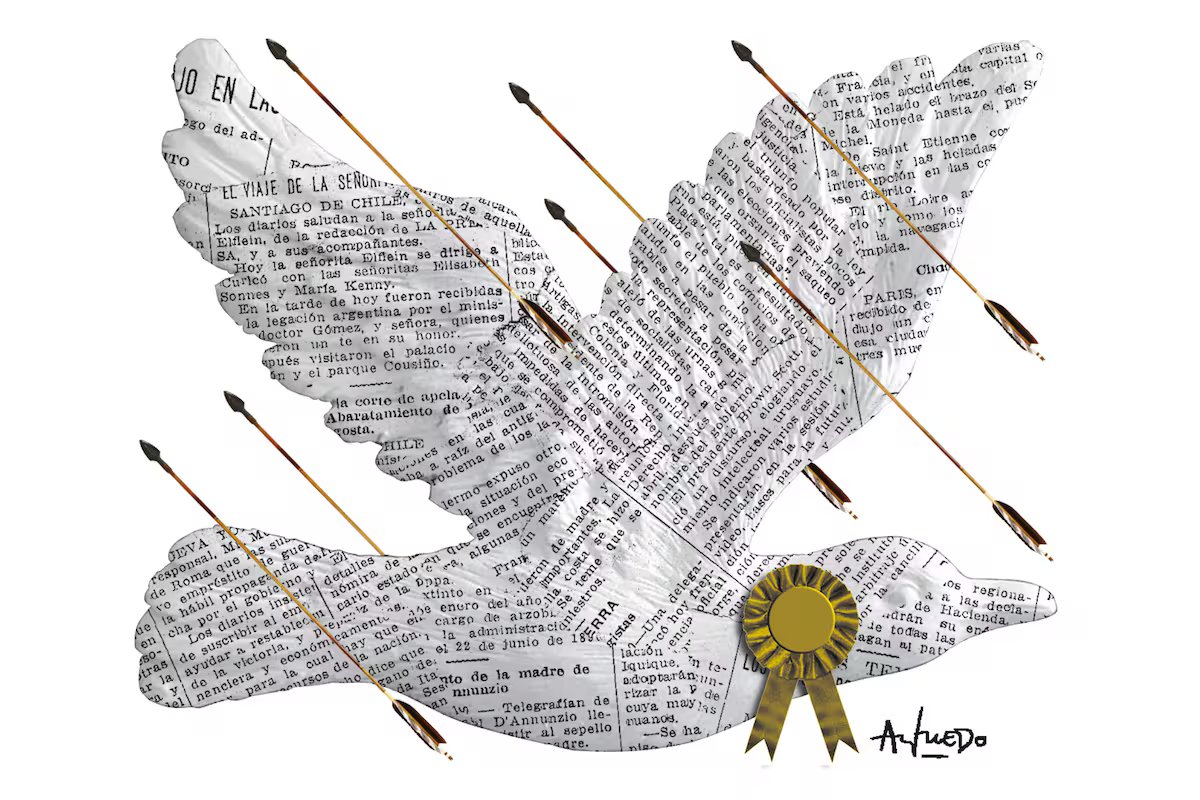
Is there a greater danger than fake news? Yes: false journalism.
The country was startled yesterday, in the middle of the World Cup, with a wave of rumors that affected the captain of the national team in his most human side. Social networks amplified alarmist versions. And a host, at the head of a pseudo-journalistic program, aired, as “information”, what was actually fake news. It was not verified, it had not been subjected to any professional verification process: it was simply clothed with certainty with the lightness and lightness of programs that boast of “speaking without filters” and that dangerously erase the borders between charlatanism and journalism.
There is a communication ecosystem that could be considered marginalif it were not for the fact that political power—and even great figures in sports and entertainment—assign him a privileged place when granting “interviews” and transmitting certain messages. It is made up of many streaming channels in which a kind of false journalism is practiced. There are no professional rules, but a kind of “anything goes”. News content is mixed with vulgar chatterin which a supposedly relaxed style is confused with an irresponsible dialectic. Interview formats are distorted, replacing them with long after-dinner conversations, as if one were not speaking in front of a microphone and an audience, but at the bar of a bar or around a barbecue. “News” is given without checking, opinions are issued without measuring the consequences, comments are made without any rigor and mockery and bullying are practiced with rampant impunity.
This ecosystem would not be so worrying if it were not actively legitimized by central power actors. The President of the Nation and several of his ministers choose these channels —where they are guaranteed a comfort that no professional journalistic interview offers— to transmit messages, set an agenda and avoid scrutiny or uncomfortable questions. Great sports figures do the same. show-business. Thus, a circuit has been fed in which the rules of journalism give way to a friendly chatter where precision does not exist, seriousness is seen as an artificial and prudish trait, and responsibility is judged as an outdated corset. The “fat Dans”, with their shocking load of rhetorical violence, are the most complete symbol of this link between false journalism and official politics. Others play the same “game” from an antagonistic path. They are united by a common language in which disinhibition is confused with aggression, and audacity with recklessness.
In many streaming programs, the light language of the student girl alternates with the bravado slang of the bravas bars.
In this ecosystem, a new limit was transgressed yesterday: The death of Messi’s father was announced. In addition to being false, it was done in a joking tone, without even giving it the sobriety that an event of that nature would have deserved. This time, the issue had a very high impact because it involved the greatest figure in Argentine football, just at the moment when all the eyes of the world are on him. But the question that perhaps we should ask ourselves is whether what happened yesterday was an exception or a repeated standard, or whether it was exactly an error – from which none of us are safe – or a natural consequence of a way of “playing journalism” as if it were an adventurer’s profession. How many times are nonsense said on the air in those spaces that demand anarchic communication, without filters or established rules? Recently, in one of these programs they insulted the playwright Pepe Cibrian with a topic as intimate and delicate as adoption. They insult, disqualify, shake and ridicule anyone all the time. Yesterday’s case was not a rarity: it was the logical consequence of a system that operates without a network and is proud of it.
The streaming universe is heterogeneousof course, and generalizations are always unfair. There are journalistic and professional spaces that provide diversity and valuable content. But many have become scenarios in which a supposed transgression coexists with unbridled and aggressive activism, and where former television hosts practice, without concealment, a militant pseudojournalism that has found its main client in politics. Many times, the light tone of the Estudiantetina alternates with the bravado jargon of the brave bars. In that atmosphere, it becomes increasingly difficult to distinguish where information ends and operations begin.
That communication code It tries to present itself as innovative and disruptive, although in reality it refers to something as trite and as old as throwing words into the air. Is it successful in terms of audience? In some cases yes. But that does not enable anything or give a “license to kill.”
Yesterday President Milei took advantage of the impact of this episode to put everything in the same bag and renew his attacks against the professional press. In a post on X he endorsed the fake news to “the trash body” of “the media.” The case, however, vindicates in itself the exercise of journalism that conforms to ethical standards and rigorous checking, editing and verification procedures.
Yesterday, with something as delicate as the pain of a family, the risk of false journalism was exposed which, in the era of networks and AI, intoxicates public conversation without measuring the consequences. When the noise dies down, perhaps we will have a lesson: let’s value the professional press enough. Let’s not do it for journalists, but for the sacred right of citizens to reliable, responsible and quality information.