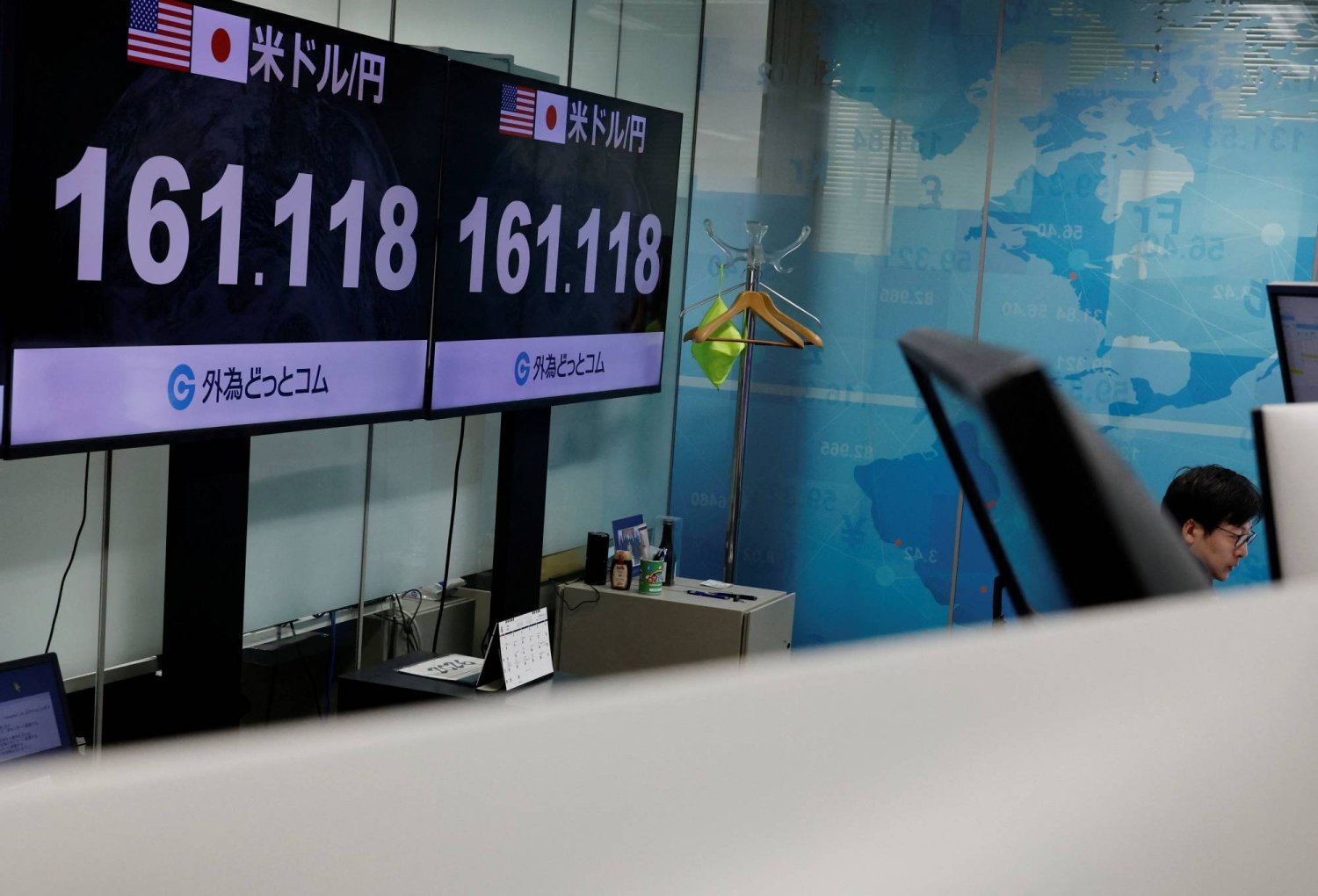
The yen blew through the ¥161-to-the-dollar mark overnight and approached levels not seen since the 1980s, though it pulled back just short of notching a multidecade record.
“When we act, we will act decisively,” Finance Minister Satsuki Katayama said Friday after the Japanese currency swooned dramatically at about 3 p.m. Thursday in New York and hit ¥161.80 to the dollar.
In July 2024, the government intervened when the currency traded at ¥161.95 to the dollar. If the yen moves beyond that level, it would be its weakest since December 1986.
By late morning Friday in Tokyo, it had strengthened to about ¥160.20 to the dollar and changed hands in the ¥161.30 to ¥161.40 range in the afternoon.
Although the yen is back near levels that triggered intervention in April and May, verbal warnings from the minister on Friday were less threatening than those ahead of the intervention earlier this year.
“The time to take the decisive action that I have been warning about is nearing,” she said in late April just before the government propped up the yen.
Atsushi Mimura, vice minister of finance for international affairs, issued a “final warning” to investors at the time.
Soichiro Tateishi, an economist at the Japan Research Institute, said financial officials probably don’t believe intervention would be very effective now compared to the last time.
“I think they were more confident about pushing the yen higher. Because the Japanese market was closed for Golden Week, trading volumes were thin, which allowed the intervention to have a much greater impact,” Tateishi said.
“Looking at the current situation, since there’s no other upward pressure on the yen, they wouldn’t be able to reverse the weak-yen trend even if they were to intervene.”
The Finance Ministry spent a total of ¥11.73 trillion ($73 billion) to support the yen from April 28 to May 27. On April 30, the currency rapidly strengthened into the ¥155 range after crossing the ¥160 mark earlier in the day.
Analysts and investors have started to factor in the possibility of a rate increase in the United States, and this is adding to the pressure on the yen.
The Bank of Japan took rates to 1%, the highest level since 1995, on Tuesday. It was the first rate increase since the end of 2025.
The BOJ’s move did little to boost the yen, as the market had already fully priced in the decision, according to analysts. BOJ Deputy Gov. Shinichi Uchida also refrained from providing guidance regarding the pace of future rate increases.
A Bloomberg survey conducted Wednesday showed about 90% of analysts project another rate increase by the BOJ this year. December was the most popular choice at…