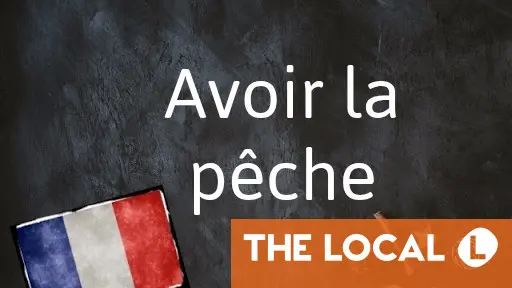
If someone tells you they’re having ‘la pêche’, it doesn’t mean they’re keen for a fruity snack.
Why do I need to know avoir la pêche?
Because you’ll likely be able to figure out its literal translation, but it’s one of those phrases where the meaning is nothing like what it sounds.
What does it mean?
Avoir la pêche – pronounced roughly as av-whar-la-pesh (listen here) – can be directly translated as ‘to have the peach’.
However, if you hear someone exclaiming j’ai la pêche ! (‘I have the peach!), it does not mean they were participating in some sort of game where the person catching the peach is the winner.
In fact, j’ai la pêche means that the person is feeling great – probably alluding to those peachy, rosy cheeks, a sign that a person is healthy.
Avoir la pêche is about feeling good mentally as well as physically. It’s about saying you’re in good form, or just generally feeling good.
Use it like this
C’est bientot le week-end, tu as la pêche ? – It’s almost the weekend, are you stoked?
Je sentais déjà avant le match que j’avais la pêche, et lorsqu’on a commencé à jouer je me sentais en pleine forme – Even before the game I felt really good, and when we started playing I was feeling in great shape
Dis-donc, tu as la pêche ce matin! – Well, you certainly are in high spirits this morning!
You can also use avoir la pêche in a negative form to say that someone isn’t looking too peachy:
Je n’ai pas trop la pêche – I don’t feel too great
What is it with the French and fruit?
The peach is far from the only French fruit or vegetable to be used in an idiom.
Avoir la patate – to have a potato (read more about this expression here)
Avoir la frite – to have a chip (to be full of energy)
Avoir la banane – to have a banana (to be happy)