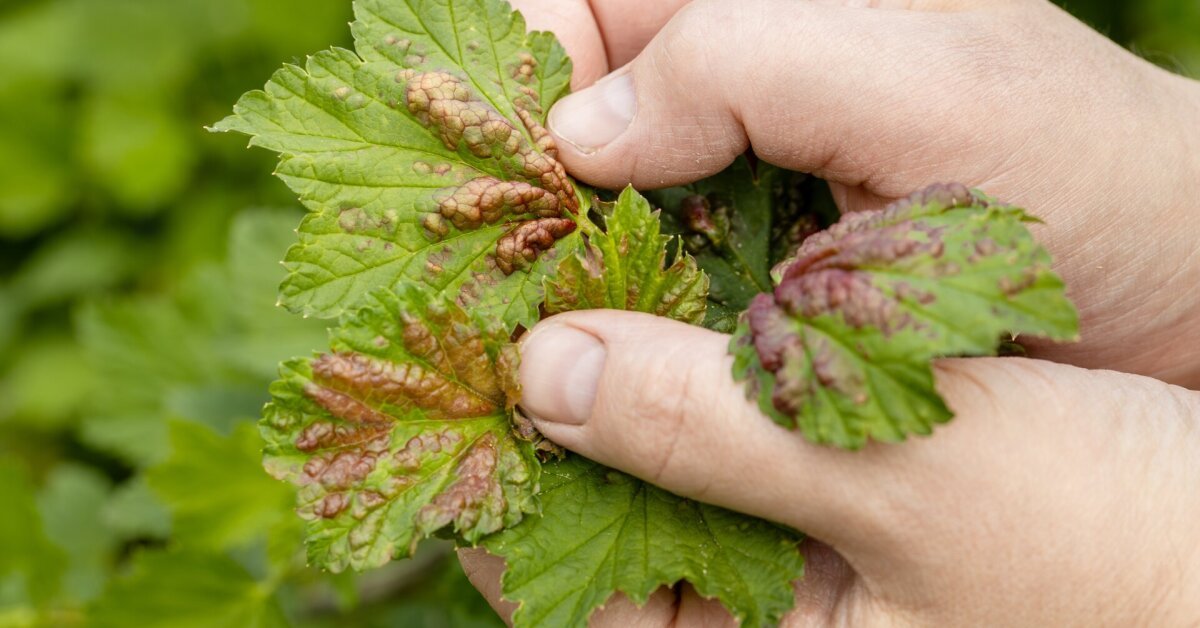
The problem is that the damaged leaves stop functioning normally, the bush weakens, the berries are smaller, and the yield can be reduced by almost half. A weakened plant survives the winter less well and gets sick more often the next season.
Folk remedies: effective only at the beginning
In the early stage, you can try an infusion of tobacco, garlic, onion skins or a soap solution. Sometimes ash is also used.
It is important to understand: if the leaves have already curled and aphid colonies have settled inside them, such measures almost do not reach the pests.
Biologics: A gentle but regular solution
Preparations such as “Fitoverm” or “Bitoxibacillin” are safer than chemistry, but they work slowly. They need to be used several times at an interval of about one week, otherwise the effect will be weak.
Chemical preparations: the most reliable option
In severe infestations, insecticides are usually used.
Contact means only help when directly on the pest, so when the leaves are already curled, they are less effective.
Systemic preparations are the most effective. They penetrate inside the plant and affect aphids even in tubers. Such protection protects the bush for about 2-3 weeks.
When to spray currants?
If the variety is early and the berries are already forming, spray only after harvesting. Late varieties of currants can be sprayed early in the season if there is still plenty of time left before the berries ripen.
Prevention: how to avoid re-infection
To prevent aphids from returning, it is important to take care of not only the bush itself, but also the environment around it:
- Remove weeds and loosen the soil around the currants.
- Destroy anthills and limit the access of ants to the bushes.
- Mulch the undergrowth.
- Plant repellent plants nearby (serniums, nasturtiums, marigolds).
- Choose aphid-resistant currant varieties.