What are the fintech and wider digital and economic developments for the Pacific nation of Micronesia in 2026?
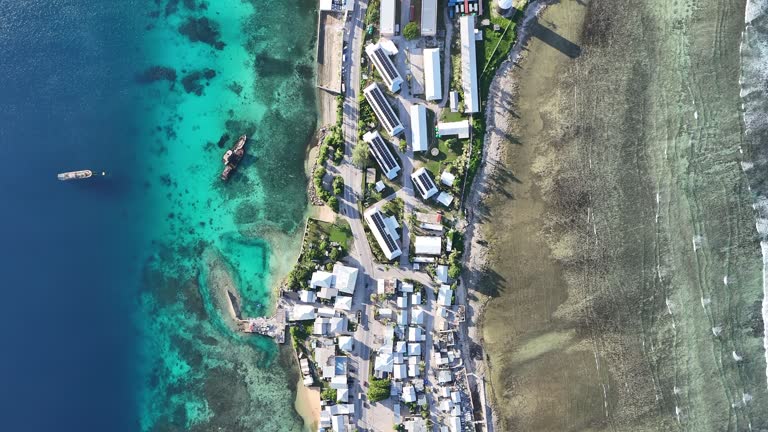
The Federated States of Micronesia is one of the most geographically dispersed countries in the world. Although its population is only around 115,000 people, the nation is spread across more than 600 islands scattered across a section of the Pacific Ocean larger than many continents. The four states of Yap, Chuuk, Pohnpei and Kosrae are separated by vast distances, creating unique challenges for transport, communications, public services and economic development.
For decades, geography has shaped nearly every aspect of life in Micronesia. It influences how goods are traded, how businesses operate, how governments deliver services and how citizens access financial institutions. In many communities, the challenge is not simply affordability or availability. It is connectivity.
This is one reason why digital finance is attracting growing attention. Unlike larger fintech markets where innovation is often driven by competition between banks, startups and technology firms, the fintech opportunity in Micronesia is fundamentally about overcoming distance. It is about finding ways to deliver financial services to citizens and businesses without requiring physical branches on every island.
In this sense, fintech in Micronesia is best understood as infrastructure rather than disruption.
The country’s economy reflects its unique geography. Gross domestic product (GDP) per capita is approximately $4,000, while the economy relies heavily on public administration, fisheries, tourism, subsistence agriculture, development assistance and services. Palikir, located on Pohnpei, serves as the capital, although economic activity is distributed across the federation’s four states.
The country’s relationship with the United States also plays an important role. Through the Compact of Free Association, the Federated States of Micronesia receives economic assistance and maintains close links with the United States. These arrangements have helped support development, infrastructure and public services across the country.
Yet economic development remains challenging. Small populations, geographic fragmentation and limited economies of scale can make traditional financial services expensive to provide. Operating a bank branch on a remote island may not always be commercially viable, while travel between islands can be costly and time-consuming.
As a result, access to financial services often depends on digital solutions. The banking sector itself is relatively small. Institutions such as the Bank of Guam and the Bank of the Federated States of Micronesia play important roles in providing financial services across the country. However, the realities of island geography mean that digital channels increasingly matter as much as physical infrastructure.
This trend is not unique to Micronesia. A previous The Fintech Times article I authored examined how financial inclusion across Pacific Island Countries highlighted how fintech can help address the challenges created by distance, limited infrastructure and dispersed populations. Few countries illustrate these challenges more clearly than Micronesia.
Financial inclusion remains a key development objective. The World Bank‘s Global Findex Database has shown that account ownership and digital financial usage across many Pacific Island nations continue to lag behind more developed markets. In Micronesia, geographic isolation can further complicate access to formal financial services.
For many residents, travelling to access banking services may involve significant time and expense. Digital financial tools therefore offer opportunities to reduce these barriers while improving convenience and accessibility.
Connectivity becomes the critical enabler. Recent investments in telecommunications infrastructure have sought to improve internet access and digital connectivity throughout the Pacific region. The Asian Development Bank (ADB) has supported projects focused on digital infrastructure, recognising that connectivity underpins broader economic and social development.
Without reliable connectivity, fintech cannot scale. With it, opportunities begin to emerge.Mobile payments, digital wallets, online banking and electronic transfers all become more feasible. Government services can be digitised. Businesses can engage more easily in e-commerce. Citizens can access financial services without needing to travel long distances.
Remittances represent another important area. Like many Pacific economies, Micronesia benefits from financial support sent by citizens working abroad. Families often rely on money transferred from relatives living in the United States, Guam, Hawaii and elsewhere. Reducing the cost and complexity of these transfers could have meaningful economic benefits.
Globally, fintech firms have helped reduce remittance costs through digital platforms and mobile-based services. Similar innovations could become increasingly relevant in Micronesia as digital adoption expands.
The public sector also has an important role to play. Because government services are so significant within the economy, digital payments can support more efficient delivery of salaries, benefits and public services. Digital government initiatives therefore often complement financial inclusion efforts.
This alignment between public sector modernisation and fintech may become increasingly important over time.
Climate resilience adds another dimension. Like many Pacific Island nations, Micronesia faces significant environmental challenges associated with climate change. Rising sea levels, coastal erosion and extreme weather events create risks for infrastructure and economic activity. According to the United Nations (UN), Pacific Island states are among the most vulnerable regions globally to climate-related impacts.
Digital finance can contribute to resilience in several ways. Around the world, governments and aid organisations increasingly use digital payment systems to distribute emergency assistance, disaster relief funding and social support. For geographically dispersed island communities, these capabilities can be particularly valuable.
The country’s digital transformation agenda extends beyond finance. Improved connectivity supports education, healthcare, government services and entrepreneurship. Fintech benefits from these broader developments because financial innovation rarely succeeds in isolation. It depends on the wider digital ecosystem.
This creates opportunities for local businesses as well. Small enterprises often face challenges accessing finance, accepting electronic payments and reaching customers beyond their immediate communities. Digital financial services can help reduce some of these barriers while improving participation in the formal economy.
Challenges nevertheless remain substantial. The domestic market is very small. Telecommunications costs can be relatively high. Digital literacy varies across communities. Cybersecurity capabilities will need continued development as more services move online.
Attracting private-sector fintech investment may also be difficult given the country’s size and geographic isolation. For this reason, partnerships involving governments, development finance institutions, telecommunications providers and regional organisations are likely to remain important.
Yet Micronesia also possesses certain advantages. Its relatively small scale allows policymakers to implement targeted initiatives more quickly than larger countries. Digital solutions can often reach significant portions of the population without requiring extensive physical infrastructure investments.
The country’s future fintech ecosystem will almost certainly look different from those found in Asia, Europe or North America. There may never be dozens of venture-backed fintech startups headquartered in Palikir. There may never be a large digital banking sector serving international markets.
That is not the point. For Micronesia, the value of fintech lies in its ability to connect people, businesses and communities across vast distances. It is about making financial services more accessible in a country where geography has always been one of the greatest obstacles to inclusion.
Ultimately, Micronesia’s fintech story is less about finance and more about connectivity. As digital infrastructure improves and financial services become increasingly mobile, technology offers the possibility of reducing some of the constraints imposed by geography. For a nation spread across hundreds of islands, that may be one of the most important forms of innovation of all.