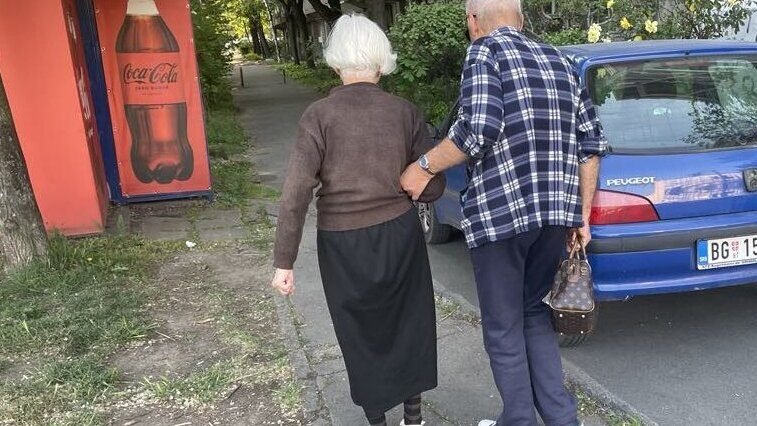
Before the new year, you remember, they told pensioners – the December pension, which is 12.2 percent higher than the previous one, will arrive before Christmas Day. In this connection, then, I wrote the text “Is it possible without mocking pensioners”. Now I see that he can’t.
It was announced back then, and repeated several times, that a package for pensioners will follow, which will certainly make them happy. Especially those with smaller pensions. We will “open” the package at the SNS meeting on June 28. It won’t be, says the president, neither a thousand nor two, it will be much more significant.
Let’s face it, increasing pensions is more than necessary. The average pension amounts to 485 euros, which is only 45.88 percent of the average December salary. However, in March it increased to 46.76 percent of the average salary, thanks to the fact that the March average salary fell compared to last year’s December. Almost two-thirds of pensions are below the average, and almost a third are below 35,000 dinars.
Now, what is that – a significant increase? Is it, say, 10 percent in mass, which would be more than the growth of the average salary and the growth of the gross domestic product (GDP) and more than the official inflation. It would be significant for retirees with below-average pensions, if the bulk of the increase were redistributed more in their favor. The problem is that there are no conditions for a 10 percent increase, if we stick to the valid systemic solutions for increasing pensions.
Data on the ratio of the mass of pensions to GDP will certainly show that another solution from the so-called Swiss formulas. And that means that at the end of the year, pensions will increase by half of wage growth and half of inflation. So, barely half of the previous increase in pensions, assuming that wages, in the best case, increase by eight percent, and inflation is four percent. In that case, half of wage growth and half of inflation amount to a total of 6.08 percent (104 x102 = 106.08). It is possible that it will be more than six percent, but with higher inflation. In other words, he won on the bridge and lost on the bridge.
It means that the position of pensioners cannot be significantly improved with the strict application of the prescribed solutions, except with a significant redistribution of the possible increase in favor of pensioners with smaller pensions. And that would be a gross violation of the right to a pension in accordance with the amount of legal earnings on the basis of which the amount of an individual pension is determined. So, help to pensioners with a small pension yes, of course, but within the framework of social policy, in the form of an allowance that is not included in the amount of the pension.
If the economy were as the officials present it to us, a partial solution, in addition to the above-mentioned supplement, would be to raise the average pension to, say, 55 percent of the average salary and that after that pensions grow in line with the growth of wages, which corresponds to the fact that the connection between salary and pension begins on the first day of employment and social insurance. This would establish the relationship between the average salary and the average pension. In that case, the government’s concern and role would be reduced to creating a system and development policy for a successful economy, in which good salaries and pensions would be a logical sequence.
If someone may not have understood me well, I want to say that in our country, as far as pensions are concerned, everything is turned upside down. Why promises to pensioners and especially to employees? Experience is not considered. The promise that the average salary at the end of 2027 will be 1,400 and the average pension 650 euros is no longer mentioned, and it is still more than a year and a half until then.
Higher wages and pensions are the result of a better economy today than yesterday, and tomorrow than today. Pensioners know this, and they would certainly be more satisfied and calmer if the government was not forced to promise them an increase in pensions and a reduction in expenses in the amount that will be announced to them at the party meeting. Unnecessary promises only indirectly admit that we do not have the economy for sustainable, logical and established relations of interdependent economic categories.
The author is an economist
The views of the authors in the Dialog column do not necessarily reflect the editorial policy of Danas.
Follow us on our Facebook and Instagram page, but also on X account. Subscribe to PDF edition of Danas newspaper.