While heading Washington andTehran Towards consolidating an agreement that ends months of escalation, it stands out in Israel Concerns about its provisions. Recent Israeli reports, along with criticism from politicians and commentators inside Israel, raise a fundamental question about the Prime Minister’s attempts Benjamin Netanyahu Using the escalation in Lebanon to obstruct the negotiating track with Iran.
The controversy within Israel was not limited to the terms of the upcoming US-Iranian agreement, but rather extended to holding Netanyahu responsible for what many consider a strategic failure to influence its course.
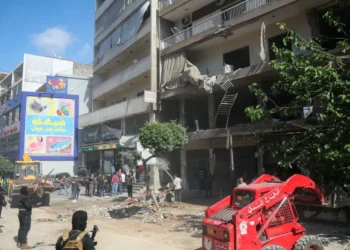
The criticism was topped by a report published by the Yedioth Ahronoth website, which quoted Israeli security sources as saying that the raid carried out by Israel on The southern suburb of Beirut It did not obstruct the negotiations as expected, but rather produced the exact opposite result. According to the account contained in the report, the escalation accelerated reaching an agreement between Washington and Tehran, and prompted Trump to express a willingness to provide additional incentives to the Iranians with the aim of preventing the collapse of the negotiating path.
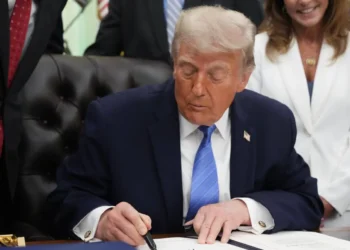
The picture of tension between Washington and Tel Aviv was strengthened with the leaks that spoke of a sharp call between them The American President Donald Trump And Netanyahu, during which Trump expressed his anger at the attack on the suburb, considering that it endangered the negotiations. In the eyes of Netanyahu’s critics, this incident represented further evidence of the decline of Israeli influence within the US administration compared to previous stages.
This feeling was also reflected in the comments of a number of Israeli writers and analysts. In the Maariv newspaper, Ben Caspit considered that Israel is “today paying the price for its bet on the confrontation with Iran,” criticizing previous promises to achieve a “complete victory” or overthrow the Iranian regime. He went further when he held Netanyahu responsible for a series of policies that brought Israel to a situation in which it finds itself outside negotiations regarding the most important threat it considers existential.
The most frequent criticism in the Israeli media is that the agreement is being formulated in practice without effective Israeli participation. Some comments describe the scene as a strategic paradox, as the United States is negotiating directly with Iran regarding files that Israel considers related to its national security, from the nuclear program to ballistic missiles and Tehran’s agents in the region, while Tel Aviv seems unable to influence the final results.
The concern is not limited to the opposition. Figures from the Israeli right also expressed their rejection of the agreement, but from a different angle. National Security Minister Itamar Ben Gvir believes that any understanding that does not lead to the dismantling of Hezbollah and reducing Iranian influence in the region “will not achieve security for Israel,” stressing that “Tel Aviv is not bound by any arrangements that may impose restrictions on it in Lebanon.”
In turn, Israeli Defense Minister Yisrael Katz said that Israel will not withdraw from the lands it controlled in LebanonAnd he warned that if it were launchedIran An attack on Israel against the backdrop of events in Lebanon, Israel will respond in kind.
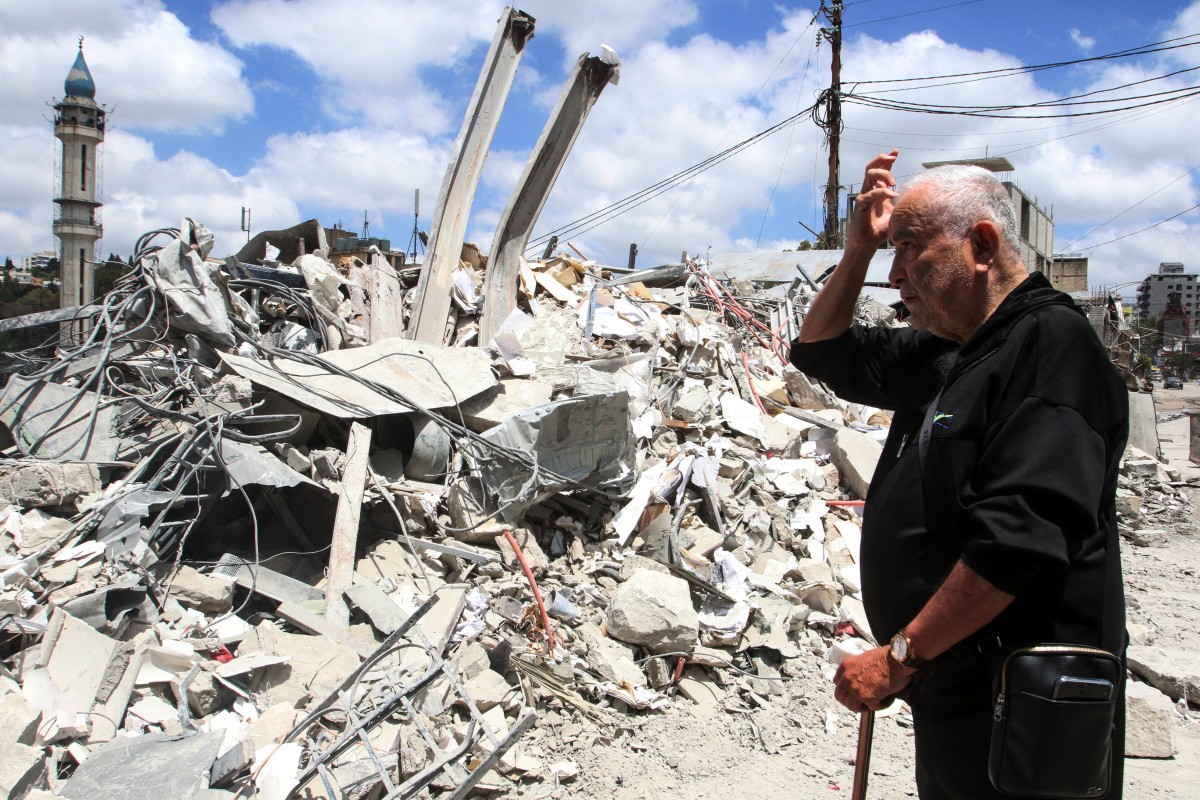
A man inspects the damage as residents displaced by the fighting return to Nabatieh in southern Lebanon, June 15, (AFP).
Katz stressed the refusal to withdraw the Israeli army from Lebanon despite all current and future pressures, noting that Netanyahu made this matter clear to Trump and senior American officials.
The question that arises is: Is Netanyahu seeking again to obstruct the agreement through Lebanon?
“Netanyahu’s failure is a prelude to what is to come.”
Israeli affairs expert Fayez Abbas told An-Nahar that Netanyahu “will not dare try to obstruct the agreement from the Lebanese gate.”
He believes that “Netanyahu’s failure is a prelude to what is to come in the region because Netanyahu will not take any decision related to the war on Lebanon without returning to Trump, who has become the only one who decides whether war or peace in the region.”
He points out that “he will soon try to convince Trump of the importance of continuing the war against Hezbollah and continuing the occupation of southern Lebanon, but Trump will not agree with him on that. Rather, he will work to ensure the success of the direct negotiations between the Lebanese and Israeli government.”
Israel is upset
For his part, Nihad Abu Ghosh, a writer and journalist specializing in Israeli affairs, told Al-Nahar, “Israel is very dissatisfied with the agreement, which some have described as a disaster and a strategic defeat,” pointing out that “many accuse Netanyahu of being primarily responsible for this outcome.” He points out that “the opposition is frank in its sharp criticism, as are analysts and reserve generals.”
He adds, “Netanyahu always has room to move independently of American policy, even though he is generally subject to its main rules. Therefore, he moves in a delicate and critical space between two strict limits: he does not want equations imposed on him by Hezbollah and Iran. He adheres to what he calls Israel’s right to self-defense and freedom of movement, and at the same time he does not want to appear as someone who wants to sabotage the agreement or clash with Trump.”
What are the possible scenarios?
Regarding the scenarios that Israel may do to obstruct the agreement, Abu Ghosh says, “Israel cannot object to Trump’s decision, but it can bet on procrastination and controlling timetables: for example, with regard to violations, adherence to what was stated in the November 2024 agreement in Lebanon about the right to self-defense, and the accompanying American-Israeli memorandum of understanding that talks about Israel’s right to enforce Resolution 1701.”
He adds, “After the agreement, Israel will adhere to what it calls the right to thwart direct and planned threats through what is called “focused frustration” or precise surgical operations, and will limit its operations to the south and perhaps reduce the area of the security zone – not only because of Iranian-American pressure, but there are clear Israeli demands for this due to the absence of a clear strategy and the fear of involvement in a war of attrition – thus approving the principle of withdrawal but postponing its implementation until an indefinite time – certainly not before the elections – and claiming that there are serious negotiations with the Lebanese government, and therefore if it wants to offer something, it will “It is presented to the Lebanese government and not to Hezbollah or Iran.”