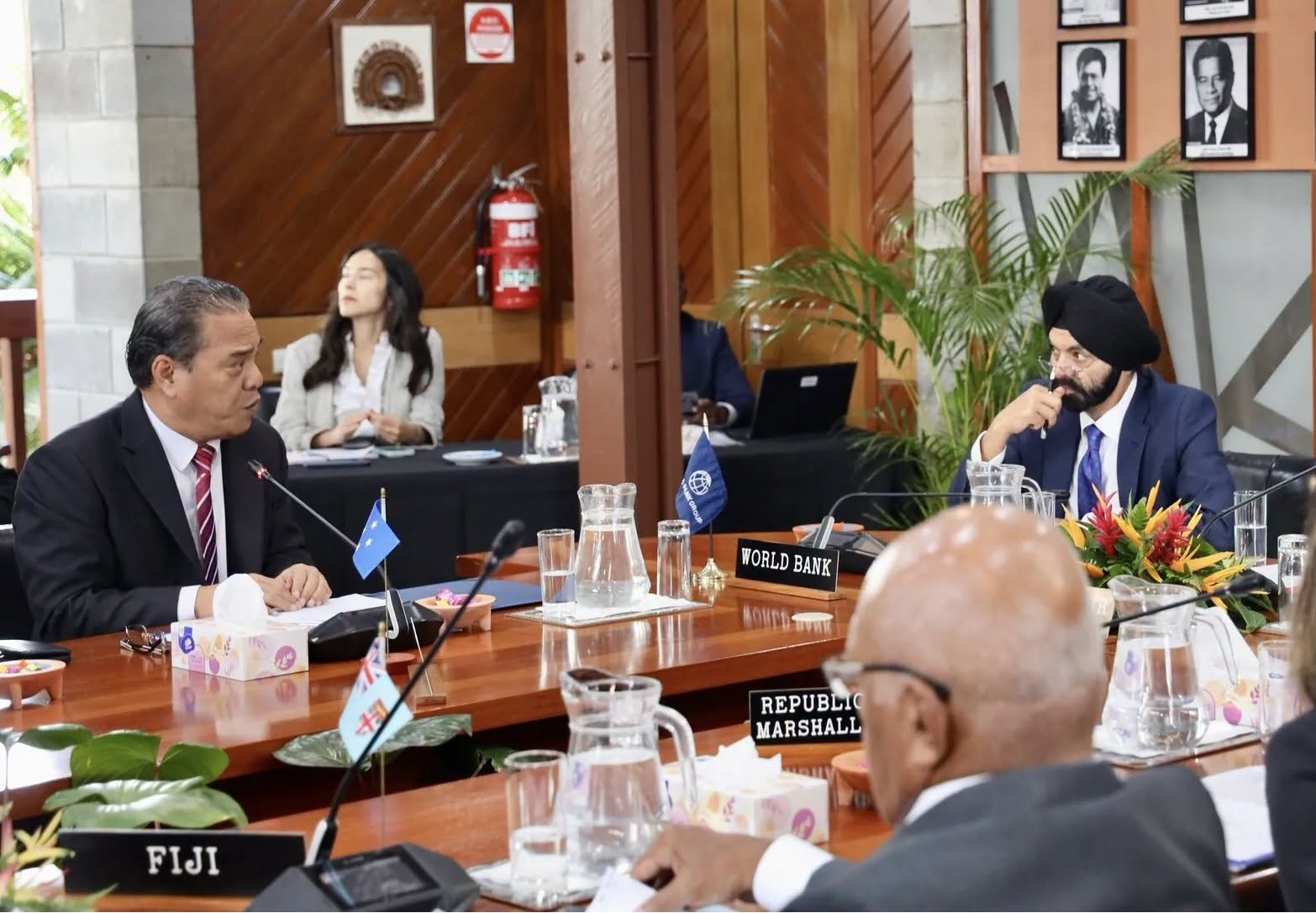
 PALIKIR, Pohnpei – June 17, 2026 – His Excellency Wesley W. Simina, President of the Federated States of Micronesia (FSM), has signed the contract for the design and construction of the East and West Pou Circular Road Upgrade in Weno, Chuuk.
The project will be carried out under the World Bank-financed Strategic Climate-Oriented Road Enhancements (SCORE) Project and will upgrade approximately 1.87 miles (3 kilometers) of roadway around Pou Bay.
The road improvements will provide safer and more reliable access for residents, businesses, schools, churches, healthcare facilities, and government offices. The project will address longstanding issues such as deteriorating road conditions, poor drainage, and flooding while strengthening infrastructure resilience to climate-related impacts, including heavy rainfall and erosion.
The SCORE Project supports the FSM’s efforts to strengthen critical transportation networks and improve resilience to climate-related challenges.
“Reliable roads are essential to the daily lives of our people. Better roads mean safer travel, stronger connections between communities, and more reliable access to schools, healthcare, businesses, and government services. I am pleased to see this important project moving forward for the people of Chuuk,” said President Simina.
Work is scheduled to begin on July 31, 2026. Following a five-month design phase, major construction activities are expected to start by the end of December 2026. The project is expected to reach substantial completion by January 30, 2028.
President Simina expressed appreciation to the Chuuk State Government, community leaders, landowners, technical teams, and the World Bank for their partnership in advancing the project.
The National Government, through its Department of Transportation, Communication, and Infrastructure (TC&I), will continue working closely with its partners throughout project implementation and will provide updates as work progresses.
The East and West Pou Circular Road Upgrade reflects the continued collaboration among national and state governments, local communities, and development partners to improve connectivity and resilience across the FSM.
###