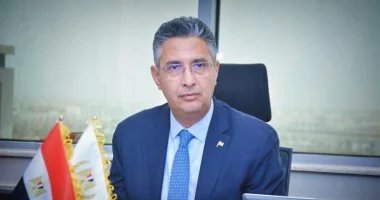
He said Dr. Sherif Farouk, Minister of Supply and Internal TradeThe current global changes, including wars, geopolitical developments, and challenges related to supply chains, impose the necessity of maintaining large levels of strategic reserves of basic commodities.
Egypt possesses unprecedented reserves of commodities
Sherif Farouk added in a telephone conversation with the media personality Engy Taher, presenter of the “Money and Business” program, on the “Extra News” channel, that Egypt currently has an unprecedented reserve, adding that the abundance of goods, their quality, and ease of access to citizens represent major factors in price stability, stressing that the continued provision of goods and opening outlets to citizens on a regular basis contributes to strengthening control over the markets and reducing price fluctuations.
Support system development program
He explained Minister of Supply The government is putting the final touches on the program to develop the support system, pointing out that it was presented in the presence of the Prime Minister to the President, while work continues to introduce new developments in it.
Sherif Farouk stressed that any new mechanism will not be adopted by the government unless it directly serves the citizen’s interest, pointing out that the primary goal is to enhance the citizen’s ability to choose the goods that suit his needs and at the time he deems appropriate.
Transforming the support system gives citizens the freedom to choose their needs
Sherif Farouk added that giving citizens the freedom to use support to purchase the goods they need increases their ability to manage their expenses and personal economics, while restricting support to specific goods at specific prices may lead to there being more than one price for the good in the market and restrict the options of the beneficiaries.
Sherif Farouk stressed that if this transformation is agreed upon and a decision is issued regarding it, it will be announced in an appropriate manner, stressing that the new system will be in the interest of the citizen and will enhance his ability to buy and shop much better than before.
The Minister of Supply and Internal Trade said that the government attaches great importance to developing and purifying the support system to ensure that it reaches those who deserve it, stressing the importance of integration between various social protection programs and government service providers.
Sherif Farouk added that the social protection system includes many programs, including social insurance, social housing, comprehensive health insurance, and the programs of the Ministry of Social Solidarity, most notably “Solidarity and Dignity,” in addition to the commodity support provided by the Ministry of Supply, stressing the necessity of integrating these programs and exchanging information between them in a way that ensures that support is provided to the eligible in an effective and easy manner.
Updating support databases ensures that it reaches those most in need
Sherif Farouk continued that updating beneficiary databases depends mainly on sharing data among all agencies providing support, noting that there is a working room that includes various stakeholders and holds periodic meetings headed by the Prime Minister to review and exchange information.
Sherif Farouk emphasized that reading citizens’ data through the various available support sources allows the formation of an accurate picture that helps exclude those who are not eligible from the system, while at the same time providing the opportunity to include new beneficiaries if the eligibility conditions are met.
Sherif Farouk pointed out that electronic connectivity systems and the use of modern technology in data analysis represent a fundamental pillar in raising the efficiency of the support system, explaining that the integration of information between government agencies, in addition to data sharing by NGOs and other agencies providing support, contributes to forming a clearer picture of the conditions of citizens.
Sherif Farouk added that developing data reading mechanisms increases the state’s ability to maximize the impact of the support provided to citizens, and ensures the exit of the undeserving from the system, thus enhancing the efficiency and fairness of resource distribution.
Sherif Farouk explained that social protection is an essential role for the state, stressing the need for integration between various programs such as social insurance, social housing, comprehensive health insurance, and the “Solidarity and Dignity” programs affiliated with the Ministry of Solidarity, in addition to commodity support at the Ministry of Supply.
Sherif Farouk pointed out that the joint operations rooms under the Presidency of the Council of Ministers are working to share data on a permanent basis to maximize the efficiency of these programs, pointing out that reading the citizen’s data through various documented sources provides a true picture of his economic situation, which allows the exit of the undeserving from the system, and in return opens the way for the acceptance of new families of the actual beneficiaries, which contributes to consolidating the principle of social justice and improving the quality of services provided to the Egyptian citizen.
Sherif Farouk stressed that the Ministry relies primarily on modern technologies and electronic connectivity to develop the support system, ensuring transparency and justice in distribution, explaining that the use of technology in reading the beneficiaries’ files provides a true and accurate picture of the citizen’s economic situation.
The state is interested in the social protection system and providing support to those who deserve it
He pointed out the necessity of integrating data between all government agencies, and even NGOs, to ensure that the most needy groups are targeted with high efficiency, which contributes to the exit of the undeserved from the system and the acceptance of new beneficiaries.
He pointed out that the current vision aims to enable citizens to control their own “economies,” by giving beneficiaries greater flexibility in choosing the goods they actually need and at the appropriate time for them, stressing that this flexibility is an essential pillar in the future transformations of the support system to maximize the citizen’s benefit.
Sherif Farouk warned that specifying certain goods at fixed prices may sometimes create “two prices” for one commodity in the market, which is harmful to economic stability, stressing that the goal is to provide goods with high quality and ensure easy access to the citizen, which naturally contributes to controlling prices and preventing monopolistic practices.
Sherif Farouk confirmed that the government is putting the final touches on the program to develop the support system, stressing that any developments approved will be primarily for the benefit of the citizen and his purchasing power.
Sherif Farouk explained that the features of the new program were presented to the Prime Minister, and then to the President of the Republic, noting that work will continue to add technological and technical developments aimed at facilitating citizens’ access to their entitlements, stressing that the new system will be more flexible and responsive to successive economic and social changes.
Sherif Farouk pointed out that the shift towards cash support (if agreed upon) aims to enable the citizen to control his budget and choose the goods he actually needs and at the time he specifies, explaining that specifying specific goods at fixed prices may not suit the needs of the citizen at a specific time, while cash support provides freedom of choice that contributes to improving the quality of life of the beneficiary families.
He stressed that providing goods with high quality and continuous abundance in outlets is the best way to control prices, noting that the anticipated system will be “much better than before” in achieving balance and stability in the Egyptian markets.