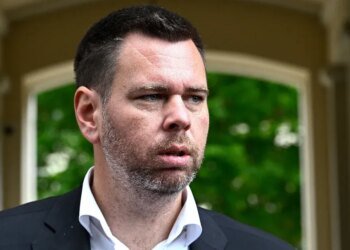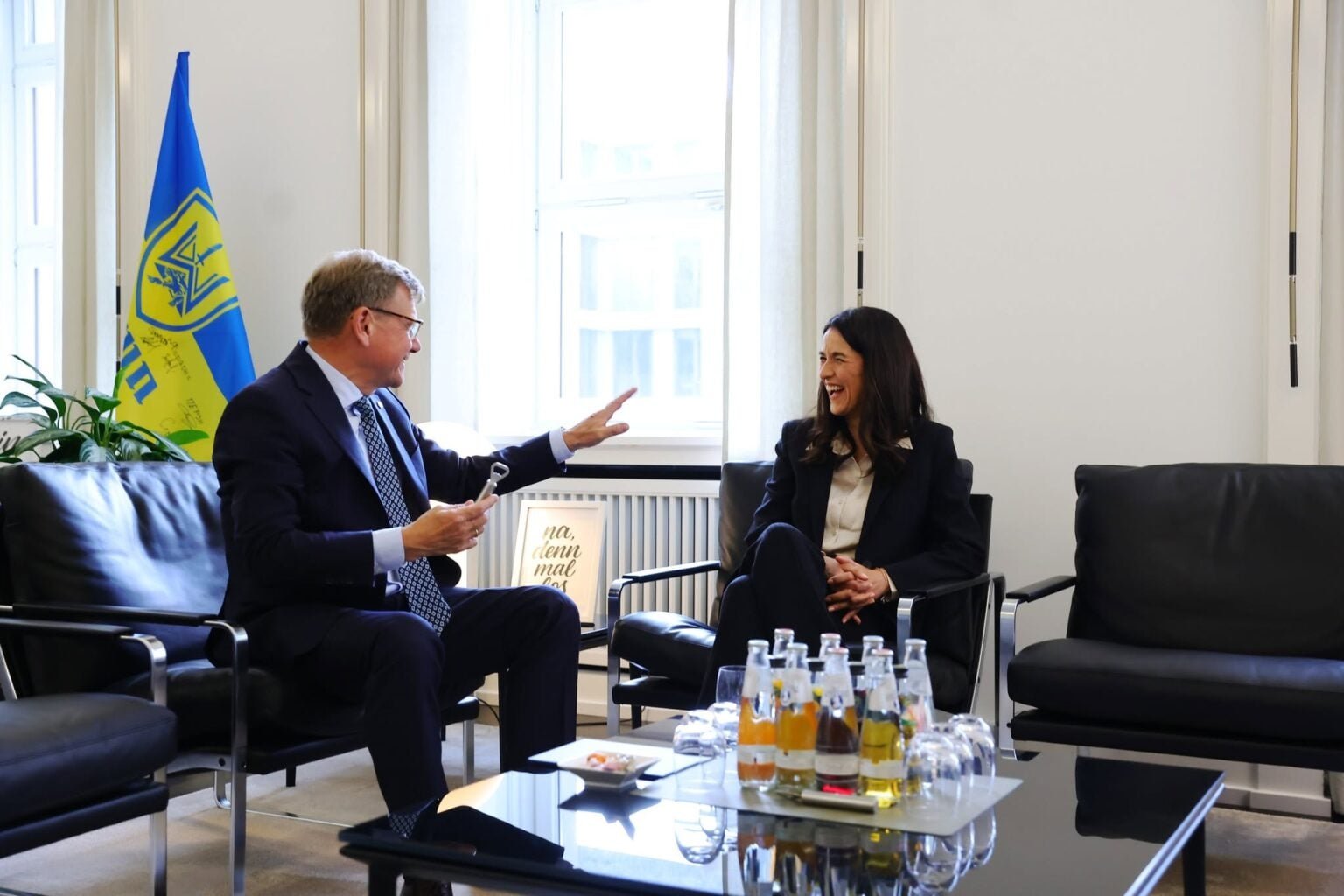

German Foreign Minister Johann Wadephul used his meeting with his Hungarian counterpart not only to offer a superficial assessment of bilateral relations, but also to share general reflections on the state of the world and how to address its problems from the perspective of the West German establishment.
Thus, the attentive listener at the press conference following the talks learned that “these days, bad news and crises increasingly dominate our lives” and—patriots and sovereigntists, take note!—
many are beginning to doubt whether democracies have enough strength to overcome the great challenges.”
All the more important, then, are those moments that inspire hope, said the sage-like head of the Foreign Office, who described the change of government in Budapest as such. This member of a government standing on shaky ground sought to bolster his own confidence with this diplomatic attempt to win favor (captatio benevolentiae). The TISZA cabinet, which enjoys a two-thirds majority in parliament, is evidently a balm for the souls of pseudo-conservatives across Europe, who are gradually being punished by their traditional voters.
#Info: Live ab +/- 14:00 Uhr MESZ: Pressekonferenz mit 🇩🇪 @AussenMinDE und seiner 🇭🇺Amtskollegin @_OrbanAnita.
Livestream (auf Deutsch)👇https://t.co/oDfBQ0mh92
— Auswärtiges Amt (@AuswaertigesAmt) June 10, 2026
“Hungary’s future is shrouded in a kind of euphoria,” Wadephul told his guest. He spoke of a “sigh of relief” that was supposedly heard not only in Budapest but throughout Europe following TISZA’s election victory. It is questionable whether this victory will benefit their colleagues in the European People’s Party. The unstoppable rise of the AfD does not seem to confirm this expectation. But enough with the compliments:
Since the new government took office, hardly a day has gone by without good news coming out of Budapest,
according to Berlin’s top diplomat.
New foundations for bilateral relations are needed, Wadephul made clear, and he named an area that is very close to his heart: “the defense of our freedom,” with which he obviously wanted to hold Hungary militarily accountable, specifically against Russia; for by now, that oft-cited phrase stands for a conflict with the world’s largest country.
Economically, everything is in order: The annual trade volume between the two countries amounts to around 70 billion euros, and more than 6,000 German companies operate in Hungary, Wadephul reported. A bilateral forum will be organized in the fall, and relations between the relevant ministries are to be strengthened.
The head of the Foreign Office also called for an end to the deadlocks in Europe—in plain language: marching in lockstep is now the order of the day for Budapest as well.
The protection of our democracy against external threats can no longer be postponed,”
warned the staunch transatlanticist, who with this appeal presumably also sought to rally the political protégé of the American “neocons” to a war footing.
Steps toward “a strong judiciary, free media, transparent institutions,” and a “functioning rule of law” in Hungary were demanded by the representative of a Federal Republic that has recently been known more for prosecutors who have been prosecuting criticism of political officeholders on social media, as well as for the intimidation of independent newsrooms and opposition politicians, and for the not-so-covert funding of state-affiliated NGOs that nip any dissent in society in the bud.
Welcome to Berlin, @_OrbanAnita. It was a great pleasure to have you here and to see #Hungary back at the table. We have agreed on a shared mission today: strengthening the EU and revitalizing the cooperation between our countries. I look forward to working with you. pic.twitter.com/uOCtvFYMip
— Johann Wadephul (@AussenMinDE) June 10, 2026
Wadephul then praised the remarkable agreement reached between Budapest and Kyiv on minority rights:
With this, you have shown that in Europe we do not resolve differences of opinion through mistrust, malice, or violence,
but by listening to one another, reaching compromises, and finding solutions that support us all,” said the staunch supporter of Ukraine, though it is unclear to whom he was directing the aforementioned criticisms.
Amid the friendly back-patting, there was a single discordant note. Contrary to Wadephul’s expectations, Anita Orbán made it clear: Hungary will not supply weapons to Ukraine.

Via MTI; Featured photo: Facebook/Anita Orbán