On the World Day to Combat Desertification and Drought…
AlUla sets a global model for restoring ecosystems and raising vegetation
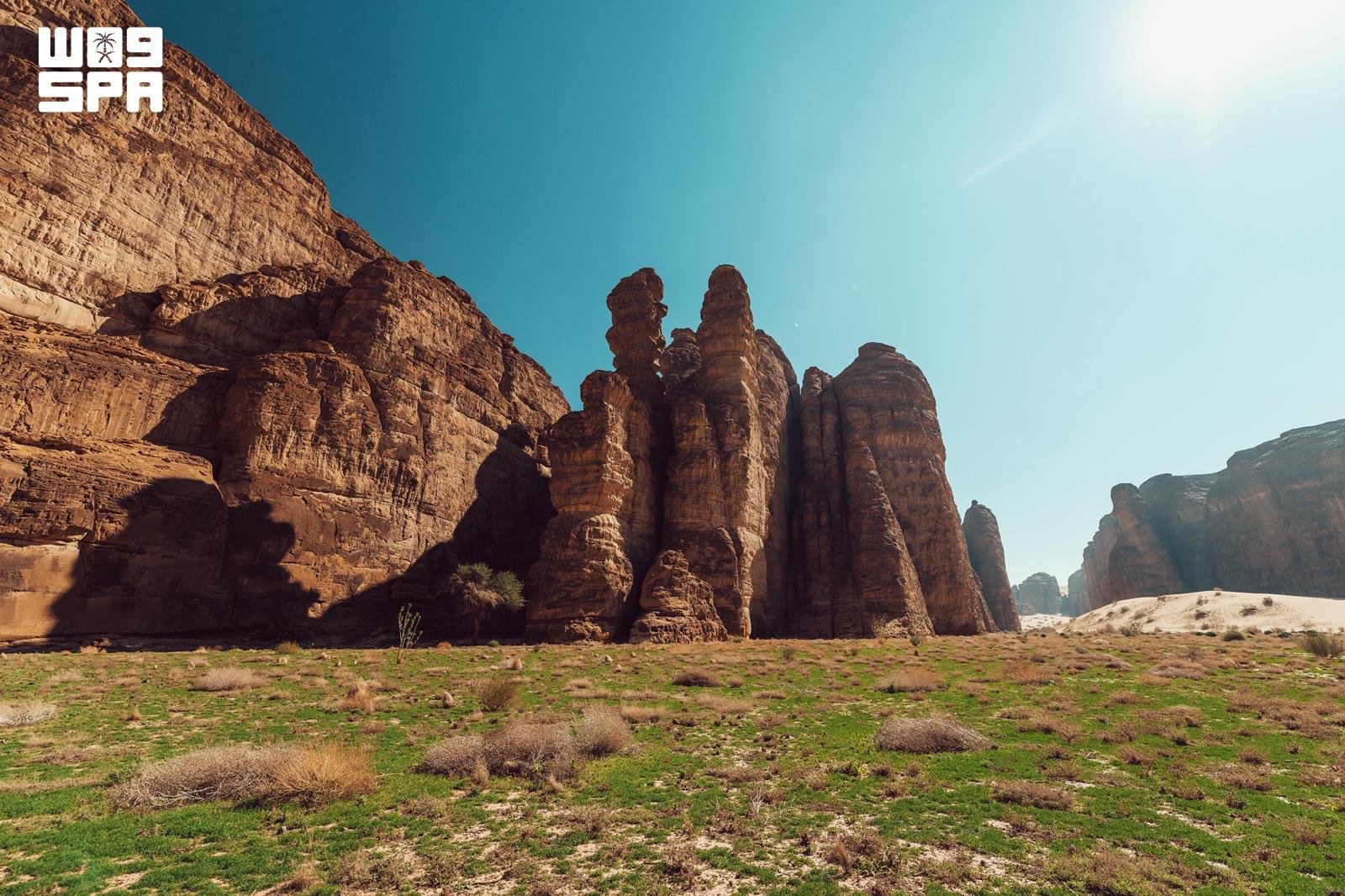
Coinciding with the World Day to Combat Desertification and Drought, Al-Ula Governorate continues to strengthen its environmental efforts aimed at restoring natural systems and reducing land degradation, through integrated programs to rehabilitate natural pastures and cultivate local plants. This contributes to enhancing biodiversity and raising the efficiency of natural habitats.
These efforts resulted in the restoration and rehabilitation of more than 5,100 hectares of natural pastures within habitat protection programs, in addition to the planting of more than 530,000 seedlings representing 60 types of local plants. To enhance the sustainability of vegetation and support the environmental balance in the region.
AlUla recorded remarkable progress in environmental recovery indicators, as the percentage of vegetation cover increased from 6% in 2018 to 35% in 2025, which reflects the impact of environmental restoration programs in improving the health of natural systems and increasing their ability to adapt to climate challenges. Environmental efforts also received international recognition through the inclusion of the Sharaan Natural Reserve on the Green List of the International Union for Conservation of Nature, in appreciation of the practices applied in protecting biodiversity and managing natural areas in accordance with global standards.
These achievements fall within the ecosystem restoration strategy for the period (2025-2035 AD). Which aims to restore and rehabilitate more than 65 thousand hectares of natural pastures, and plant more than 10 million seedlings of local plants, supporting the goal of reaching zero neutrality by 2035 AD.
These initiatives reflect AlUla’s commitment to adopting nature-based solutions to confront the challenges of desertification and land degradation, and to contribute to the restoration of ecosystems and enhance the sustainability of natural resources, in line with the goals of the Saudi Green Initiative and the Kingdom’s Vision 2030.