PACIFIC leaders have warned that the region’s fuel crisis is no longer just a supply problem, but a threat to economic security, as rising prices, inflation and the cost of living ripple through island economies.
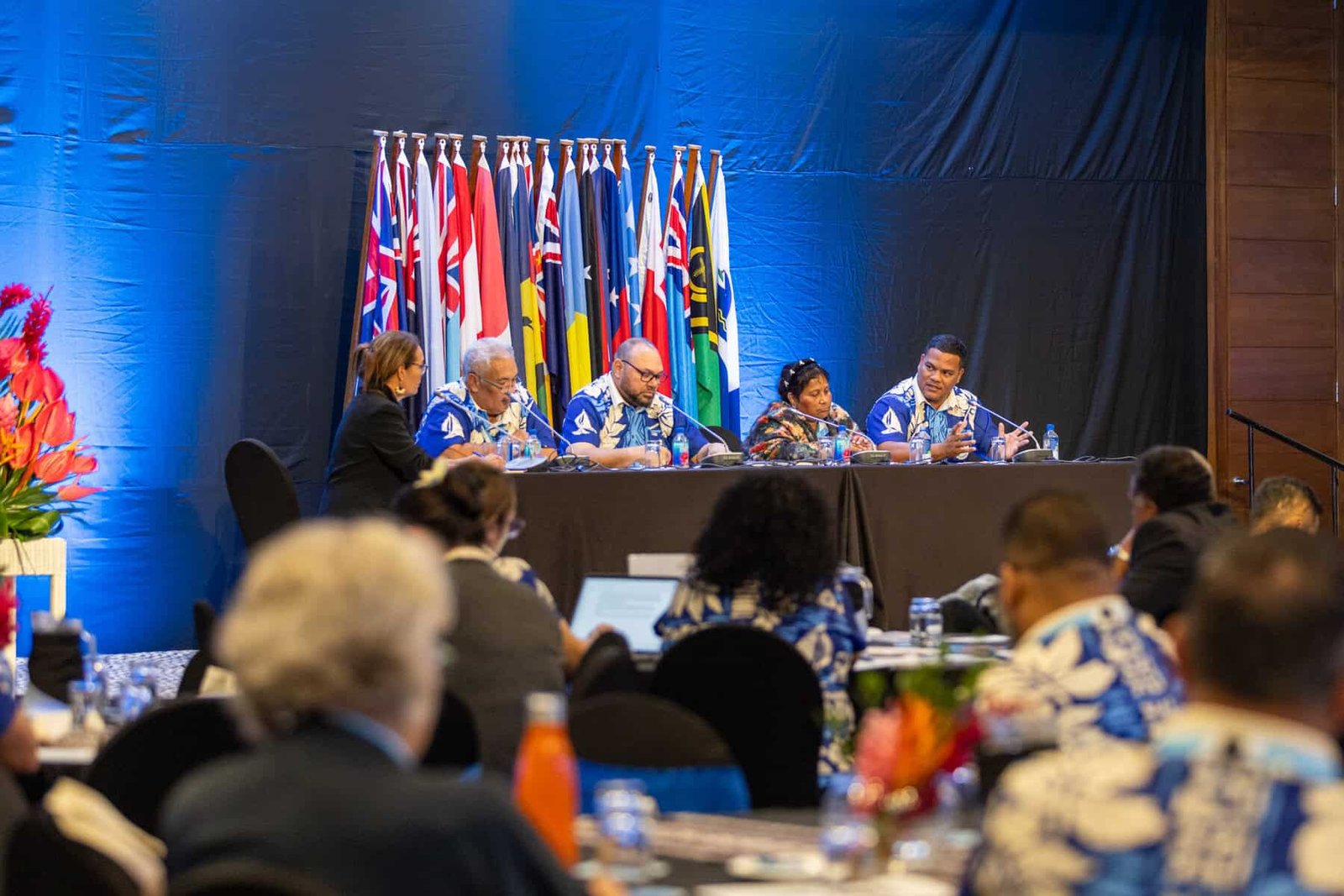
At the 2026 Pacific Peace and Security Dialogue hosted in Suva, Fiji, ministers from the Cook Islands, Papua New Guinea, Nauru and Tuvalu said the shock has underscored the need for regional cooperation, stronger supply chains and a faster shift toward more resilient economies.
Papua New Guinea Finance Minister Thomas Opa said remote islands are feeling the pressure most acutely, with higher fuel costs hitting transport, business and jobs.
“The increase in fuel prices has really affected not only the people on the mainland that will now buy more fuel at the bowser, it also affects business, and if the business is not growing, they cannot make profit, they cannot employ people – so it has broader implications on the wellbeing of people. This is a concern that affects Papua New Guinea.”
Opa said PNG has introduced a fuel subsidy but called it unsustainable in the long term.
“The government is exploring smaller refineries to strengthen domestic supply and support other Pacific states.”
Tuvalu’s Minister for Transport, Energy, Communication and Innovation, Simon Kofe, said the crisis is a warning that energy transition is now a security issue.
“We do a lot of advocacy on the international stage, but what are we doing on the local level to achieve that transition? It’s no longer just an environmental issue; it’s now become a security issue for us.”
Cook Islands Foreign Affairs Minister Tingika Elikana said resilience in the Pacific depends on economic stability rather than military power.
Nauru Minister for Women and Social Development Affairs, Charmaine Scotty, said regional cooperation can cut costs and create opportunities.
She argued that “the Pacific’s greatest resource is not beneath our oceans or on our lands. It is our people.”