The 2026 FIFA World Cup will be held from June 11 to July 19. The championship, which will be the largest in history.
Where will it take place?
For the first time in history, three countries will host the World Cup at the same time.
The trio of the USA, Mexico and Canada (their application was called United 2026) won the right to host this championship on June 13, 2018. Voting took place at the 68th FIFA Congress in Moscow – just a day before the start of the WC-2018. The main and only competitor of the North Americans was Morocco. For the North African country, it was already the fifth attempt to get the World Cup, and they launched a serious campaign, hoping to return the World Cup to Africa (the first and last time it was in South Africa in 2010).
Read also: Soccer for three: how the USA, Mexico and Canada organized the World Cup
However, the odds were initially unequal: the three giants offered a ready-made, super-powerful infrastructure, huge stadiums and guaranteed billions in revenue for FIFA.
For the first time in history, FIFA made the voting results completely open (it was published which country voted for whom). United 2026’s advantage proved to be overwhelming – 136 votes against 65 in Morocco. Spain, Cuba and Slovenia abstained, while Iran voted against both bids.
Interesting fact: Despite the fact that the African continent was supposed to act as a single bloc in support of Morocco, 11 African federations (including South Africa, Liberia, Zimbabwe) still voted for the American bid due to political pressure and their own interests. Instead, Morocco was supported by football giants such as France, Italy and Brazil.
In turn, Morocco achieved its goal and will host the next World Cup in 2030 (along with Portugal and Spain).
Canada will host the final stage of the World Cup for the first time. The USA hosted the World Cup in 1994. But Mexico was awarded such an honor already for the third time (1970, 1986).
In which cities will the World Cup matches be held?
The tournament will be hosted by 16 cities. The largest part of matches and stadiums is in the USA.
United States of America (11 cities)
-
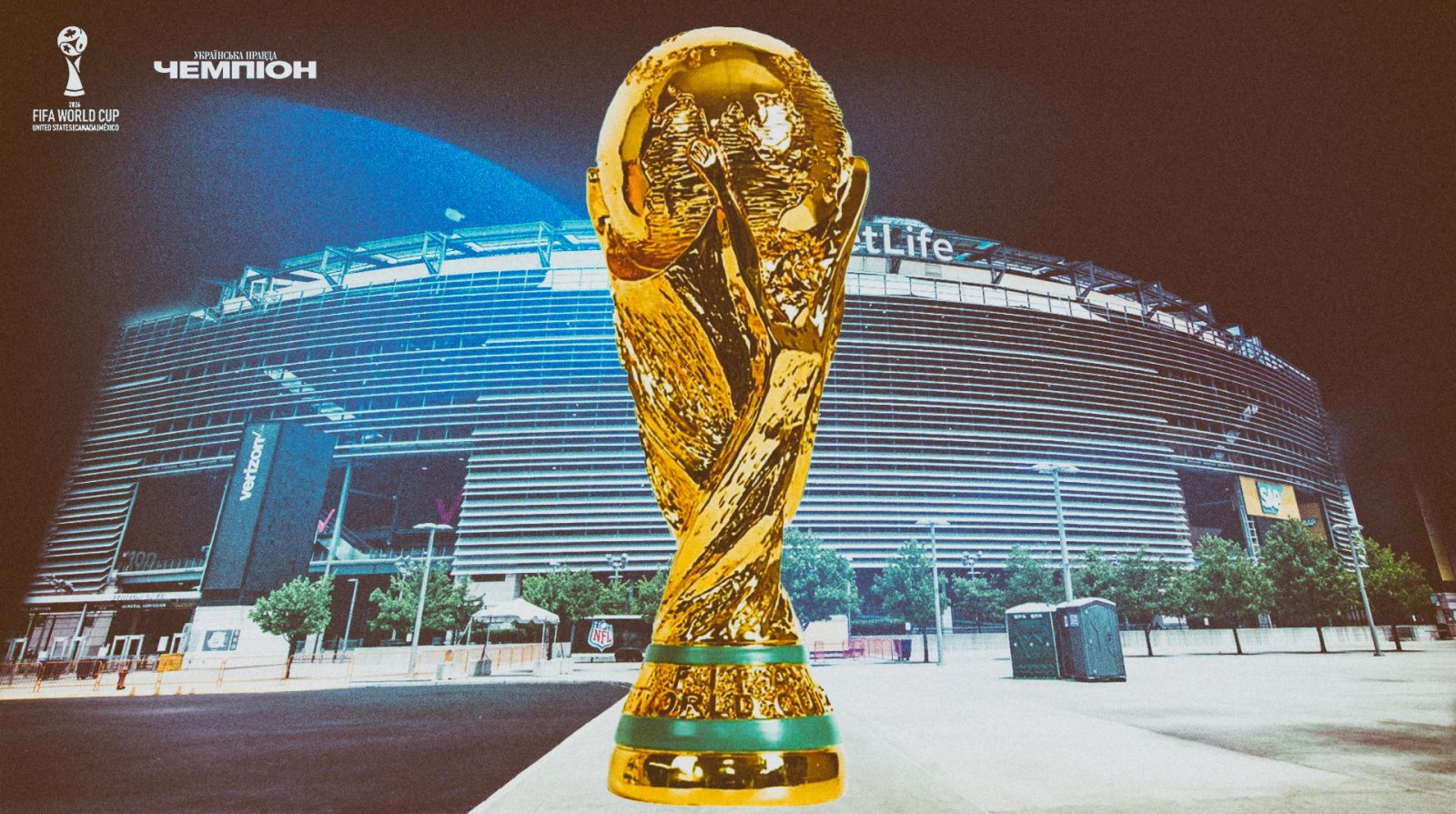
New York / New Jersey (“MetLife Stadium” – this is where the Grand Final will take place)
-
Los Angeles (SoFi Stadium in Inglewood)
-
Miami (“Hard Rock Stadium” – the match for 3rd place will be played here)
-
Dallas (AT&T Stadium in Arlington will host the most matches in the tournament with 9)
-
Kansas City (Arrowhead Stadium)
-
Houston (NRG Stadium)
-
Atlanta (“Mercedes-Benz Stadium”)
-
Boston (Gillette Stadium in Foxborough)
-
Philadelphia (Lincoln Financial Field)
-
Seattle (Lumen Field Stadium)
-
San Francisco / San Jose (“Levi’s Stadium” in Santa Clara)
Mexico (3 cities)
-
Mexico City (legendary stadium “Estadio Azteca” – the opening match of the tournament will be held here)
-
Guadalajara (Estadio Akron)
-
Monterrey (Estadio BBVA)
Canada (2 cities)
-
Toronto (stadium “BMO Field”)
-
Vancouver (BC Place Stadium)
All cities were specially divided into three zones – West Coast, Center and East Coast. This was done so that the teams in the group stage did not fly across the entire continent, but played matches within the same region, minimizing jet lag and long flights.
However, the geography of the 2026 World Cup is very difficult, and the logistics for some national teams, and especially fans, will turn into a real test.
For example, the route between Canadian Vancouver (Pacific Coast) and American Miami (East Coast). By plane, the distance between them is about 4,500 kilometers (or just over 2,800 miles). The direct flight lasts more than 6 hours. The time difference is 3 hours.
For comparison: this distance is greater than the way from London to Tehran or from Madrid to Baku through the whole of Europe.
Despite FIFA’s promise to keep the group stage compact, the schedule has turned into logistical hell for some teams, while others have been given “royal” conditions.
A few teams will suffer the most from the flights:
The national team of Bosnia and Herzegovina drew the toughest ticket in this group stage. They fly over 3,100 miles (almost 5,000 km) in just three group matches!
They play the first match in Toronto (Canada), and then they will have to fly to the other end of the continent – to Los Angeles. This flight (2,175 miles) will be the longest single flight between two matches for any team in the group stage.
After that, another jaunt north to Seattle for the third game.
Canadians and Algeria are “victims” of home stadiums and geography.
Canada has to fly more than 2,000 miles between Toronto and Vancouver just to play in front of their fans in both Canadian host cities.
Algiers will play in Kansas City, San Francisco and again in Kansas City. That’s almost 3,000 miles in the air in two weeks.
The situation with the Egyptian national team is radically opposite. If the draw was ruthless for the Bosnians in view of the flights, the Egyptians must pray for him. During the entire group stage, the Egyptian national team will drive/fly a total of 254 miles (about 400 km). Their schedule is perfect: game in Seattle – short trip to Vancouver – back to Seattle. Moreover, if Egypt wins their group, they may not leave Seattle at all until the Round of 16. Five matches with almost no flights.
Paraguay became the only team in the tournament to play all three group stage matches in one single American state — California. They will only migrate between Los Angeles and San Francisco, covering a modest 337 miles.
Further playoff chaos
If at the group stage, FIFA still somehow restrained geography, then analysts have already calculated the potential playoff routes. The Cape Verde team is at the highest risk of a “chaotic” schedule: in a worst-case grid progression scenario, their total journey through constant coast-to-coast zigzags could be nearly 13,000 kilometers.
All participants of the World Cup
For the first time, 48 national teams will play in the tournament instead of the usual 32. Participants are divided into 12 groups (4 in each):
-
Group A: Mexico, South Korea, South Africa, Czech Republic;
-
Group B: Canada, Switzerland, Qatar, Bosnia and Herzegovina;
-
Group C: Brazil, Morocco, Scotland, Haiti;
-
Group D: USA, Australia, Paraguay, Turkey;
-
Group E: Germany, Ecuador, Ivory Coast, Curacao;
-
Group F: Netherlands, Japan, Tunisia, Sweden;
-
Group G: Belgium, Iran, Egypt, New Zealand;
-
Group H: Spain, Uruguay, Saudi Arabia, Cape Verde;
-
Group I: France, Senegal, Norway, Iraq;
-
Group J: Argentina, Austria, Algeria, Jordan;
-
Group K: Portugal, Colombia, Uzbekistan, DR Congo;
-
Group L: England, Croatia, Panama, Ghana.

FIFA
Match time
Given the difference in time zones, for Ukrainian fans, watching matches will be no less a test than flights for some teams. In some places, the first match of the day will start at 7 or 8 p.m. Kyiv time. There are also slots at 10 p.m. and 11 p.m. The rest are at night or early in the morning.
Format
First, the national teams will play a group tournament according to the “one-on-one” system. That is, the team will play 3 matches in the group stage.
The 2 best representatives from the group (24 teams) and the 8 best national teams, which took the third places in their quartets, enter the playoffs. For the first time in history, the playoffs will start from the round of 16.
A total of 104 matches will be played at the 2026 World Cup. The final is scheduled for July 19 at the giant “MetLife Stadium” (New York/New Jersey), which can accommodate more than 82,000 spectators.
Interesting fact: Mexico City’s legendary Estadio Azteca, which will host the opening match, will become the first arena in history to host three World Cup matches 56 years apart. Moreover, in 1970 and 1986, the final was held at Azteca.

“Azteca”
Getty Images
Prize fund
The teams that will play in the final part of the 2026 World Cup will receive $727 million in prize money from FIFA. It should be noted that compared to the 2022 World Cup, the International Football Federation doubled the payments.
Each national team that reached the final stage of the tournament is guaranteed to receive 11.5 million. Of them, 9 million are prize money, and 2.5 million are to cover the costs of preparing for the World Cup. Another $655 million is distributed depending on the results that the teams will show at the end of the tournament.
Teams ranked 33rd to 48th will receive $10 million each.
Places 17-32 are valued at $11 million.
9-16 places – 15 million.
5-8 places – $19 million.
The team that finishes fourth will receive 27 million. Bronze medalist – 29 million dollars. The runner-up – 33 million dollars, the champion – 50 million dollars.
Where to watch
You can watch matches of the World Cup in Ukraine on the MEGOGO media service, which is the official broadcaster of the tournament. More about broadcasts by link.
Who is the favorite for the World Cup?
The main contenders for the victory in the world championship are the teams of Spain, France and England. The odds for their victory are 5.5, 6.0 and 7.0 respectively. You can read more about bookmakers’ quotes by link.