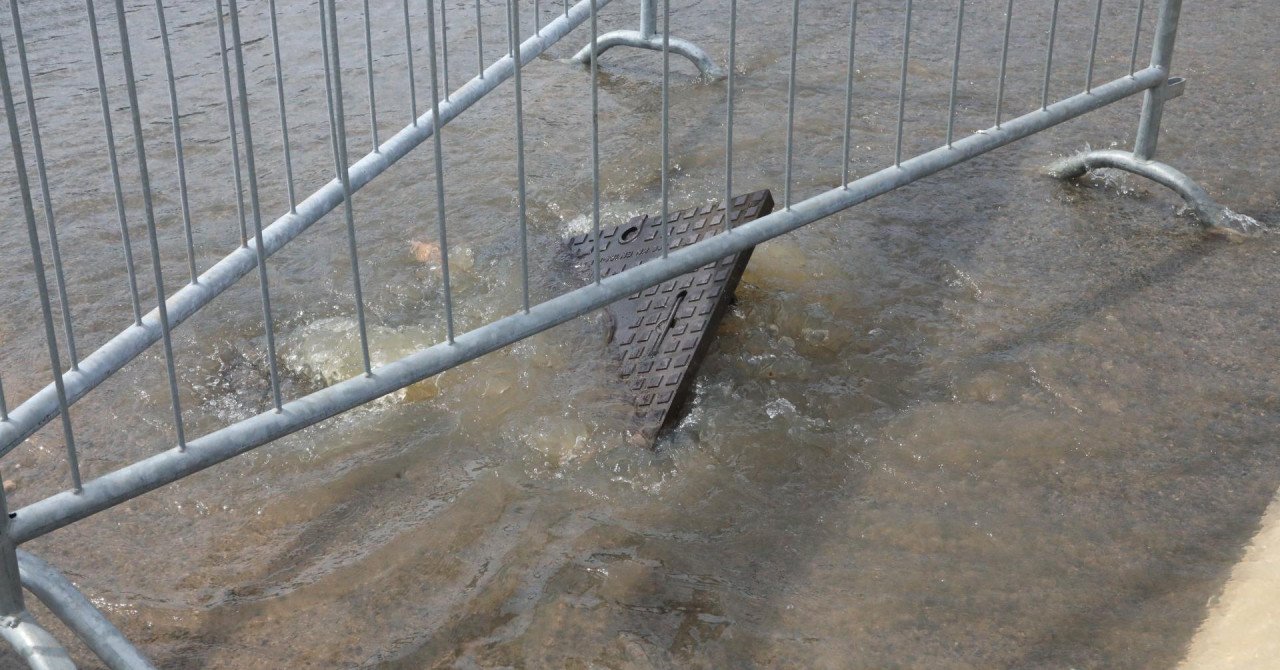
After the heavy rain that fell in Koprivnica on Sunday and briefly flooded part of the streets, the question arose of the functioning of the drainage system after the agglomeration, and the director of the utility company KC Vode Zdravko Petras he assessed that the system mostly functioned as expected.
Petras told Hina that the biggest problem was temporarily blocked drains, because of which some streets were briefly under water. He explained that the frequent flooding of underpasses near Podravka is not related to rainwater drainage, but to the failure of the pumps that ensure the pumping out of water there.
Speaking about the situation elsewhere in the city, he pointed out that a very large amount of precipitation fell during the storm, but that five new retention basins, built as part of the agglomeration project, successfully accepted the excess water. The agglomeration of Koprivnica ended about a year ago.
“The retention basins were filled, and the water was then pumped through sewer collectors towards the suburban settlement of Herešin. All overflow systems were in operation, and the Koprivnica stream was not even half full,” reported Petras.
He added that during the first 30 to 40 minutes of the storm, a part of the drain was blocked by branches and leaves that the storm carried from the trees along the roads, because of which the water could not flow smoothly.
According to him, the sewage system was fully loaded during that period, but after the withdrawal of water through the collector network, most roads quickly emptied.
Petras emphasized that the maintenance of drainage and storm drains is not the responsibility of KC Voda, but the services responsible for road infrastructure and its maintenance.
He also assessed that the agglomeration project significantly increased the system’s resistance to heavy rainfall.
“The new 13,000 cubic meters of retention capacity, which we didn’t have before, significantly helps. If there was no agglomeration, the situation would certainly be worse,” said Petras, adding that a part of the sewage network was renovated in the central part of the city and retention basins were built that reduce the load on the system during heavy rains.