Israel will sooner or later join the deal between the United States and Iran to resolve the conflict in the Middle East. This opinion was expressed on the evening of June 15 by American Vice President JD Vance. However, speaking on the same day, Israeli Prime Minister Benjamin Netanyahu made it clear that he was not even briefed on the details of the US-Iranian memorandum. Behind the scenes, Israeli security officials are sounding the alarm about the deal, fearing it will provide Iran with an influx of resources that it could use to support radical groups in the Middle East.
Israel will join the US-Iran agreement when the diplomatic process has “moved forward a little.” JD Vance announced this on the evening of June 15 on NBC. “The United States has its own interests (in the diplomatic process with Iran.— “Kommersant”), he emphasized. “Israel is often a good partner.” We have the same interests, but sometimes we disagree on various issues. And I think it’s completely logical.” Mr. Vance added that the upcoming agreement with Iran will “make safer” not only Israel, but the entire Middle East.
On the same day, Benjamin Netanyahu gave his first press conference in three months on the US-Iran deal.
The prime minister noted that he and his team were not aware of the details of the memorandum.
“This agreement was made by the President of the United States. And he believes that he can really combine the opening of the Strait of Hormuz and the abolition of the nuclear program (Iran.— “Kommersant”),” explained Mr. Netanyahu. He added that he expressed his thoughts to the US President during direct contacts. “I said that we have our own interests, primarily in relation to the nuclear threat. I am convinced that there will be no such threat for us,” the prime minister said.
Meanwhile, representatives of the Israeli intelligence community are sounding the alarm about the likely negative impact of the upcoming US-Iran agreement on the situation in the region. “Will we be deprived of freedom of action in Lebanon? Will Trump force Israeli troops to withdraw from southern Lebanon? And most importantly, how long will it take for Iran to become a regional power under the protection of the United States, gain freedom to sell oil, control the Strait of Hormuz and threaten its neighbors? – asks Al-Monitor’s source in the security forces of the Jewish state.
Israeli security officials fear that Iran will “learn lessons” from the latest conflict and “build a modern air force once sanctions are lifted.”
“The next time we have to launch a critically important war against it, a completely different Iran will be waiting for us,” an Israeli source suggested to Al-Monitor.
In this case, he said, it would be difficult for Israel to establish air superiority, as was the case during Operations Like a Lion in 2025 and Operation Lion’s Roar in 2026.
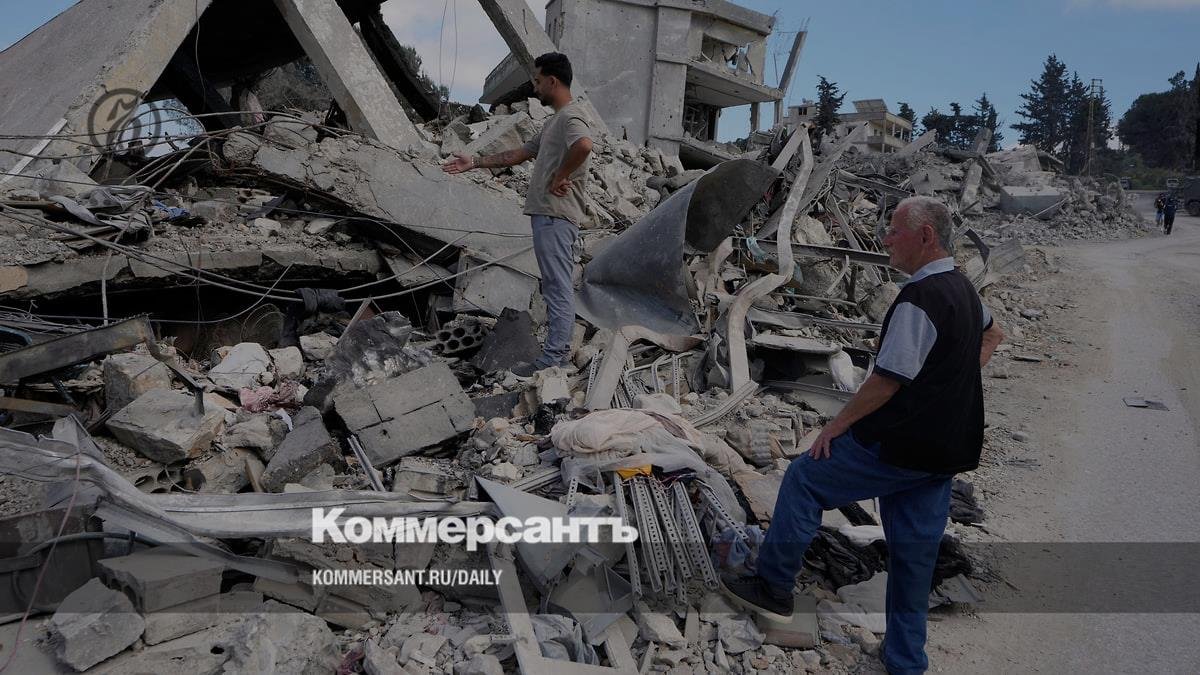
Speaking on the sidelines of the G7 summit in France on June 16, Donald Trump did not hide the fact that he would like to stop Israeli operations in Lebanon, which in recent weeks almost led to the breakdown of the negotiation process between the United States and Iran. “Israel has been fighting Hezbollah for too long, and too many people are dying as a result,” the head of the White House emphasized during a meeting with the Emir of Qatar, Tamim bin Hamad Al Thani. “You don’t need to tear down an apartment building every time you look for someone, because there are a lot of people in these buildings, and believe me, not all of them are members of Hezbollah.”
Mr. Trump said he would suggest that Israel delegate the fight against Hezbollah to Lebanon’s neighbor Syria because it would be “better able to do the job.”
Nevertheless, Israel is preparing to expand military activity in the region, according to Maariv sources in the local security apparatus. According to them, the Israel Defense Forces (IDF) intends to resume strikes on Yemen, where the Iranian-allied group Ansar Allah (Houthis) operates, as well as attack the radical Palestinian group Hamas in the Gaza Strip, which refuses to disarm contrary to its commitments in October last year.
The Gaza Strip is seen by Israel as a place with a particularly high potential for conflict, Maariv sources say. According to them, the danger from Hamas and related groups could increase significantly if a deal between the United States and Iran does take place. In this case, Tehran will have access to large financial resources, which, according to the Israelis, it will immediately use to strengthen its regional proxies. In this regard, it is in Israeli interests to carefully distribute military force on all fronts, without entering into a full-scale conflict with Iran, Maariv’s interlocutors summarize.