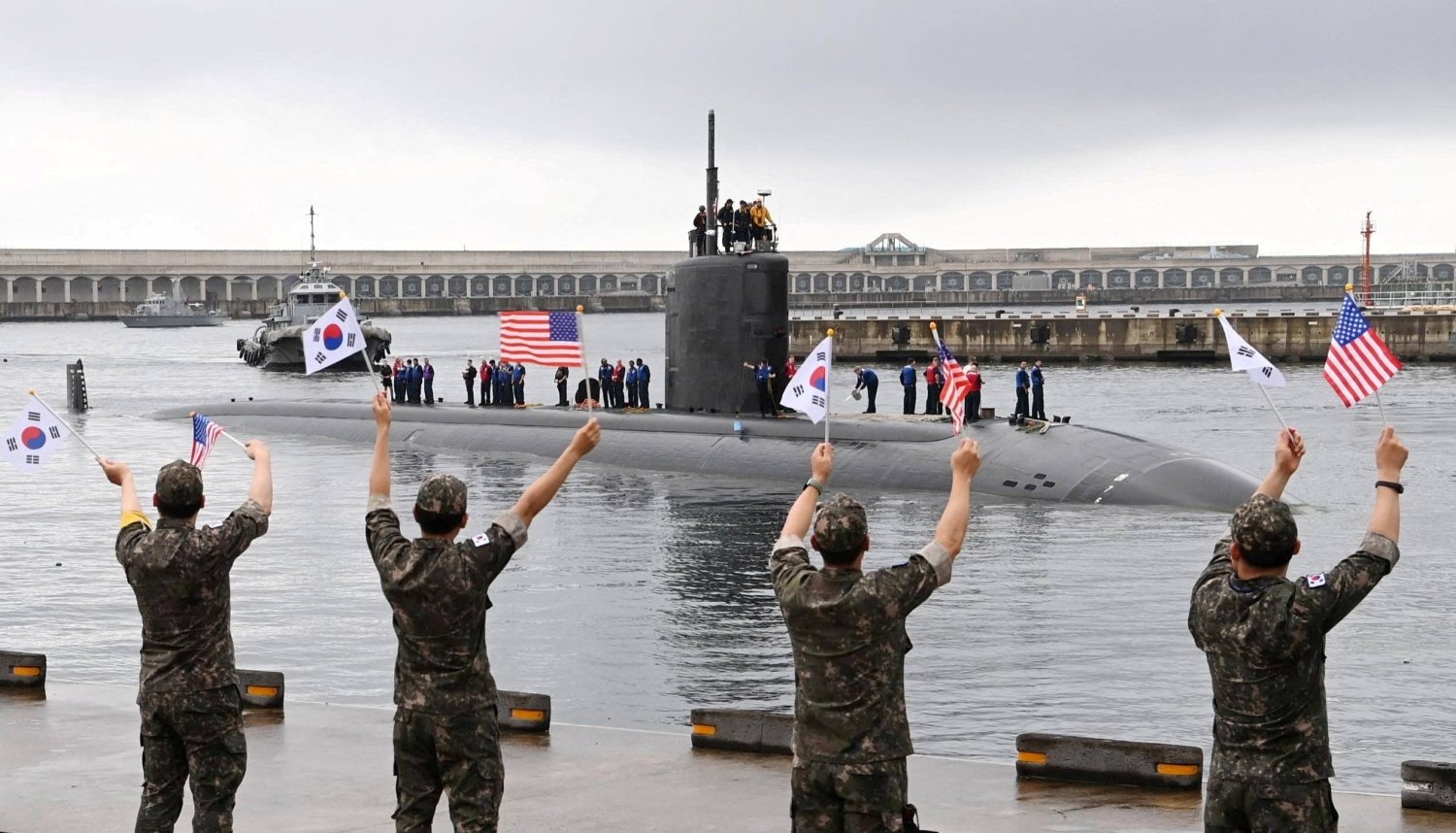
South Korea insists its newly announced plan to build nuclear-powered submarines by the mid-2030s is aimed squarely at countering North Korea. But while Pyongyang may be the immediate justification, the decision carries implications far beyond the Korean Peninsula, with one country likely to be watching particularly closely: China.
In the cold logic of military planning, stated intentions matter far less than capabilities.
This means Beijing is unlikely to focus solely on Seoul’s defensive rhetoric. Instead, analysts say, Chinese strategists will see a future fleet of nuclear-powered attack submarines — operated by a U.S. treaty ally — possessing the endurance, stealth and operational reach to pierce deep into regional waters and strategic chokepoints for extended periods.
Such a capability would complicate Chinese naval planning and strengthen the broader undersea deterrence gradually taking shape across the Indo-Pacific.
James Holmes, a maritime strategist at the U.S. Naval War College, believes Chinese planners will have little difficulty interpreting South Korea’s future nuclear sub fleet as part of a broader U.S.-aligned maritime architecture.
That assessment goes to the heart of why the South Korean project, known as the Jang Bogo-N program, matters beyond the waters surrounding the Korean Peninsula.
While Seoul has justified the program as a response to North Korea’s growing submarine-launched ballistic missile threat, Chinese military planners are unlikely to evaluate the move in isolation.
Australia is already moving toward operating nuclear-powered submarines under the AUKUS partnership, with the country’s navy expected to receive Virginia-class boats before transitioning to a future AUKUS-class design.
Combined with the United States’ existing undersea dominance, South Korea’s future nuclear subs would likely be seen by Beijing as another element in an expanding network of allied undersea forces stretching across the Indo-Pacific.
For China, the challenge is not necessarily the number of submarines South Korea may eventually build. Rather, it is the cumulative effect of allied capabilities. A future operating environment featuring American, Australian and South Korean vessels — and potentially also Japanese further down the road — would present Beijing with a far more complex undersea picture than it faces today.
Such concerns are not merely theoretical. Holmes argues that future South Korean nuclear subs could influence Chinese military planning even in emergencies where Seoul would have no intention of directly participating.
Chinese “commanders would have to wonder whether the ROK (Republic of Korea) Navy would intervene,” Holmes said when asked about a Taiwan scenario. “Doubt and fear lie at the heart of deterrence.”
The strategic effect, in other words, stems partly from uncertainty itself. Even if South Korea remained formally neutral during a regional crisis, Chinese military planners would still be compelled to account for the possibility that South Korean submarines could become…