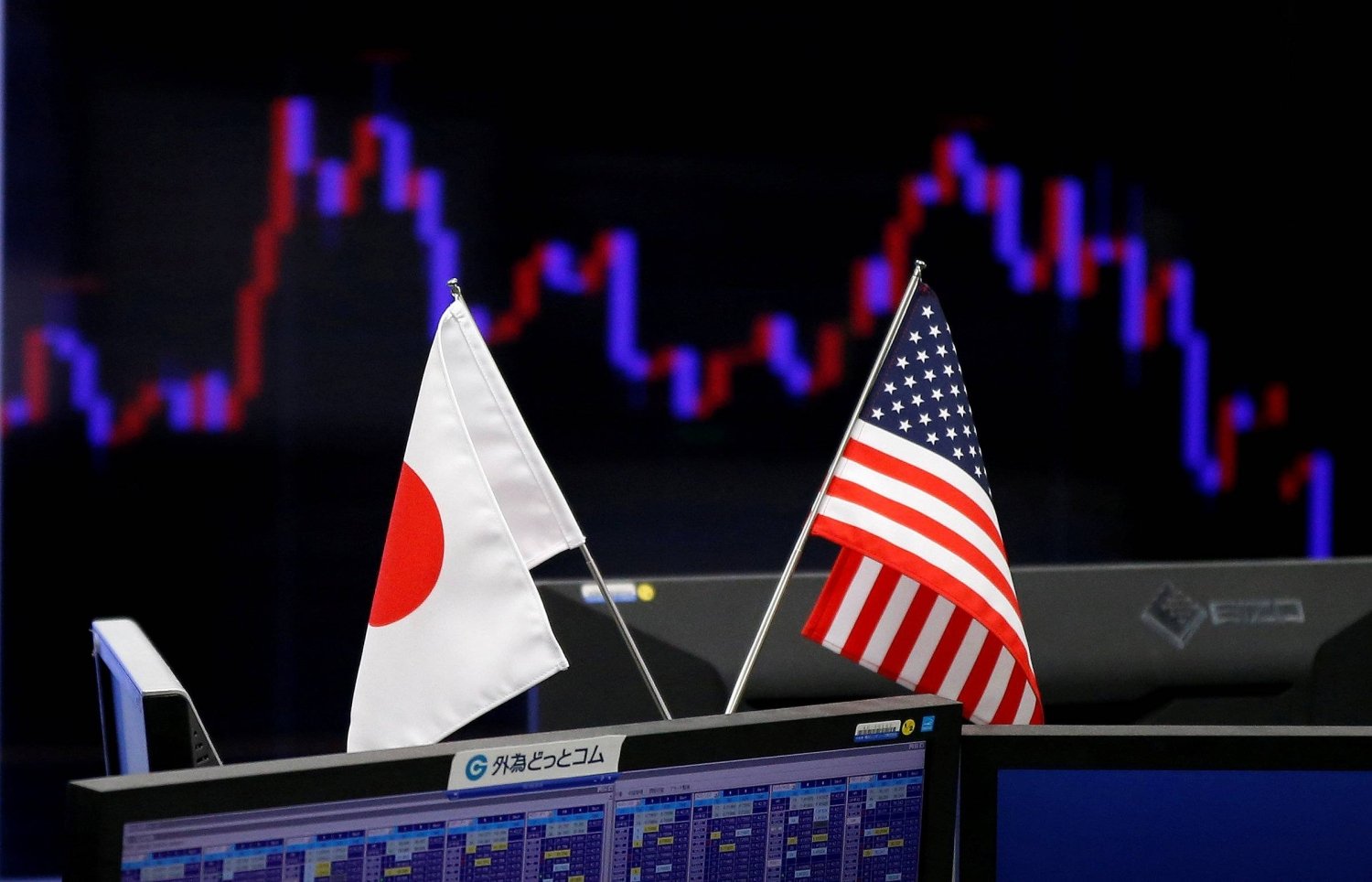
The yen was trading back above ¥160 to the dollar late last week and lingered there through Monday, the market testing Japan’s tolerance for a weak currency and daring it to intervene.
Safe-haven buying of the dollar due to the conflict in the Middle East and growing expectations of a rate increase in the United States following stronger-than-expected May jobs data helped weaken the yen.
By midday Monday, the Japanese currency was trading at ¥160.39 to the dollar, its weakest since late April, when Tokyo last intervened to prop up the yen.
“As Japanese government officials are expected to continue their verbal warnings to curb further depreciation ahead of next week’s Bank of Japan policy meeting, the dollar-yen is likely to see range-bound trading around the ¥160 mark,” a report by SMBC Trust Bank said on Monday.
With the yen now entering the territory that many investors believe is near the red line for market intervention, the tone of verbal intervention by top financial officials will be closely monitored.
U.S. economic data due out this week, such as the consumer price index and producer price index, could affect the foreign exchange markets. If data indicate inflationary pressures, expectations for Federal Reserve rate increases could grow further, potentially triggering another wave of dollar buying.
In that case, it’s possible that Japanese financial authorities will intervene and the dollar-yen rate could remain highly volatile, a report by Sony Financial Group said on Monday.
From late April through May, Japan’s Finance Ministry spent a total of ¥11.73 trillion ($73 billion) to support the yen to defend the ¥160 mark.
The currency intervention took the yen to the ¥155-range, but those gains vanished in a little over a month. With market interventions widely seen as a short-term fix, analysts note that the yen needs support from monetary policy as well.
Investors are expecting a BOJ rate increase next week. Data from Totan ICAP show the market was pricing in a 94% chance of a rate hike as of Monday morning.
In a speech last week, BOJ Gov. Kazuo Ueda discussed how the central bank should navigate monetary policy in light of the recent oil supply shock. The market heard a hawkish message in his words.
“Japan is currently in a situation in which the secondary spillover effects of inflation stemming from higher crude oil prices are more likely to lead to an upward deviation in underlying inflation,” Ueda said.
“The bank considers that it is necessary to make decisions about future policy based on this premise.
“Even if the situation remains unclear, should it be judged that upside risks to prices outweigh downside risks to economic activity, it will be necessary…