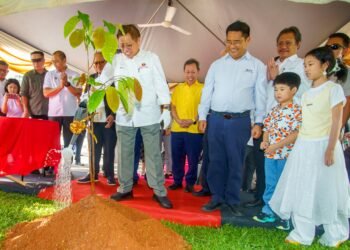

The iconic ara tree the retreat is named after.
 ASPIRING to be a wiser wanderer this year, I made a point of looking for destinations that would offer the same quality of leisure and relaxation, minus the hefty carbon footprint. In addition to choosing a place based on its eco-sustainability criteria, I also look for accommodations that employ local staff and give back to their local community (Community-based Tourism – CBT). I’d like to think that whatever one spends on ‘healing’ should also trickle its way back into the community, helping the Sabahan economy thrive.
Enter Ara Dinawan Island Retreat — located just a 15-minute boat ride from the Apai Jetty (you can park your car at the Beringgis Riverside Seafood Restaurant), off the coast of Kinarut. As you cruise away from the jetty, the chaotic buzz of Kota Kinabalu fades into a rhythmic hum of rolling waves and rustling canopy. This is the welcome ritual of the Ara Dinawan Island Retreat, a privately managed paradise that stands out as Sabah’s first exclusive eco-conscious glamping haven.
Named after its oldest resident — a magnificent, 40-foot Ara (Banyan) tree that has stood sentry on the island since World War I — the retreat serves as an example of how low-impact tourism can preserve the raw identity of Borneo’s vulnerable ecosystems.

Twin sharing tent with comfy beds.
Where standard island developments typically clear-cut shorelines to install heavy concrete infrastructure, Ara Dinawan chose a different blueprint: adaptation. Resort Manager Johnny Ong notes that the choice of glamping was intentional, allowing the retreat to weave its structure meticulously between existing roots and branches.
The entire resort caps its daily footprint at just 30 guests, ensuring that the island’s tranquil spirit remains entirely unsullied by the pressures of mass over-tourism.
Ara Dinawan’s sustainability blueprint
For Ara Dinawan, eco-ethic isn’t just a marketing tagline, but it is something that is incorporated directly into the daily mechanics of the island’s operations.

Small pool for little children.
From 9am to 3pm, the resort’s kitchen, clubhouse, and essential facilities run entirely on clean, natural solar energy to drastically curb operational carbon emissions. The 14 elevated luxury tent villas and communal spaces were also fashioned almost entirely using locally produced and upcycled materials, blending seamlessly into the lush tropical jungle backdrop.
Unlike most isolated escapes, Ara Dinawan is connected to a freshwater pipeline from the mainland, drastically reducing the environmental toll of local extraction. This is paired with an extensive rainwater harvesting system used for maintaining the grounds and rinsing sea equipment.
In addition, all refuse is strictly categorised at the source — glass, paper, and plastics — and systematically shipped back to recycling hubs in Kota Kinabalu. Food waste is also collected for composting, proving that no surplus goes to waste.
Roughing it in luxury
Stepping into one of the 14 safari-style tents feels less like traditional camping and more like open-air indulgence. Elevated safely on solid wooden platforms, each tent is remarkably spacious, boasting comfy beds, private en-suite bathrooms, heated showers, and eco-friendly toiletries boasting the Ara Dinawan brand name.
The tent design allows the cool South China Sea breeze to act as natural climate control throughout the day, although modern air conditioning is seamlessly integrated for a comfortable night’s rest. Outside your canvas door, a private deck opens directly toward the shoreline, offering front-row seats to a breathtaking sunrise!

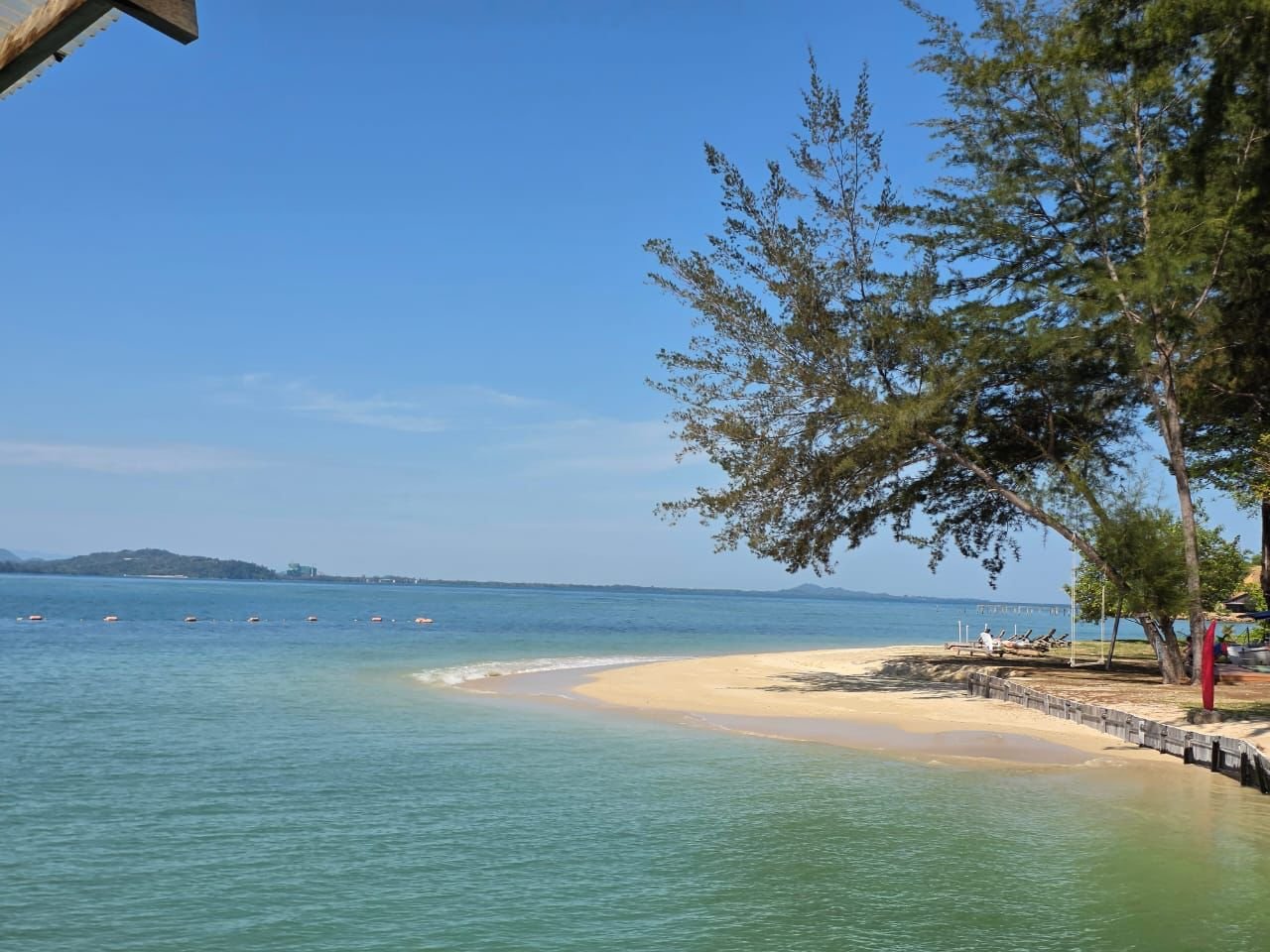
Ara Dinawan Island’s private beach.
It was my first glamping experience, and the team at Ara Dinawan made sure that I had the best time! While electricity in the tents doesn’t get switched on until 3pm, I was still able to lounge comfortably at the reception/dining area with a free flow of coffee, country music and cool, relaxing sea breeze.
There is no Wi-Fi provided at Ara Dinawan, but you’ll be pleased to know that you’ll still get solid 5G coverage on most mobile networks. At the end of the day, who needs Wi-Fi when there is a gorgeous white sandy beach to enjoy?
A natural playground above and below
The true luxury of a low-density private island is the space it grants you to disconnect. The shallow coral reefs flanking the shore are teeming with marine life and are easily explorable on kayaks or a casual shore snorkel.
For those looking to keep their feet dry, grassy, untampered paths cut through the centre of the island, where, weather permitting, you can go on a short stroll to the other side of the island to catch Borneo’s legendary, fire-hued sunsets.
More importantly, the retreat bridges the gap between leisure and active conservation. Through collaborations with local institutions like Universiti Malaysia Sabah (UMS), guests can engage in educational conservation programs, including monitoring localised coral restoration projects and learning about the island’s seasonal sea turtle nesting sites.

Ara Dinawan Island.
Unlike other island resorts that offer plenty of activities to do, Ara Dinawan is truly meant for resting and relaxing. If you feel that a night’s stay here is too much of a time commitment, you can also opt for a day trip package that includes snorkelling, kayaking, lunch and tea before heading back to the mainland. While you’re in this part of Sabah, you may also want to visit the Papar tamu (traditional open-air market) — happening every Sunday from 6am to noon — as well as other attractions.
Ultimately, Ara Dinawan demonstrates that premium hospitality does not require the erasure of natural heritage. By keeping its volume low, its community ties tight, and its carbon footprint light, this quiet sanctuary offers travellers a glimpse of Borneo exactly as it was meant to be experienced — unspoiled, intentional, and profoundly peaceful.