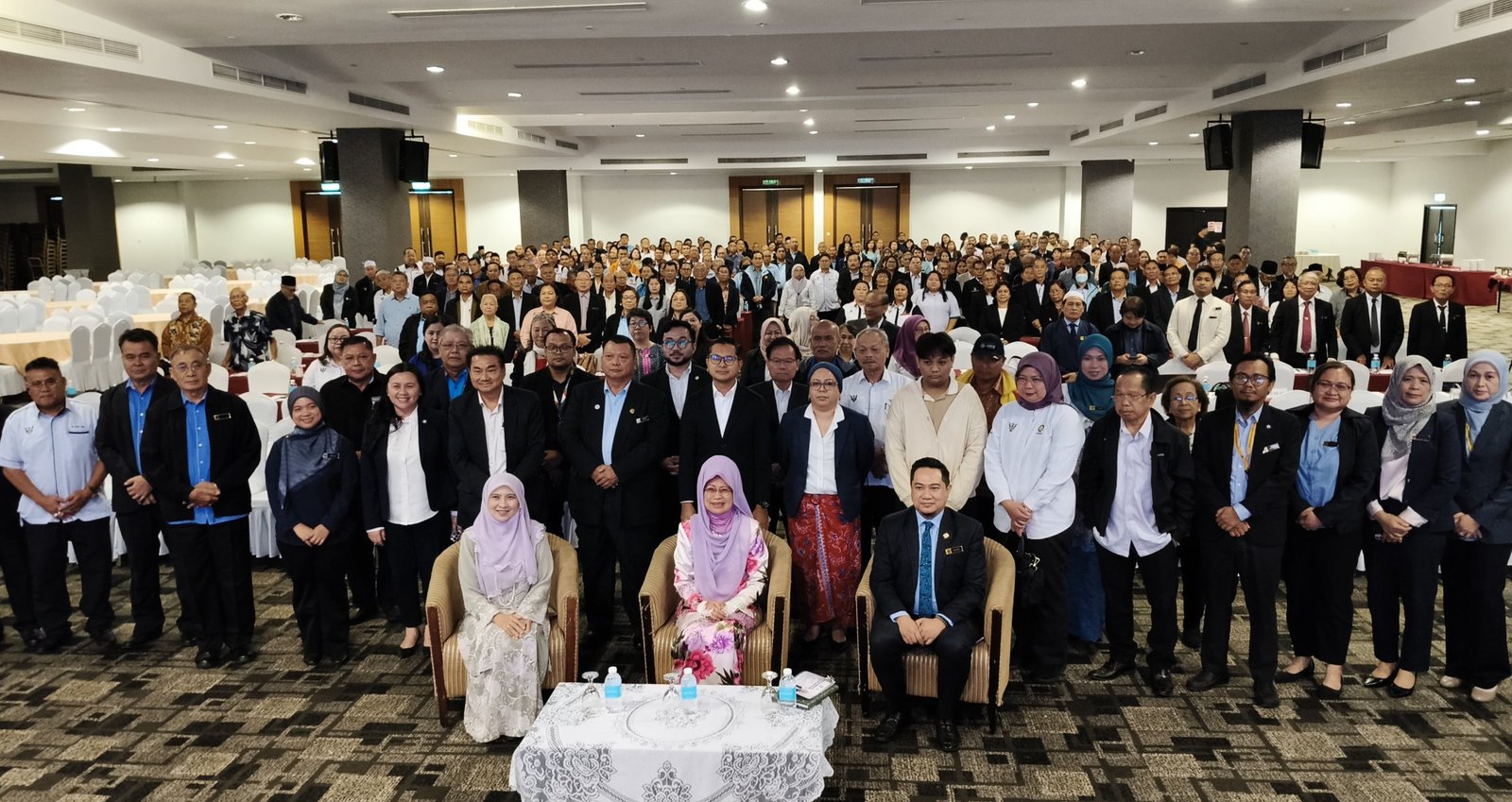

(Seated from left) Farah and Fatimah in a photo call with other guests at the Child Rights Awareness Convention.
SIBU (June 15): The public has been urged to remain vigilant against child grooming, which has been identified as one of the factors contributing to underage marriages among teenagers.
Minister for Women, Childhood and Community Wellbeing Development Dato Sri Fatimah Abdullah said grooming refers to the gradual process by which adults gain the trust of children or teenagers through attention, gifts, sweet promises and emotional manipulation before exploiting them.
“Parents must be aware of this issue and ensure their children do not fall victim to manipulation or false promises by adults,” she said after officiating at the Child Rights Awareness Convention on Underage Marriage here on Monday.
Fatimah stressed that the issue of underage marriage should be addressed through a comprehensive support-based approach that prioritise children’s rights to education, health and wellbeing.
She noted that underage marriages in Sarawak occur through three main channels ― civil marriages, Islamic marriages under the Sarawak Islamic Religious Department (Jais), and customary marriages.
For customary marriages, she said community leaders such as tuai rumah (longhouse chief), pemanca and temenggong play a vital role in the decision-making process.
“Every decision must take into account the best interests of children and their future,” she said.
Fatimah pointed out that early marriage often leads to students dropping out of school before completing their secondary education.
“We want our children to remain in school at least until Form Five.
“Education empowers them, opens doors to better opportunities and helps them break out of the cycle of poverty,” she said.
Fatimah added that marriage and pregnancy at a young age also pose health risks, as teenagers may not be physically or emotionally prepared for childbirth and parenthood.
She added that the government has established various support mechanisms for teenagers facing unplanned pregnancies, including baby hatch facilities, safe shelters and assistance with adoption procedures.
Fatimah added that opportunities are also available for affected students to continue their education, including transfers to other schools where necessary.
“A mistake should not mean the end of someone’s future.
“We want them to be given a second chance and continue building a better future through education,” she said.
Meanwhile, Children’s Commissioner of the Human Rights Commission of Malaysia (Suhakam) Dr Farah Nini Dusuki said the convention forms part of a nationwide series of programmes aimed at raising awareness of children’s rights and preventing underage marriages.
She said the Sarawak edition was specifically designed for community and traditional leaders, who are often closest to local communities and play a key role in matters involving children.
According to Farah, various conventions, dialogues and workshops are being conducted nationwide to promote better understanding of children’s rights and the significance of prioritising the best interests of every child.
The convention was organised through a collaboration between the Ministry of Women, Childhood and Community Wellbeing Development and Suhakam.