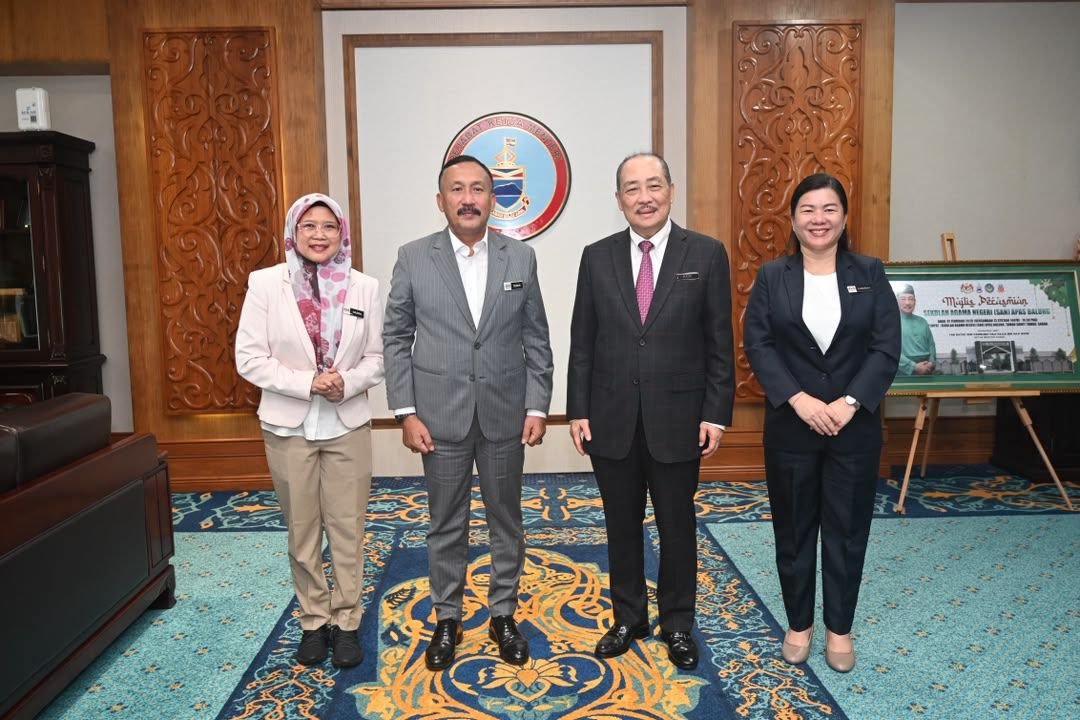

Ruslin (second left) posing for a photo with Hajiji at the MTMD meeting.
KOTA KINABALU (June 15): Sabah has recorded a 5.9 per cent decrease in the rate of drug or substance addicts and abusers in 2025, said National Anti-Drug Agency (AADK) director-general Datuk Ruslin Jusoh.
He said based on statistics, 8,665 people were recorded as involved in substance abuse in 2025, compared with 9,207 cases in 2024.
“Of that total, Sabah recorded a rate of drug and substance addicts and abusers of 230 people per 100,000 population, thus placing Sabah in the best position in the country for the year 2025.
“This success is clear evidence of the effectiveness of coordinated actions by all parties in curbing the supply and demand for drugs and prohibited substances in the state of Sabah,” he said after attending the Sabah State Level Anti-Drug Action Council (MTMD) Meeting Number 1 of 2026, chaired by the Chief Minister Datuk Seri Panglima Hajiji Noor here on Monday.
Ruslin said to ensure that the momentum continues towards the 2030 Controlled Drugs target, the MTMD meeting also approved two consideration papers, namely the ‘Perluasan Program Tempat Kerja Bebas Dadah (TEKAD) Sektor Awam Negeri Sabah’ and ‘Pemerkasaan SKUAD Antidadah Membangun Komuniti Berdaya Tahan’ which were presented by AADK and the Sabah State Anti-Drug Squad.
The initiatives are part of a new strategic step to develop a society with high resilience while expanding prevention education campaigns and public awareness on the dangers of drug and substance abuse in Sabah.
As a proactive step at the local level, AADK expressed appreciation to the Sabah state government for its support of the Drug-Free Aspiration Village (KABD) programme, which is now focusing on two pilot locations in Sabah, namely Kampung Likas in Kota Kinabalu and Kampung Benoni in Papar.
Community intervention initiatives have also been strengthened through the empowerment of the Anti-Drug Squad programme, aimed at building resilient communities through cooperation between the federal government, state government and local communities.
In addition, AADK is actively mobilising the National Drug-Free Aspiration Tour.
Ruslin said the large-scale programme, launched by Hajiji on Feb 16, uses a two-way strategic action model, namely top-down and bottom-up approaches.
“This hybrid approach aims to mobilise the community in total, thereby building a social defence wall starting from the family institution to reduce dependence and demand for drugs and substances.
“AADK is highly confident that the strong commitment shown by the leadership of the Sabah state government will produce constructive, practical and high-impact results to ensure that Sabah and Malaysia in general are free from the threat of the country’s number one enemy,” he said.