Loading Text-to-Speech…
USA and Iran they chose to withdraw from the negotiating table the great nuclear thorn in order to be able to give immediate and practical way out in some of the other quagmires of the war.
If all goes well without further twists, then next Friday, June 19, Washington and Tehran are set to sign a framework agreement in Geneva that:
- will extend the ceasefire for 60 days on all fronts, including Lebanon
- will open the Straits of Hormuz
- will end the naval blockade of Iranian ports.
In other words, the US and Iran are preparing to sign an agreement that will address not the root causes of the war but some of its effects: in this case the closure of the Straits of Hormuz and the naval blockade of Iran.
Based on such a memorandum of understanding, the Americans would gain by opening the Straits, the Iranians by lifting the naval blockade and the international community from de-escalating pressure on energy prices.

Even with these basics, however, there are details – capable of shaking any deal up in the air – that remain unclear for now.
How will the Straits be reopened? Without tolls and with free access for all, as the US wants, or with fees and under Iranian-Omani control as Tehran wants?
Judging by the restrained optimism that the Americans and Iranians have been expressing in recent hours, then these “small” and procedural things are going to be sorted out, if they haven’t already been sorted out behind the scenes. But what about all the other, “big” ones? Based on what has been leaked, these are to be discussed in due course at a later stage.
As clashes raged over the past few months over the Straits of Hormuz, the Trump administration announced that Iran should:
- to get rid of the enriched uranium it had well hidden in its soil,
- to end its nuclear program and enrichment processes;
- to lose its ballistic arsenal,
- to dismantle the network of proxies (the so-called axis of resistance) that he maintained in the wider Middle East region, a network at the top of which was Hezbollah, on the one hand, and the Houthis, on the other.
Currently, however, on the altar of the opening of the Straits of Hormuz, the US appears to be setting all of the above aside for future settlement, while Trump is calling on Israel to stop bombing Hezbollah positions in Lebanon.

Confusion and anger in Israel
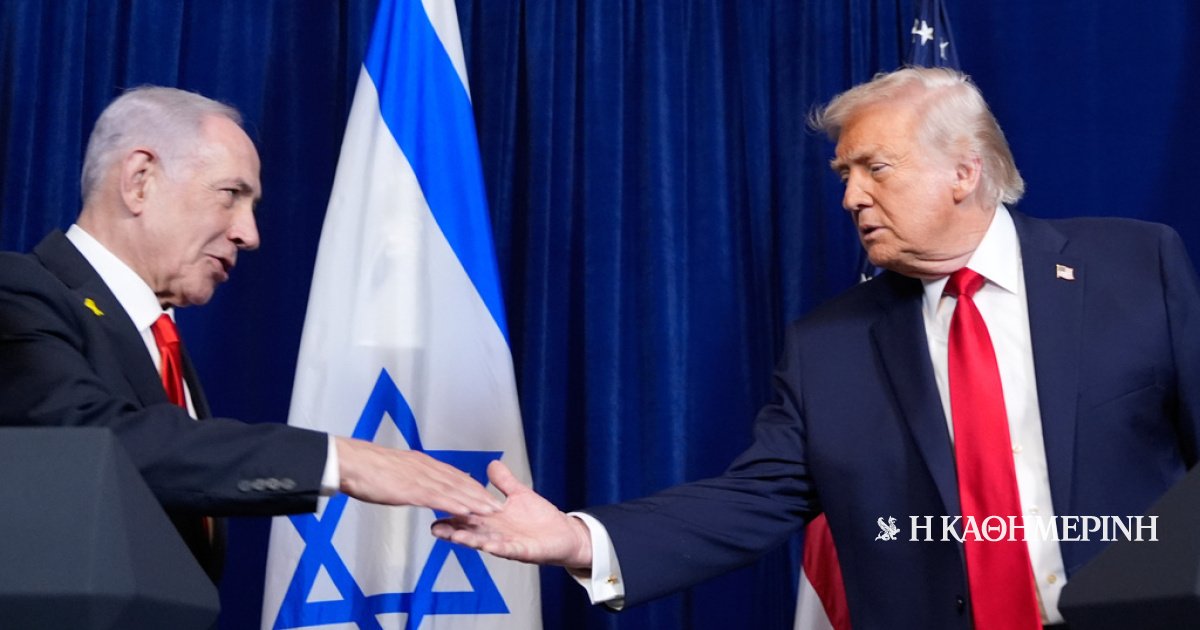
Who doesn’t like all that at all? Apparently in the government of Israeli Prime Minister Benjamin Netanyahu. “Israel will undoubtedly have a leading place at the table of the new Middle East,” said US Vice President Jay D. Vance today, who was recalled to have had contacts with the Iranians in the Pakistani capital, Islamabad, last April. Back in Israel, however, there is no longer complacency, but escalating concern.
“Trump and Netanyahu headed for a rift that could shock US-Israel relations”, characteristically writes Amos Harel in the Israeli Haaretz, underlining that the American president has chosen at this stage “to put the agreement with Iran above all else”, but this fact “doesn’t leave many options for Netanyahu”. (s.b.: far-right Minister of National Security) Ben-Gvir says that the “Trump deal” does not bind Israel and (s.b.: far-right Finance Minister) Smotrich that this agreement is “bad for the whole free world”, as Netanyahu remains silent, we read in another report of the same newspaper, which does not fail to remind us that Israel is headed for parliamentary elections next October.
“Despite his efforts, Netanyahu realized there was nothing he could do to prevent Donald Trump from signing a deal with Iran,” writes Ben Caspit at the Al-Monitor website. Much harsher in their criticism, other Israeli journalists, such as the far-right former MP Yinon Magal, now portray Kushner and Witkoff as “two Jews who sold out their brothers to Israel”Trump as a “loser” and Vance as “scum”, while Israeli Defense Minister Israel Katz makes it clear that the Israeli Armed Forces are not going to withdraw from Lebanon. Disturbances are not limited to the ranks of the Israeli hard-right, however. On the contrary, the majority of Israelis now appear to feel “despair”, “confusion” and “anger” at the turn things have taken on the war front.
Netanyahu’s “hidden” narrative
In the past, whenever the Americans and Iranians seemed to be heading for convergences mediated by the Pakistanis, Qataris, etc., Israel was ratcheting up the tension, sending destabilizing tremors through Lebanon. Could he attempt something similar this week ahead of the signing of the US-Iranian memorandum?

“Netanyahu will not attack Trump himself. He knows Trump is unpredictable and doesn’t like to be challenged. But behind the scenes, it will encourage the narrative that Trump abandoned Israel, that it was Trump and not Netanyahu who failed to complete the mission,” a senior Israeli source told Al-Monitor, speaking on condition of anonymity.
Netanyahu and Trump are both facing crucial electoral contests: with the mid-term elections in November for the American Congress one, with the Israeli parliamentary elections in October the other. The stakes, however, for Netanyahu are comparatively much higher, since a defeat in the election could even open the way for him to be jailed (against the corruption case that still hangs against him).