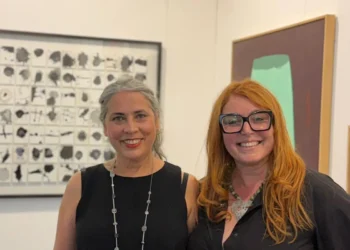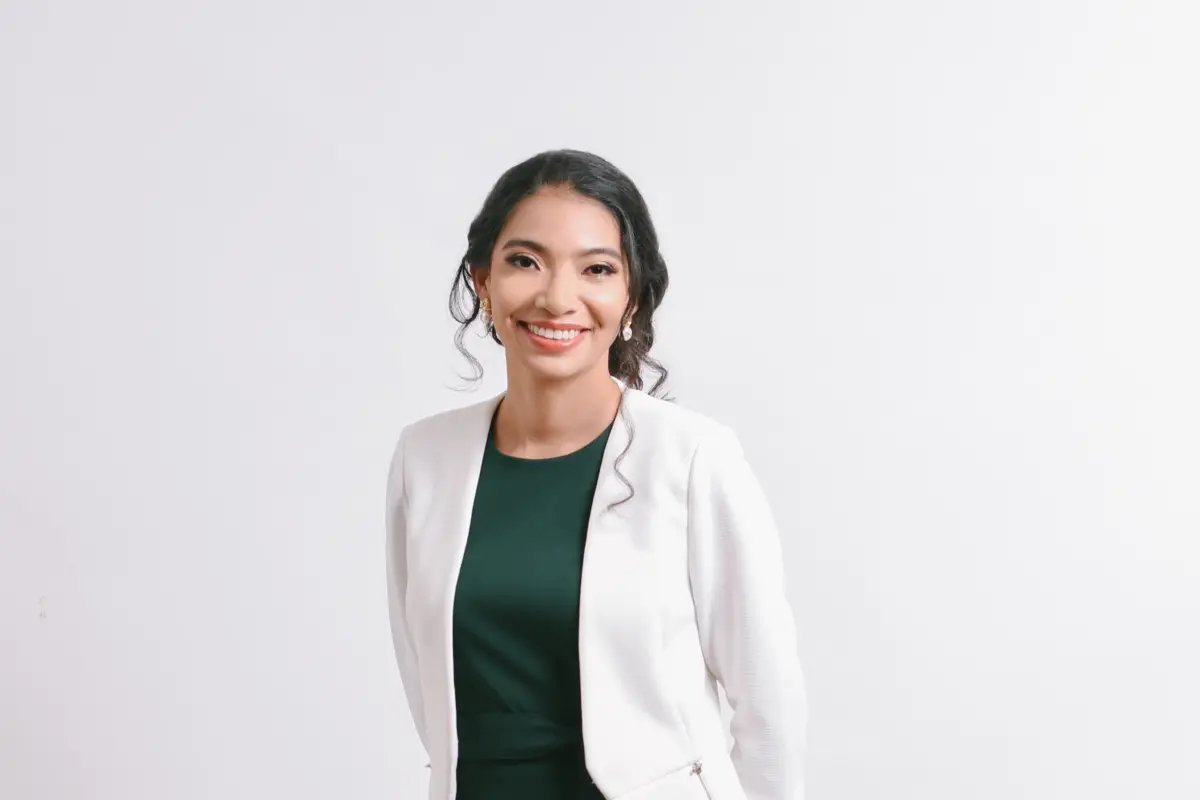
Jovana Ríos has made her voice a tool of change. Based on his experience, he is committed to active participation that transcends speech and becomes action. In this edition of ‘Mía Voces Activas’ she shares what drives her to continue generating impact and transformation.
Jovana, your journey is deeply inspiring. What motivated you to dedicate your life to defending the rights of women and girls?
My first inspiration has been and continues to be the women in my life. I have been fortunate to grow up and share with wonderful women like my mother, my sister, my grandmothers, my aunts, my friends, my co-workers. The solidarity that other women have extended to my life and my personal and professional growth has been a source of motivation to defend the rights of other women and girls. I have also seen first-hand what it means when rights are violated and injustices motivated me from a very young age to want to see a different world, where all women and girls can be free and happy.
You grew up in Santiago de Veraguas as a woman of Afro-indigenous descent. How did your environment influence the construction of your identity and your way of leading?
There are many symbolic moments in my life that have influenced my view of the world. I feel very proud to be from Santiagueña and to have studied at the “glorious” Urracá Institute. My thinking as an adolescent was influenced by an anti-colonial and freedom vision that had space in my school, where I strengthened my activism and youth participation for human rights. Growing up in adverse socioeconomic realities made me very creative, decisive and perseverant, which are elements that continue to be reflected in my leadership. Without a doubt, I wish that the women and girls of Panama and the world do not have to experience adversity to lead and at the same time, I know that my life story is very common. There are many women and girls in Panama and in the world who face multiple obstacles to leading. Today in my role, I ask myself on a daily basis how we can transform these realities so that more women and girls lead. Meanwhile, I continue to use my voice to tell girls and young women that it is possible to achieve it and that adversity also gives us tools. As systems change, our creative resilience – without romanticizing that adversity – gives us a super power. Solidarity between women and girls reminds us that we have the power to build the conditions we dream of to transform the world.
As CEO of Women’s Link Worldwide, what has been the biggest challenge you have faced since taking on the role?
In Panama and in the world, the international NGO sector has been influenced by the elites and most privileged groups. It is a sector that continues to transform. Even so, assuming a leadership position in an organization with a presence in East Africa, Europe and Latin America and the Caribbean, while not belonging to the traditional elites, has been a significant challenge. In many spaces I still face comments in a tone of surprise such as: Are you the director? I also constantly face different forms of racism, sexism, and classism that mean I spend more emotional energy navigating those systems of oppression.
At the same time, I also receive a lot of solidarity and joy. I know that my life experience makes me close to the realities of the town and other women and girls. These challenges also motivate me to continue building conditions that eliminate barriers to access to justice and leadership roles.
You have led high-level international spaces. At what point did you feel your voice began to make a real impact? And along that path, how do you build authentic leadership without losing your personal and cultural essence?
My life as a human rights defender has been deeply influenced by my community experiences. I began to notice that my voice had a real impact when I was an APLAFA volunteer and participated in community projects that allowed me to facilitate comprehensive education workshops on sexuality and prevention of gender violence in communities in Mariato, Atalaya and in schools in Santiago. I left those workshops hopeful. In my current role, I understand the responsibility of contributing to more changes, now in broader geographical spheres, but deep down, it is still very much the same because I see the real impact on each woman and girl that we represent at Women’s Link and that we accompany in their path of seeking justice, which, in addition, through strategic litigation, allows other women and girls to be positively impacted. The way I stay connected to my essence is to start my day and close my day by remembering and honoring where I come from, why I chose this path in life, and how I must use my power and privilege now to honor the struggles of other women and girls.
How does Women’s Link’s legal work translate into concrete changes in the lives of women, girls and gender diverse people?
Our organization works in four areas: reproductive justice, the elimination of gender violence and access to justice for survivors, racial justice and climate justice. Over the past two decades we have led very important legal cases. From achieving the release of hundreds of women unjustly imprisoned for “crimes related to pregnancy” in Rwanda, guaranteeing greater protection for survivors of gender violence in Spain, making visible before the Special Jurisdiction for Peace in Colombia how black women have experienced and continue to experience racism and gender and class inequalities in the context of the armed conflict and we also contributed so that this transitional justice mechanism recognized reproductive violence in the context of armed conflicts, such as abortions. forced labor and forced use of contraceptives. Our work has amplified the power of communities, reshaped policy, and redefined the possibilities of justice. In 2024, for example, we work in 17 countries in the Global South, promoting 14 strategic litigation cases and 12 legal actions against systemic injustices. These actions will benefit more than 55 million women and children through the legal and political changes driven by our work.
Was there a key figure—teacher, family member, or mentor—who influenced the person and leader you are today?
Yes, my mom has been my first mentor. I grew up seeing her as a community volunteer through her Catholic faith. My mother’s story has taught me a lot, for example, that it is possible to profess a faith and also believe in human rights. Even though I grew up in a very conservative context, my mother supported me. My mother took me to mass and also to sexual education workshops. It motivated me to choose, to believe in my dreams, to be persistent. When people want the best for their communities, they do not exclude, but rather create spaces in which you feel welcomed. My mother is still Catholic and when I tell her about my meetings, plans, and other women and girls’ searches for justice, including those that tend to be controversial in conversational contexts, my mother gives me her blessing and I continue to receive it with love. Building bridges and recognizing ourselves in our humanity with love and hope is a beautiful legacy that my mother constantly gives me.
What does it mean to you to represent Panama on international stages?
Being Panamanian in international spaces is always a great responsibility, it moves me and fills my heart. The people of Panama have an anti-colonial history, democratic struggle and a good sense of humor that makes me feel very proud. I love to laugh out loud like a good Panamanian and talk about our diverse cultures and how ancestral generations have made Panama what we are today. I love my country, I am grateful for having been born in this land and I consider that fighting for human rights is one of my ways of honoring our homeland. I dream of a Panama where there is no poverty and where all people have the same opportunities.
From your experience, what are the main barriers that women in Latin America and the Caribbean still face in terms of sexual and reproductive rights?
The main barriers that women and girls still face in Latin America and the Caribbean include the high incidence of sexual violence and unwanted pregnancies, the criminalization of abortion in several countries, and limited access to quality contraceptives. These are restrictions that are made even stronger by traditional gender norms, the lack of comprehensive sexual education, and socioeconomic and geographic inequalities.
Those who are most affected by these barriers are racialized and impoverished women who do not have the same access to services and information about their sexual and reproductive rights. Panama can learn a lot from the experiences of countries such as Argentina, Colombia and Mexico, which have made progress in access to reproductive health services, including the decriminalization of voluntary termination of pregnancy. At Women’s Link we are very proud to have contributed to removing legal barriers and access to voluntary termination of pregnancy services in Colombia.
Beyond your professional role, who is Jovana Ríos in her daily life?
In my daily life I am the one who sets up the “parkins” with the family. I like to be connected with nature, I protect my joy. I have friends who are the best, they are also my family and I enjoy the time we share. I like to go to the park on Sunday with a backpack to read a good book and play with Alika. I have a great life partner with whom I celebrate and appreciate love.
In a global context where women’s rights face setbacks, how can hope and action be maintained?
I think something key is feminist solidarity and collective care. In my experience, feminist solidarity has been fundamental to sustain me. It has allowed me to recognize that there are ways to complain and take action without ceasing to take care of ourselves in the process; that we travel together and that we can support each other, challenging capitalist practices. From there, we share our experiences, our forms of care and the knowledge that our ancestors have transmitted to us from generation to generation to sustain us collectively. I also consider it important to leave behind the idea that we must sacrifice ourselves to the point of exhaustion or “die for the cause.”
It is necessary to think and build forms of struggle that do not destroy us, but rather take care of us. That is precisely the power of the community: it allows us to reclaim joy as a political act of resistance and freedom. Happiness, in this sense, can be a tool for social transformation, capable of sustaining hope and action to build a more just world for all people, from their own visions of justice.
Finally, what advice would you give to young women who want to influence the defense of human rights and generate changes from their communities? How can they begin to exercise leadership from their own spaces, even without having formal positions?
I would tell them to identify spaces, groups or organizations in their communities and to identify mentors or people in their environments who support their dreams, projects and passion for human rights. If you can’t find a group or space, form one with your friends or schoolmates. There is no small community impact and social transformations begin in the neighborhoods. I would tell them that it is not necessary to have a formal position, I did not always have one.
Activism and citizen participation are central to the defense of human rights. If you want to be a human rights defender, know that it is a path with complexities and at the same time, it brings love, hope and freedom to your professional and personal life.
Jovana Rios
CEO of Women’s Link Worldwide
I dream of a Panama where there is no poverty and where all people have the same opportunities.