To declare martial law…
Former South Korean president imprisoned for 30 years for “fabricating war conditions”
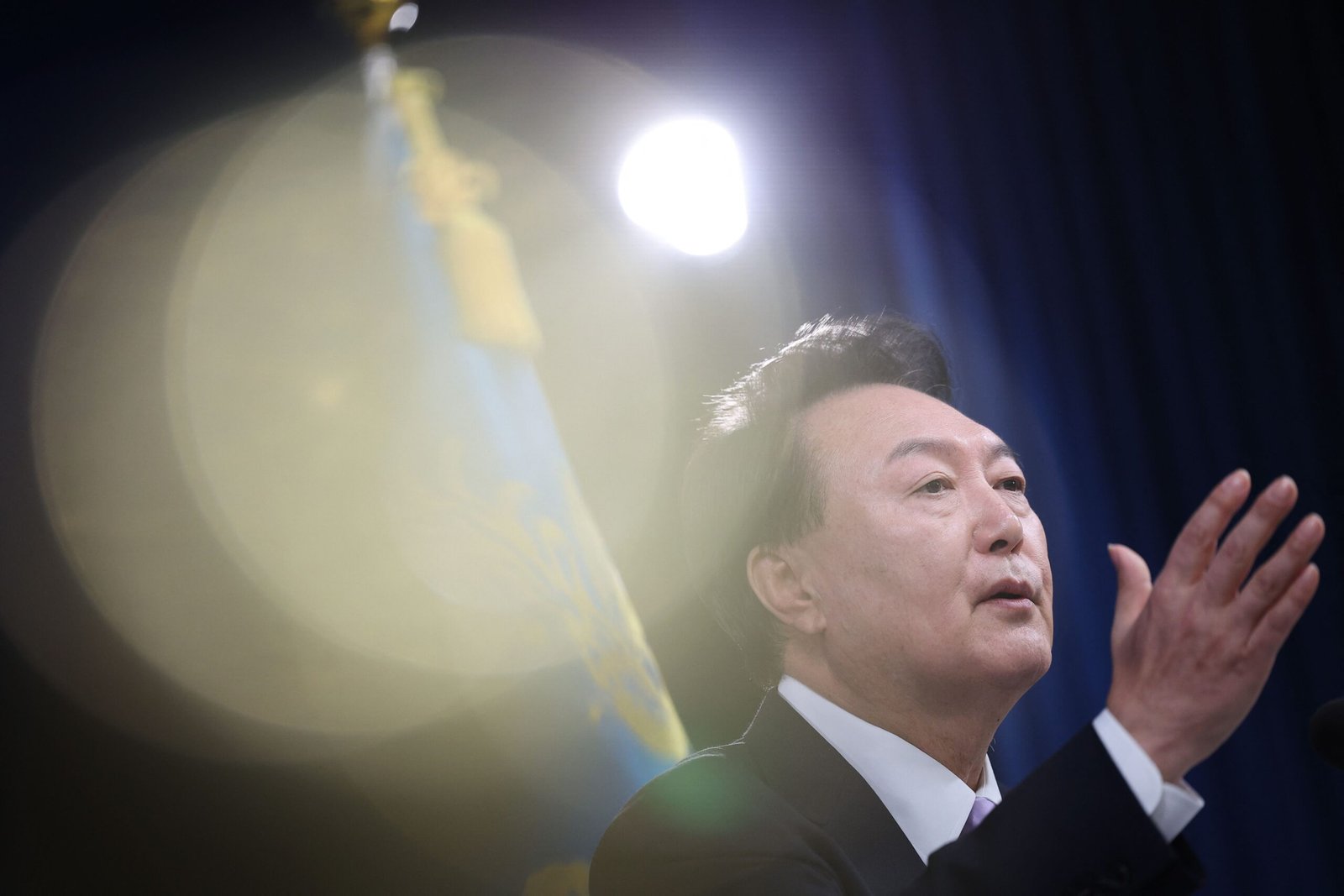
Former South Korean President Yoon Suk-yeol was sentenced on Friday to 30 years in prison for sending drones into North Korea, in a move that prosecutors said was intended to create a pretext to declare martial law in December 2024.
The sending of drones, which Pyongyang said included dropping propaganda leaflets, caused a sharp escalation of military tensions between the two countries in October 2024.
The prosecutors in charge of the case said last April that Yoon’s efforts to “fabricate conditions of war” with the marches undermined national security.
A spokesman for the Seoul Central District Court told AFP that Yoon was “sentenced to 30 years in prison” on the charges against him.
The judges said in their decision issued on Friday that Yoon’s operation to send the drones “involved the use of South Korea’s military capabilities for private purposes” in addition to “achieving political gain.”
They added that the powers granted to the president, including the supreme command of the armed forces and the power to declare martial law, must be exercised to protect the country’s survival and security.
Prosecutors also explained that this operation led to an escalation of tensions with North Korea and caused the leak of classified information, including details about the country’s military capabilities, following the crash of the drones, according to Yonhap News Agency.
This ruling comes after a previous ruling was issued against Yoon last February to life imprisonment on charges of leading a rebellion that aimed to “paralyze” the parliament in South Korea by declaring martial law.
- “Project work for self-defense” –
On the evening of December 3, 2024, in a televised speech, he suddenly announced the imposition of martial law, and sent the army to Parliament to silence him.
His coup lasted only six hours, as a sufficient number of representatives were able to infiltrate the parliament hall, which was surrounded by soldiers, and pass a resolution against the attempt to seize power, forcing him to retreat.
Yoon, who is currently in prison, has appealed his life sentence, insisting that he acted “solely for the benefit of the nation.”
The legal team defending him denied the charge related to the marches, stressing that there was “no prior order or subsequent approval” on its part regarding the marches process on which the prosecution relied.
Defense lawyers explained that this operation was in response to North Korea sending balloons carrying garbage across the border that year, and that it was a “legitimate act of self-defense” and had nothing to do with Yoon’s declaration of martial law.
They refuted the plaintiffs’ claims, saying it was a “conjectural narrative and pure fabrication.”
The issue of sending drones to Pyongyang remains a point of tension in relations between the two Koreas, which are still practically a state of war, as their conflict ended in 1953 with a truce and not a peace treaty.
South Korean President Lee Jae-myung expressed his regret earlier this year after an official investigation revealed that government officials sent marches to the North in January, something that Pyongyang initially seemed to welcome before returning and describing its southern neighbor as “the most hostile enemy state.”