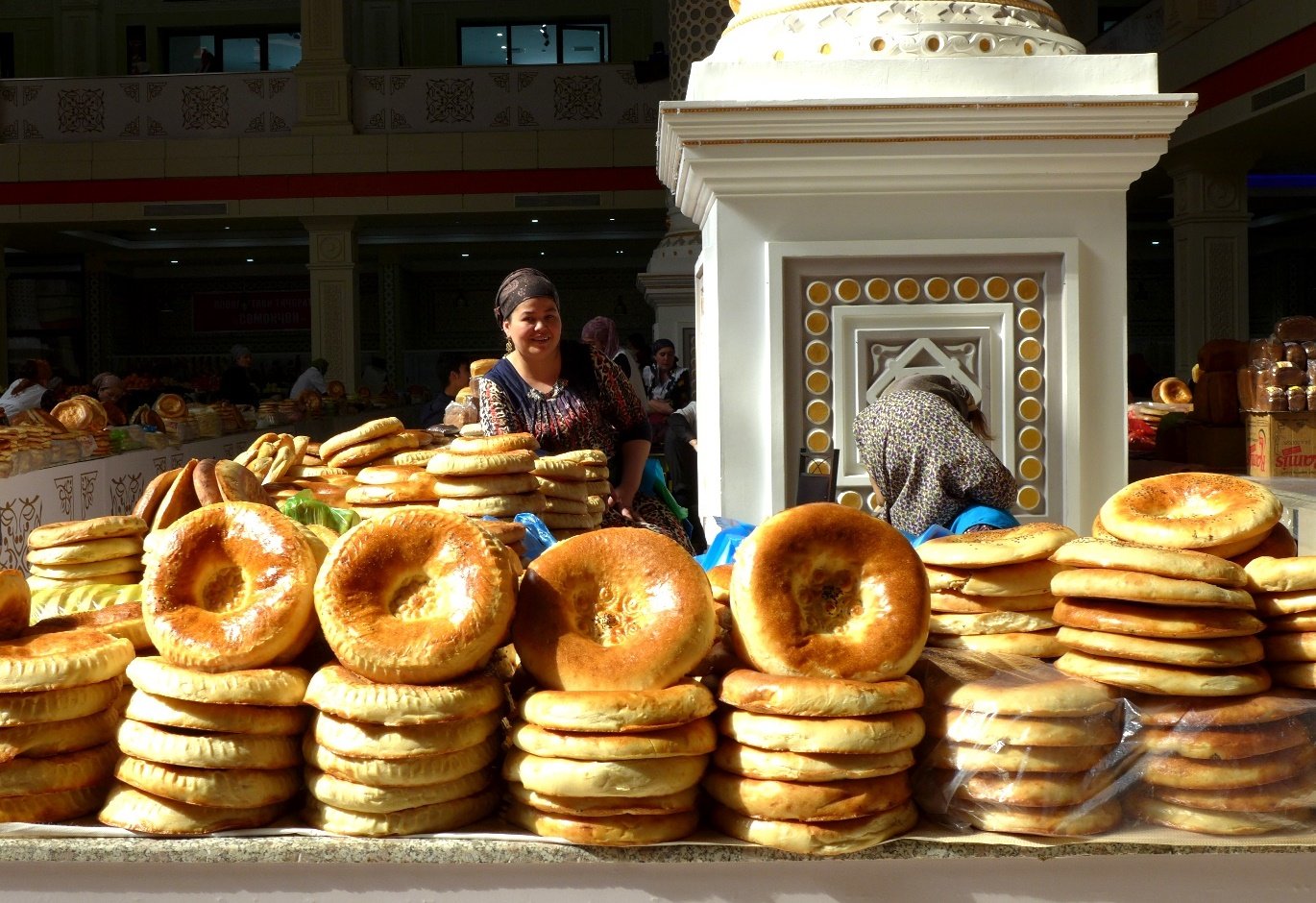
Tajikistan provides itself with basic products by approximately 85%. But there are issues – the import of certain products, the dependence of agriculture on water, the state of irrigation, the development of livestock farming and climate risks.
Food security is about more than just harvests. This is also the availability of products for the population, quality of food, stability of supplies and the country’s ability to depend less on foreign markets.
By according to the Statistics Agency under the President of Tajikistan, in 2025 the country’s agriculture continued to grow: the total volume of agricultural products amounted to about 84.7 billion somoni, and growth in comparable prices was 9.5%. Crop farming generated more than 56.5 billion somoni, livestock farming – about 28 billion somoni.
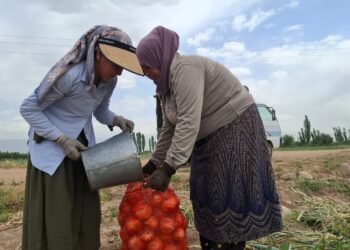
By according to the Ministry of Agriculture of Tajikistanin 2025, the country produced more than 1.7 million tons of grain, including more than 800 thousand tons of wheat. Also produced were more than 1.3 million tons of potatoes, about 3.4 million tons of vegetables, more than 1.2 million tons of melons, more than 950 thousand tons of fruits, more than 346 thousand tons of grapes and more than 2 million tons of feed.

By according to the Food Security Program Republic of Tajikistan for 2026–2030, the country’s food security depends not only on production, but also on the population’s access to products, rational use of resources and sustainability of supplies.
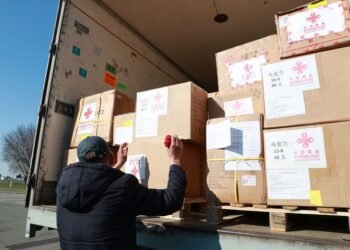
According to information FAO/GIEWS for Tajikistanimports cover more than half of domestic grain consumption, and wheat accounts for more than 90% of grain imports. FAO also projected Tajikistan’s wheat import requirement at 1.2 million tonnes in the 2024/25 marketing year.
According to UN World Food ProgramTajikistan’s food security is “extremely sensitive to price shocks.” WFP also notes that malnutrition remains widespread and agricultural productivity low, with much of the production taking place on small family farms.
According to FAO Regional Review for Europe and Central Asia for 2025–2034, Central Asia’s trade deficit in agri-food products could almost triple by 2034. The FAO forecasts that imports in the region will grow by almost 3% per year, while exports will decline by almost 1% per year. For Tajikistan, this is an important signal: even with the growth of its own production, dependence on external supplies, especially for wheat, remains a risk.
How does Tajikistan plan to achieve complete food security?
The Food Security Program of the Republic of Tajikistan for 2026–2030 is designed to improve the population’s access to food, rationally use food resources and make supplies more sustainable.
The Program identifies four main tasks.
First – increase food availability. This means producing more, storing better and using resources more efficiently.

Second – improve the population’s access to food. Products should not only be on the market, but also affordable to people.
Third – improve food use. Here we are talking about safe and nutritious nutrition, health, sanitation and education of the population.
Fourth – increase supply stability. This is due to preparedness for natural disasters, climate change, rising prices and other crises.
The program focuses on two areas. One is to manage food security better: monitor, collect statistics, provide early warnings of risks and update laws.
Another is to solve practical problems: improve land reclamation and irrigation, update technology, develop livestock farming, seed production, processing, logistics, healthy nutrition and measures against climate risks.
What needs to change by 2030?
By 2030, Tajikistan plans to achieve complete food security. This means that the country must better provide the population with basic products and be less dependent on external supplies.
To achieve this, the state plans to strengthen food security management: more accurately assess risks, warn in advance about possible crises and have ready response plans.

It is expected that food production will increase due to the restoration of agricultural land, the development of land reclamation, the introduction of new technologies, support for seed production, livestock farming and digital solutions in the agricultural sector.
In other words, by 2030, Tajikistan must not only produce more, but also store, transport and process products better, reduce losses and respond more quickly to climate, price and external risks.