On the 10th of June, we celebrate Portugal, Camões, the Portuguese language, the communities and, in between, we hear speeches about national identity. I confess that when I think about my country, I often don’t just remember Camões. I remember a car parked outside a cafe, somewhere in a peripheral neighborhood, windows half open, bass making the sheet metal shake slightly and a voice rhyming about a life that would hardly fit into a presidential speech.
I’m afraid it may sound like heresy, but I suspect that part of the country’s history in recent decades was not just written in books, newspapers or statistical reports: it was rhymed. There is a Portugal that rarely appears in official portraits: that of suburbs, forgotten neighborhoods, endless journeys on public transport, people who grow up among difficulties, petty crimes, violence, unemployment, deferred dreams and a persistent feeling of invisibility.
Like it or not, it was tuga hip hop who often decided to tell these stories. There are those who consider it a minor genre. Music from “gunas/mitras”, often considered aggressive, too raw, not elegant to enter the respectable halls of national culture. As if an orchestra purified what the neighborhood contaminated, as if fado, classical music or the so-called “great culture” had a curriculum, while rap had a record.
I find it curious that we celebrate the Portuguese language so much while ignoring some of its most creative forms. Our language also lives in improvisation, in errors, in slang, in regionalisms, in accents, in unlikely crosses between Portuguese, Creole and everything else. Live where people live and hip hop has been one of the most powerful ways to reinvent Portuguese. Rhyme forces you to know the weight of the syllables, the breath of the phrase, the internal rhythm of the words, the elasticity of the meaning. A good rapper doesn’t just use his tongue to communicate: he takes it apart, folds it, stretches it, twists it, puts it back together and, in the end, makes it dance.
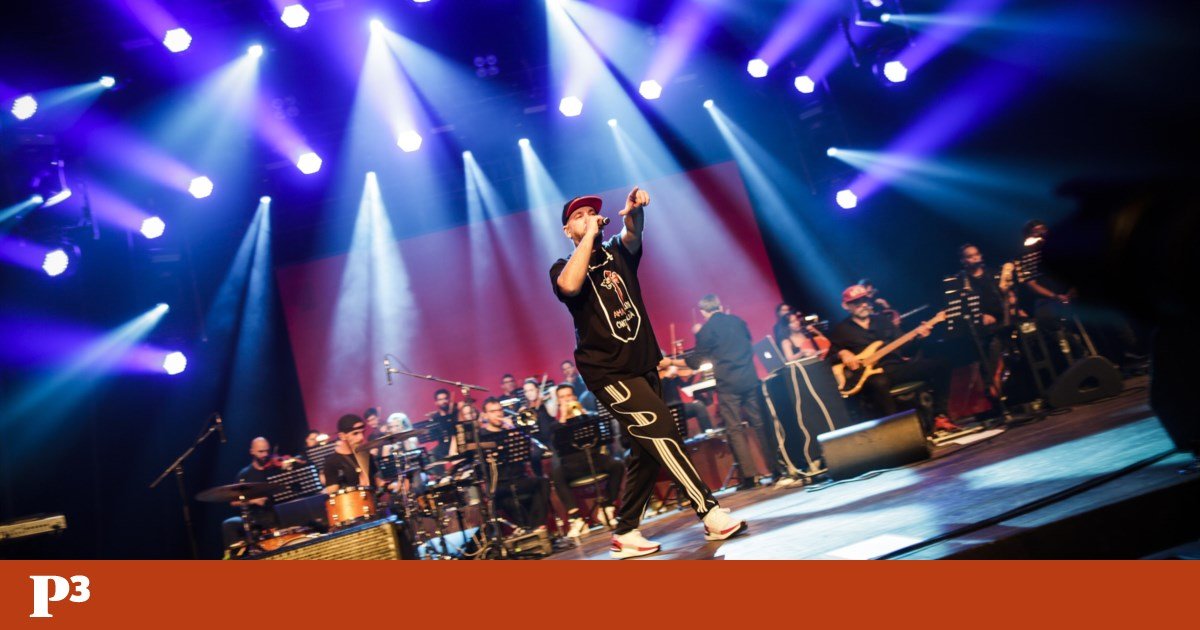
Sam the Kid is perhaps one of the most evident examples of this almost artisanal relationship with the word. There is a kind of language workshop in him, not only in the way he writes, but also in the way he thinks of Portuguese as living matter. And it is curious, perhaps even poetically fair, that someone coming from hip hop ended up talking to Marco Neves, professor and researcher of the Portuguese language, in a project like “Assim ou Assado”. Seen from the outside, it might seem unlikely: a rapper and a language expert talking about grammar, linguistic myths, errors, prejudices and curiosities. It is only unlikely for those who still believe that the language lives exclusively in grammars and school manuals. The language also lives on the street and hip hop has created, over the years, a kind of street dictionary. In this dictionary, Portugal does not appear as a hairstyle, it appears as it is.
Maybe that’s why many songs taught more than a few lessons. Many young people may have reflected for the first time on greed, trust or respect when listening to Messageby Sam The Kid; others will have realized the risks of AIDS and other STIs through Russian Rouletteby Valete, in a way that is probably more impactful than some hastily taught biology classes.
Fernando Pessoa’s love letters continue to be “ridiculous”, as all love letters must be, but today perhaps they can also be written with a beat underneath, with a hoarse voice at the microphone, with an unexpected rhyme to cut through the ceremony. Not to transform Pessoa into an occasional rapper (it would be too easy, and perhaps a little goofy), but to remember that emotion also changes its medium. Before there were letters, then there were cassettes, recorded CDs, messages on the cell phone, shared verses, songs sent at four in the morning with the modern cowardice of someone who says “listen to this” when they meant “I like you”.
Tuga hip hop perhaps did something very Portuguese: it told stories. Only, instead of caravels, he talked about neighborhoods; instead of epics, he spoke of survival; instead of heroes, he talked about real people. It is worth remembering that Portugal is also written in rhymes. Not always polished, not always elegant, but often uncomfortable. Often with words that would not pass the scrutiny of the guardians of good language, but viscerally Portuguese. And perhaps Camões understood this better than we imagine.