Russian President Vladimir Putin may be banking on a major new offensive against Ukraine in the winter season after the spring 2026 military campaign failed to produce the results the Kremlin hoped for. According to an analysis published by The New York Post, the Kremlin leader is facing increasing domestic pressure and could see next winter as a last chance to change the course of the war.
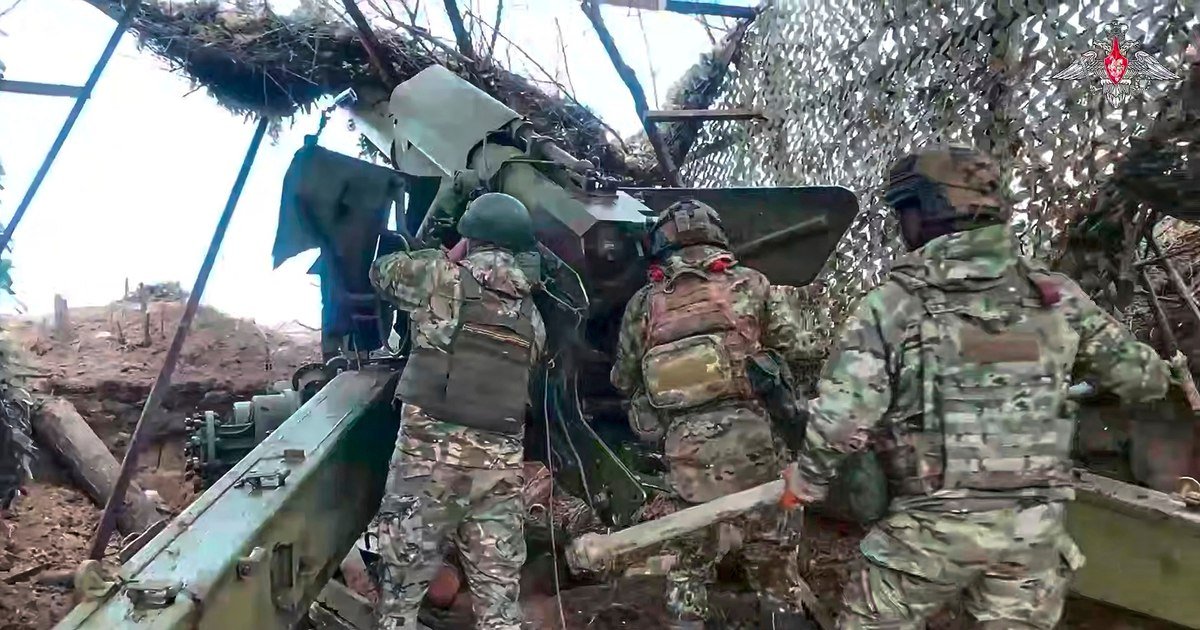
Russian soldiers on the front in Ukraine/PHOTO: Profimedia
A winter offensive, after the failure of the spring campaign
According to the American publication, the Russian army recorded modest results during the operations carried out in the spring of this year. In some sectors of the front, Russia may have lost more ground than it managed to conquer, which raises questions about the effectiveness of the current military strategy.
In this context, several analysts believe that Moscow could prepare a new offensive in the winter months, counting on Ukraine’s vulnerabilities in the cold season.
“Putin will likely wait again for winter to resume massive attacks and provoke a humanitarian crisis to force concessions on Donbas”said Maria Snegova, senior researcher in the Europe, Russia and Eurasia program at the CSIS think tank. According to her, the bombings on Ukrainian infrastructure could be even more intense than those of the previous winter.
New targets on the Kremlin’s list
Experts warn that Russia could expand the range of targets in the event of a new campaign of attacks.
Ekaterina Stepanenko, team coordinator for Russia and deputy director of the Cognitive Warfare project at the Institute for the Study of War (ISW), believes that Moscow could try to hit Ukraine’s railway infrastructure to disrupt the transport of equipment and supplies to the front.
At the same time, water supply facilities could in turn become targets of Russian attacks, in a strategy designed to increase pressure on the civilian population and create additional difficulties for the authorities in Kiev.
The problems that accumulate in Moscow
The prospect of another difficult winter is a cause for concern for millions of Ukrainians who have already experienced periods of blackouts, lack of heat and repeated attacks on energy infrastructure. Analysts cited by the American publication claim, however, that the Kremlin is also facing its own problems.
Russia’s economy is increasingly feeling the costs of the war, and internal grievances are beginning to accumulate. In addition, frequent interruptions of Internet services and economic difficulties increase the pressure on the Russian authorities. “Putin is facing growing pressure inside Russia amid a rapidly deteriorating economic situation and increasingly visible problems in the daily lives of the population,” notes The New York Post.
The Russian army is looking for new recruits
Even on the military level, the situation does not seem without challenges. According to Western analysts, the recruitment of new soldiers has become more difficult than in previous years, and the Russian authorities have begun to turn their attention also to university students, trying to attract them to the army through various incentives. At the same time, economic indicators are sending worrying signals.
Data from the Ministry of Finance in Moscow show that the federal budget deficit reached $81.4 billion in the first five months of the year, about twice the level of the same period in 2025.
At the same time, the Central Bank of Russia reported a reduction in gold reserves by 5.7 tons in April, a decrease that many economists consider the sharpest in the last 25 years.
Pressure can generate unpredictable reactions
According to experts, the economic and military difficulties will continue to accumulate and could affect the Kremlin’s ability to sustain the current pace of war in the long term.
But there is also a major risk: before these problems have decisive effects, the Russian leadership could try to gain an advantage through a new military escalation.
Thus, what some analysts see as signs of Russia’s weakening could, paradoxically, become arguments for even more aggressive actions on the part of the Kremlin.
In this context, many observers believe that the coming months will be decisive for the evolution of the conflict, and the winter of 2026–2027 could represent one of the most important moments of the war that began in February 2022.