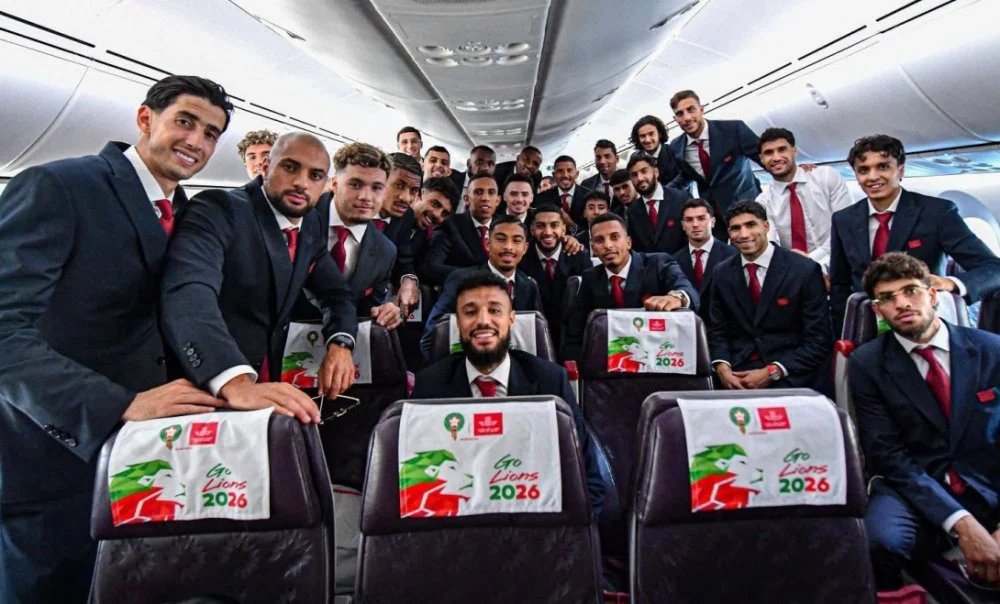
The Moroccan public, true to its reputation, has already reserved its tickets, configured its giant screens and validated its tactical theories in the cafes of Rabat, Casablanca, Tangier, and even Agadir. The wait is no longer just great, it has become pachydermic. In 2022, our Lions were the delightful surprise. In 2026, we are the team to take down! The change in status is accompanied by a thrill of demand, the people will no longer be satisfied with a last stand. He wants, demands confirmation. To lead this campaign, exit the “genius of the lawyer” Walid Regragui and make way for Mohamed Ouahbi.
The 49-year-old technician, freshly crowned with his world title with the U20s, was propelled onto the bench of the A selection with a mission worthy of a balancing act: to inject new blood without diluting the soul of the Doha semi-finalists. A daring, almost impertinent bet, but one of implacable logic. Where others would have rebuilt with a pickaxe, Ouahbi refines with a scalpel. His list of 26 testifies to this gentle but firm transition. Gone are the days when statutes protected executives lacking mental or physical freshness. The new boss of the den advocates cold rigor, tactical objectivity and instant merit. By integrating dynamic profiles like Ayyoub Bouaddi or the twirling Yassine Gessime alongside certainties named Brahim Diaz, Achraf Hakimi and Ismael Saibari, Ouahbi installs a healthy competitive terror. His orientation is clear: fast transition football, stifling pressing and iron discipline. It remains to be seen whether the mayonnaise will hold up under the heat of the American spotlight.
A 48-member World Cup: Africa at the gates of paradise?
This 2026 World Cup is also the era of gigantic excess designed jointly by FIFA and the USA. Forty-eight teams on the starting line, a format that resembles a global high mass as much as a giant trade fair. If the purists grind their teeth at this football marathon, Africa, like Asia, is rubbing its hands. With a historically enlarged contingent of representatives, the black continent no longer has excuses to play extras. And in this expanded concert, it is Morocco which wears, willingly or unwillingly, the costume of conductor. Doha’s exploits have broken the psychological glass ceiling. From now on, seeing an African nation claim the final four – or even more if there are affinities – is no longer a dreamer’s heresy, but a development plan objective. Morocco has shown the way, it is up to it to prove that the path was not an accident.
The 2026 course… with an eye on 2030
“We did not come here to do tourism or distribute smiles, we are here to do great things. We really hope to make Moroccans proud,” insisted Mohamed Ouahbi upon his arrival on the American tarmac. A profession of faith that resonates like a warning. Because beyond the green rectangle of 2026, a much larger score is playing out. This “new generation” of Lions not only takes a passing exam in Mexico, Canada or the United States, they spend their internship years. Every tackle, every overrun and every goal scored during this North American edition actually lays the foundations for the true promised land: the 2030 World Cup, at home. The ambition is immense, almost dizzying. The Lions of the Atlas begin their American campaign with the modesty of outsiders and the hunger of conquerors, aware that to be crowned kings at home tomorrow, they must first go and shake up the empires on the other side of the world today.