When Sagrado Armando Garcia, an 85-year-old former civil servant, collapsed in his home, his son couldn’t take him to the hospital because he didn’t have gas for the family car, he said. Lately, there have been times when Garcia was so sick and dizzy with hunger that he thought he might fall again.
Garcia spent decades working in Cuba’s Ministry of Social Welfare, believing in a system that promised to protect people in old age. That feeling of security is gone.
“They leave us to fate,” he said.
For years, under the burden of harsh American economic sanctions, Cuba has struggled to fulfill Fidel Castro’s promise that its communist government would provide basic services for workers: subsidized food, health care, education, public transportation and pensions, writes Reuters.
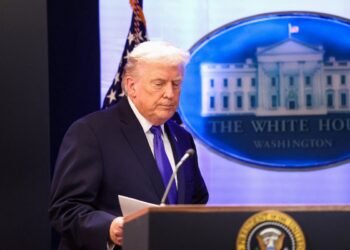
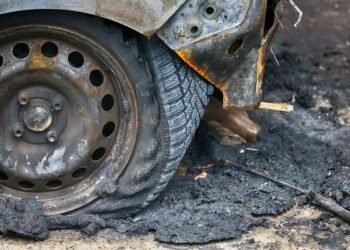
Now the country’s elderly citizens – long accustomed to faltering public services, power outages and chronic shortages of food and medicine – face even more difficult conditions after the Donald Trump administration cut off the island’s fuel supply in late January.

A State Department spokesman referred Reuters to recent testimony by Secretary of State Marco Rubio, who blamed internal corruption and mismanagement, not US sanctions, for Cuba’s problems.
“Cuba had power outages long before January 3 of this year, for two reasons: they no longer received free oil from Venezuela and they did not invest a single dollar in the renovation of their power plants,” said the spokesman, referring to Rubio. “Cuba is in chaos.”
Reuters writes that the pensions have been reduced to the equivalent of seven dollars a month at the black market exchange rate, as the peso has lost about a third of its value against the dollar since the blockade began.
The Cuban government has requested assistance from the United Nations World Food Program so that it can continue to provide two meals a day to the vulnerable and elderly.
Cuba is the fastest aging country in Latin America and the Caribbean. More than a quarter of the population is over the age of 60, according to data from the Cuban state statistics agency, which is a consequence of a sharp drop in the birth rate and a mass exodus of young people. The population has shrunk to less than 10 million by 2021, a 10 percent drop, according to Reuters.

Etienne Laband, representative of the World Food Program in Havana, said that the combination of high prices and decreasing pensions and meals has put many elderly people in a dangerous situation, where they cannot afford enough food or medical care.
“That population is now exposed to a very high risk, and the situation has worsened since January,” he told Reuters. “Inflation has skyrocketed, there is no public transport, and movement costs a lot of money.”
Cuba’s public health system, long considered a major achievement by the communist government, is collapsing under the weight of years of sanctions.
The number of doctors in Cuba decreased by 30 percent between 2019 and 2024, according to the Cuban government – the most recent year for which data is publicly available – while 70 percent of essential medicines were either difficult to obtain or completely unavailable.
According to the Cuban Ministry of Health, the waiting list for surgery is expected to reach 160,000 patients by the end of the year, a 60 percent increase. Most medicines, including those for blood pressure, are in short supply, doctors told Reuters.
On an island where the average monthly salary is about 15 dollars, even small sums of money sent by relatives from abroad mean a lot.
For elderly Cubans who do not receive remittances from abroad, conditions are particularly difficult.
“In this crisis that Cuba has been going through since January, the elderly are the most affected,” said Brian Arbueles, a priest at the Church of San Juan de Letran in Havana. “These are people who have worked for decades, but whose pension is now not enough to live on.”
He added: “The situation is terrible.”

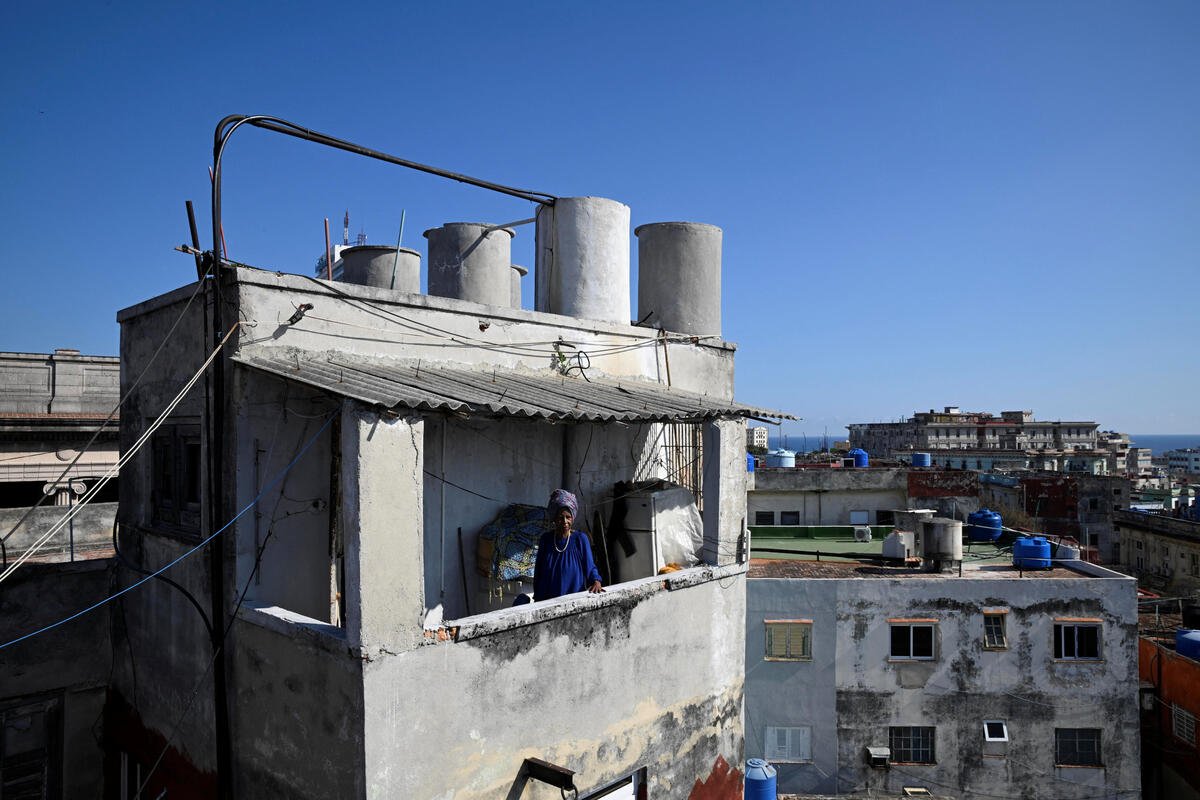
Regina Zaida Jorge (74), a retired doctor who lives alone in the former service quarters of a once luxurious old house, receives no money outside of Cuba.
There is no running water in her small apartment, so every day she is forced to carry it from the cistern on the roof. He says he survives on government subsidies and food packages distributed by the Catholic Church.
“The policies here are designed to guarantee the basics,” she said. “But basically, these are cosmetic measures, to keep you alive. You have to forget about wanting to have a TV, a phone, the pension is not enough for anything.”
She said that as a low-paid state worker, she gave “everything” to a system that is not capable of providing her with basic necessities such as soap. Now, as a pensioner who barely manages to survive, she says: “I feel like I sacrificed for nothing.”
US sanctions last year prompted the leading money transfer company, Western Union, to suspend services to Cuba.
Some, however, still manage to find a way to get money from abroad.
Sonia Belmonte Puebla, 73, receives small dollar amounts from her daughter in Florida.
Unlike many of her generation, she said she is enjoying her old age, living independently at home with her husband and with little need for government assistance. “I can sometimes afford something and eat well,” said Belmonte.
Download the application and follow the news


FOLLOW US ON

News