
A memorial service was held on Wednesday at the naval cemetery in Pula, Croatia, on the day commemorating Hungarian sailors who died heroically.
Csaba Demcsák, the Hungarian ambassador to Zagreb, delivered a speech at the event. He stated that the naval cemetery in Pula, one of Europe’s largest military cemeteries, symbolizes the power of a shared past, comradeship, and a common historical destiny.

Pula, Croatia. Photo: Pexels
The ambassador said the gravestones serve as a reminder of the era when Hungarians, Croats, and the other peoples of the Austro-Hungarian Monarchy stood shoulder to shoulder to defend the Adriatic coast. As he noted, the heart of the joint fleet beat in Pula, and more than 150,000 soldiers and sailors, including hundreds of Hungarians, rest in the cemetery.
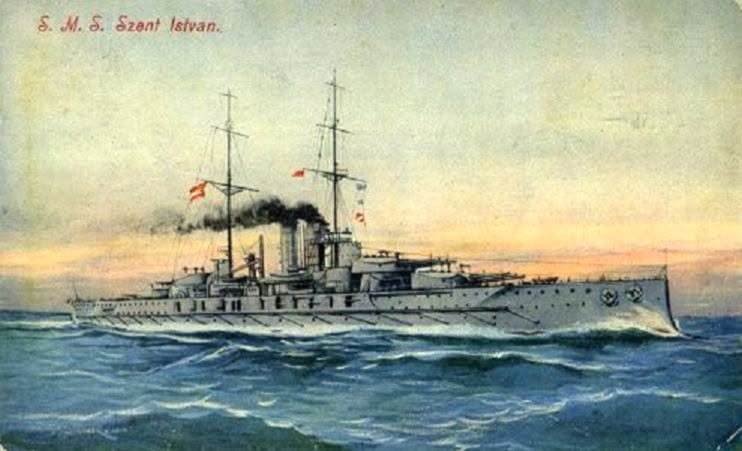
Csaba Demcsák also recalled the memory of the battleship Szent István, which was built in Fiume and was considered the pride of Hungarian industry. He noted that the warship suffered a fatal attack on June 10, 1918, as a result of which nearly a hundred Hungarian and Croatian sailors died a heroic death.
In his speech, the ambassador said: Central Europe and the world are once again “navigating stormy waters” today, and the armed conflicts raging in neighboring regions and the political tensions in more distant areas serve as a reminder that peace, security, and stability are not to be taken for granted.
He added that Hungary and Croatia are not only neighbors, but also NATO allies and European Union partners. According to him, the wreath-laying ceremony is also an expression of the fact that the peoples of Central Europe are capable of learning from history.
Demcsák thanked the leaders of Istria County and the city of Pula, the representatives of the Alfalusi Mixed Choir, as well as the Istrian branch and members of the Democratic Community of Hungarians in Croatia for their support of the commemoration.
In October 2008, on the 90th anniversary of the sinking of the battleship Szent István, Hungarian divers placed a memorial plaque at the wreck site. This outstanding achievement of Hungarian industrial and military history lies on the seabed in the open sea, 65 meters deep, with its deck facing downward. Several expeditions were launched to locate it, and its wreck was discovered by Yugoslav divers in the 1970s. In recent decades, Hungarian divers have explored the shipwreck on several occasions, including in 1994 and 2008, but due to its condition and the costs of salvage, there is little hope that it will ever be brought to the surface. When the ship was sunk, 89 Hungarian sailors lost their lives in the watery grave.
The erection of the memorial plaque was initiated by local Hungarians. In 2017, the National Assembly declared June 10 a day of remembrance for the Hungarian sailors who died heroically and asked the government to erect a memorial at the naval cemetery in Pula. Since then, a wreath has been laid at the plaque every year in their memory.

Via MTI; Featured image: Facebook/Nándor Gruber