Sunday, June 14, 2026
    The GeoStrategic Consensus
    No Result
    View All Result
    • Login
    • HOME
    • AMERICAS
      • Argentina
      • Brazil
      • Canada
      • Chile
      • Colombia
      • Costa Rica
      • Cuba
      • Dominican Republic
      • Ecuador
      • El Salvador
      • Greenland
      • Guatemala
      • Honduras
      • Mexico
      • Nicaragua
      • Panama
      • Paraguay
      • Peru
      • United States
      • Uruguay
      • Venezuela
    • ASIA-PACIFIC
      • Australia
      • Brunei Darussalam
      • Cambodia
      • China
      • Federated States of Micronesia
      • Fiji
      • Indonesia
      • Japan
      • Kiribati
      • Laos
      • Malaysia
      • Marshall Islands
      • Mongolia
      • Myanmar
      • Nauru
      • New Zealand
      • North Korea
      • Palau
      • Papua New Guinea
      • Philippines
      • Samoa
      • Singapore
      • Solomon Islands
      • South Korea
      • Taiwan
      • Thailand
      • Timor-Leste
      • Tonga
      • Tuvalu
      • Vanuatu
      • Vietnam
    • CARICOM
      • CARICOM – Non-English
        • Haiti
        • Suriname
      • CARICOM Associates
        • Anguilla
        • Bermuda
        • British-Virgin-Islands
        • Cayman-Islands
        • Curacao
        • Turks-and-Caicos
      • CARICOM English
        • Antigua and Barbuda
        • Barbados
        • Belize
        • Dominica
        • Grenada
        • Guyana
        • Jamaica
        • Montserrat
        • Saint Kitts and Nevis
        • Saint Lucia
        • Saint Vincent and the Grenadines
        • The Bahamas
        • Trinidad and Tobago
    • EURASIA
      • Armenia
      • Azerbaijan
      • Balarus
      • Georgia
      • Kazakhstan
      • Kyrgyzstan
      • Moldova
      • Russia
      • Tajikistan
      • Turkmenistan
      • Ukraine
      • Uzbekistan
    • EUROPE
      • Albania
      • Andorra
      • Austria
      • Bosnia and Herzegovina
      • Bulgaria
      • Croatia
      • Cyprus
      • Czech Republic
      • Denmark
      • Estonia
      • Finland
      • France
      • Germany
      • Greece
      • Holy See
      • Hungary
      • Iceland
      • Ireland
      • Italy
      • Kosovo
      • Latvia
      • Liechtenstein
      • Lithuania
      • Luxembourg
      • Malta
      • Monaco
      • Montenegro
      • Netherlands
      • North Macedonia
      • Norway
      • Poland
      • Portugal
      • Romania
      • San Marino
      • Serbia
      • Slovakia
      • Slovenia
      • Spain
      • Sweden
      • Switzerland
      • United Kingdom
    • MIDDLE EAST AND NORTH AFRICA
      • Algeria
      • Bahrain
      • Egypt
      • Iran
      • Iraq
      • Israel
      • Jordan
      • Kuwait
      • Lebanon
      • Lybia
      • Morocco
      • Oman
      • Palestinian Territories
      • Qatar
      • Saudi Arabia
      • Syria
      • Tunisia
      • Turkey
      • United Arab Emirates
      • Western Sahara
      • Yemen
    • SOUTH ASIA
      • Afghanistan
      • Bangladesh
      • Bhutan
      • India
      • Maldives
      • Nepal
      • Pakistan
      • Sri Lanka
    • SUB-SAHARAN AFRICA
      • Angola
      • Benin
      • Botswana
      • Burkina Faso
      • Burundi
      • Cabo Verde
      • Cameroon
      • Central African Republic
      • Chad
      • Comoros
      • Cote d’Ivoire
      • Democratic Republic of the Congo
      • Djibouti
      • Equatorial Guinea
      • Eritrea
      • Eswatini
      • Ethiopia
      • Gabon
      • Gambia
      • Ghana
      • Guinea
      • Guinea Bissau
      • Kenya
      • Lesotho
      • Liberia
      • Madagascar
      • Malawi
      • Mali
      • Mauritania
      • Mauritius
      • Mozambique
      • Namibia
      • Niger
      • Nigeria
      • Republic of the Congo
      • Rwanda
      • Sao Tome and Principe
      • Senegal
      • Seychelles
      • Sierra Leone
      • Somalia
      • South Africa
      • South Sudan
      • Sudan
      • Tanzania
      • Togo
      • Uganda
      • Zambia
      • Zimbabwe
    • HOME
    • AMERICAS
      • Argentina
      • Brazil
      • Canada
      • Chile
      • Colombia
      • Costa Rica
      • Cuba
      • Dominican Republic
      • Ecuador
      • El Salvador
      • Greenland
      • Guatemala
      • Honduras
      • Mexico
      • Nicaragua
      • Panama
      • Paraguay
      • Peru
      • United States
      • Uruguay
      • Venezuela
    • ASIA-PACIFIC
      • Australia
      • Brunei Darussalam
      • Cambodia
      • China
      • Federated States of Micronesia
      • Fiji
      • Indonesia
      • Japan
      • Kiribati
      • Laos
      • Malaysia
      • Marshall Islands
      • Mongolia
      • Myanmar
      • Nauru
      • New Zealand
      • North Korea
      • Palau
      • Papua New Guinea
      • Philippines
      • Samoa
      • Singapore
      • Solomon Islands
      • South Korea
      • Taiwan
      • Thailand
      • Timor-Leste
      • Tonga
      • Tuvalu
      • Vanuatu
      • Vietnam
    • CARICOM
      • CARICOM – Non-English
        • Haiti
        • Suriname
      • CARICOM Associates
        • Anguilla
        • Bermuda
        • British-Virgin-Islands
        • Cayman-Islands
        • Curacao
        • Turks-and-Caicos
      • CARICOM English
        • Antigua and Barbuda
        • Barbados
        • Belize
        • Dominica
        • Grenada
        • Guyana
        • Jamaica
        • Montserrat
        • Saint Kitts and Nevis
        • Saint Lucia
        • Saint Vincent and the Grenadines
        • The Bahamas
        • Trinidad and Tobago
    • EURASIA
      • Armenia
      • Azerbaijan
      • Balarus
      • Georgia
      • Kazakhstan
      • Kyrgyzstan
      • Moldova
      • Russia
      • Tajikistan
      • Turkmenistan
      • Ukraine
      • Uzbekistan
    • EUROPE
      • Albania
      • Andorra
      • Austria
      • Bosnia and Herzegovina
      • Bulgaria
      • Croatia
      • Cyprus
      • Czech Republic
      • Denmark
      • Estonia
      • Finland
      • France
      • Germany
      • Greece
      • Holy See
      • Hungary
      • Iceland
      • Ireland
      • Italy
      • Kosovo
      • Latvia
      • Liechtenstein
      • Lithuania
      • Luxembourg
      • Malta
      • Monaco
      • Montenegro
      • Netherlands
      • North Macedonia
      • Norway
      • Poland
      • Portugal
      • Romania
      • San Marino
      • Serbia
      • Slovakia
      • Slovenia
      • Spain
      • Sweden
      • Switzerland
      • United Kingdom
    • MIDDLE EAST AND NORTH AFRICA
      • Algeria
      • Bahrain
      • Egypt
      • Iran
      • Iraq
      • Israel
      • Jordan
      • Kuwait
      • Lebanon
      • Lybia
      • Morocco
      • Oman
      • Palestinian Territories
      • Qatar
      • Saudi Arabia
      • Syria
      • Tunisia
      • Turkey
      • United Arab Emirates
      • Western Sahara
      • Yemen
    • SOUTH ASIA
      • Afghanistan
      • Bangladesh
      • Bhutan
      • India
      • Maldives
      • Nepal
      • Pakistan
      • Sri Lanka
    • SUB-SAHARAN AFRICA
      • Angola
      • Benin
      • Botswana
      • Burkina Faso
      • Burundi
      • Cabo Verde
      • Cameroon
      • Central African Republic
      • Chad
      • Comoros
      • Cote d’Ivoire
      • Democratic Republic of the Congo
      • Djibouti
      • Equatorial Guinea
      • Eritrea
      • Eswatini
      • Ethiopia
      • Gabon
      • Gambia
      • Ghana
      • Guinea
      • Guinea Bissau
      • Kenya
      • Lesotho
      • Liberia
      • Madagascar
      • Malawi
      • Mali
      • Mauritania
      • Mauritius
      • Mozambique
      • Namibia
      • Niger
      • Nigeria
      • Republic of the Congo
      • Rwanda
      • Sao Tome and Principe
      • Senegal
      • Seychelles
      • Sierra Leone
      • Somalia
      • South Africa
      • South Sudan
      • Sudan
      • Tanzania
      • Togo
      • Uganda
      • Zambia
      • Zimbabwe
    No Result
    View All Result
    Agentially
    No Result
    View All Result
    Home EUROPE Hungary

    Telex: Without bees, humanity can fall flat on its face

    The Analyst by The Analyst
    June 14, 2026
    in Hungary
    Telex: Without bees, humanity can fall flat on its face


    When we scoop honey, we may even think gratefully of the bees for producing such a super food, and everyone learned as a child that bees pollinate flowers. In order to understand why bees are important to all of humanity, it is enough to know these two properties, you just need to multiply them and put them in a system. Plant pollination can be done by many things, from the wind to humans to insects, but the most important pollinators are bees, which are also key players in food security. According to the World Food and Agriculture Organization about a third of the world’s food production depends on bees. You can imagine what would happen if bees were eliminated from the system: falling yields, rising food prices and even famine.

    All this may not happen to us in the very near future, but we do a lot to put the bees and then us in a difficult situation. Many of the pesticides used in agriculture destroy populations, while the habitat of bees is decreasing, and it has been increasingly proven that climate change also has a great impact on them, redraws their distribution area, and can lead to the collapse of populations. Researchers around the world are finding that the synchrony between bees and plants is breaking down. It is common for bees to become active when there is no flowering plant yet, or they die due to sudden frosts after they become awake, but floods, rains, cold springs and drought can also wear them down, and they do not always find enough nutrients even in a drying environment.

    Image from Reuters using it, we show how South Korean beekeepers face the effects of climate change and how they try to survive.

    Park Kyong-jae burns cypress leaves to fumigate bees - Photo: Kim Hong-Ji / Reuters

    Park Kyong-jae burns cypress leaves to fumigate bees – Photo: Kim Hong-Ji / Reuters

    The warming climate is indicated by plants the fastest. Since there are no big cold spells, their rest period is shortened, so they produce their flowers earlier than usual, but their flowering lasts for a shorter time. By definition, this also means a shorter active period for beekeepers. At the same time, climate change has brought not only higher temperatures, but also more frequent extreme weather events. Strong gusts that appear more frequently can also be detected in honey production, because many bees are simply unable to find their way back to their hive in the wind. Warming has also significantly expanded the distribution area of ​​a number of pests and diseases, which also led to a higher proportion of bee deaths.

    In 2009-2010, a virus nearly wiped out one of Korea’s native bee species. They put it at 75-90 percent Apis cerana koreana loss of colonies, which eliminated traditional beekeeping in several regions, and the product known as native honey almost completely disappeared from the market.
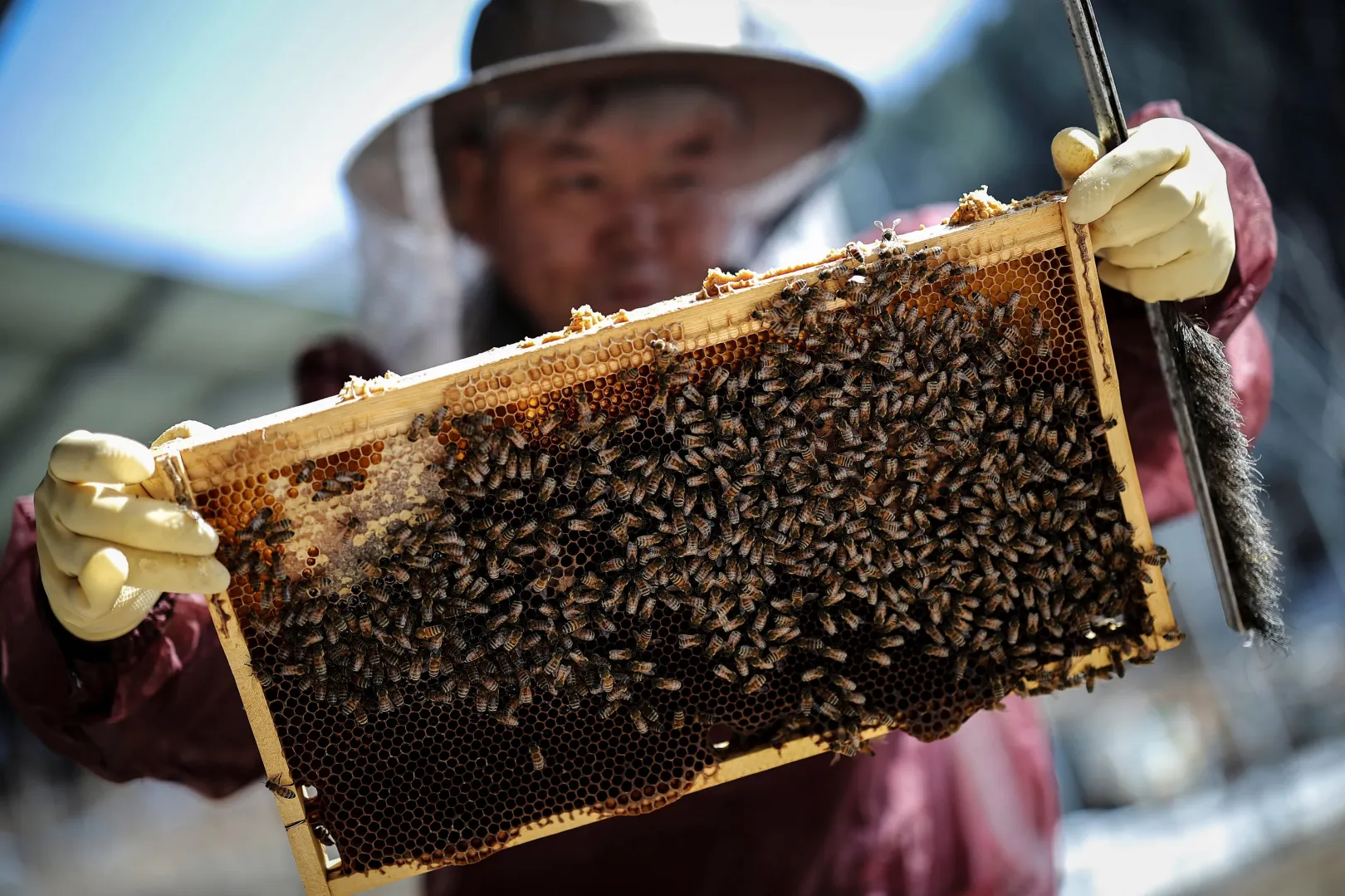
    Beekeeper Park Kyongjae checks how much his bee colony has grown - Photo: Kim Hong-Ji / Reuters

    Beekeeper Park Kyongjae checks how much his bee colony has grown – Photo: Kim Hong-Ji / Reuters

    65-year-old Park Kyongje has been a professional beekeeper for nearly five decades, so he spends almost all of his time in nature. He also asked himself the question of how beekeepers will be able to make a living and survive in the changing climate conditions.

    Park lives in the south of South Korea, but he constantly wanders the country depending on where he can find honey plants in bloom.
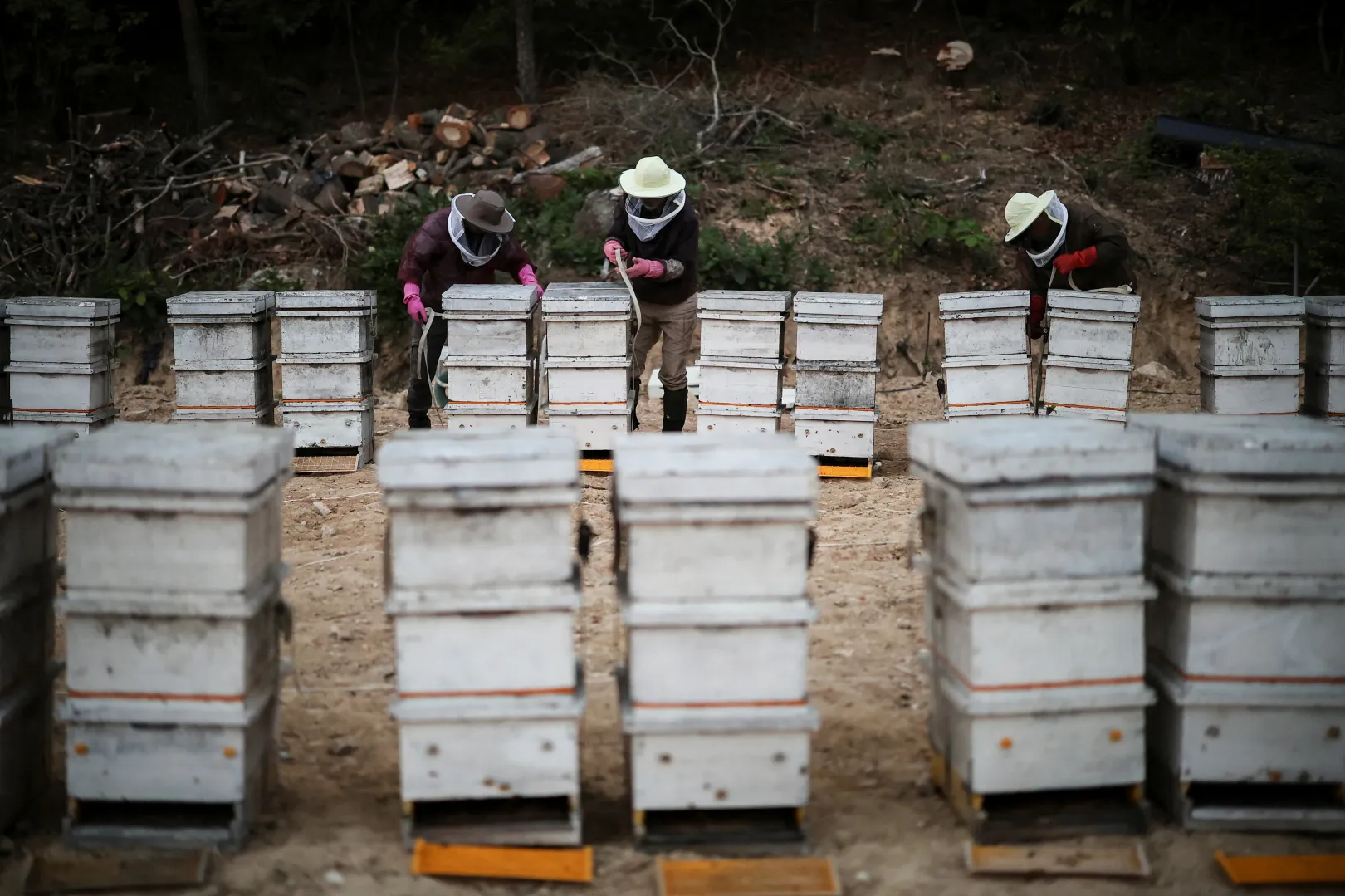
    Workers prepare the hives for transport - Photo: Kim Hong-Ji / Reuters

    Workers prepare the hives for transport – Photo: Kim Hong-Ji / Reuters

    “City dwellers don’t really pay much attention to the seasons, but farmers perceive them more directly. Now it’s pretty much just winter and summer,” said Park, who started with eight hives in 1979 and now has 110 around the country and about 8.8 million bees.
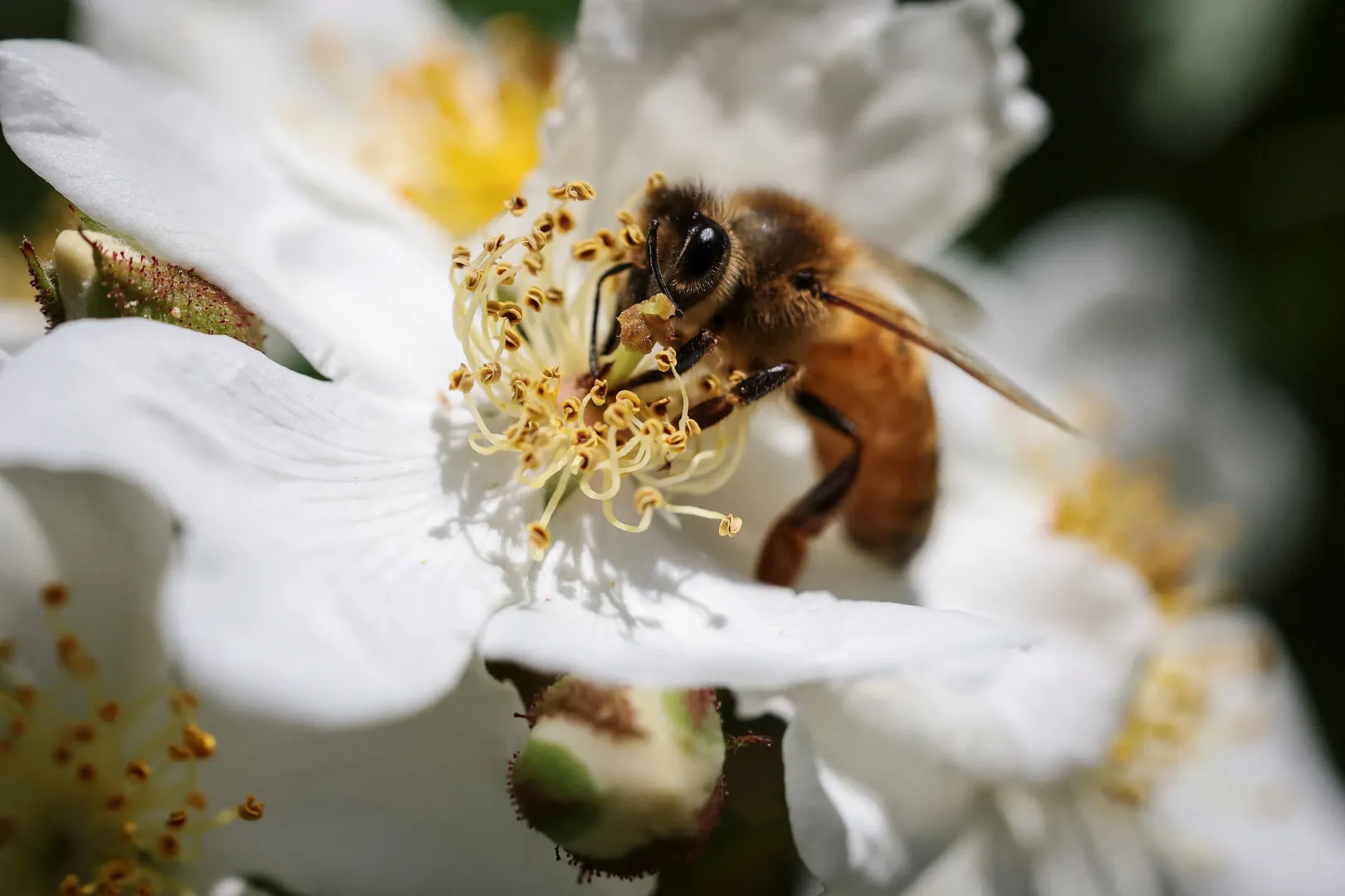
    Nectar collecting bee - Photo: Kim Hong-Ji / Reuters

    Nectar collecting bee – Photo: Kim Hong-Ji / Reuters

    In addition to honey production, pollination made more difficult by climate change also causes a decline in many other crops, such as apples, tomatoes and strawberries. “Decreasing bee populations will ultimately affect the food supply. The most basic building block of the ecosystem that makes up our entire natural world is in a sense collapsing,” said Yeh Sang-Wook, a professor in the Department of Climate and Energy Systems Engineering at Ewha Women’s University in Seoul.
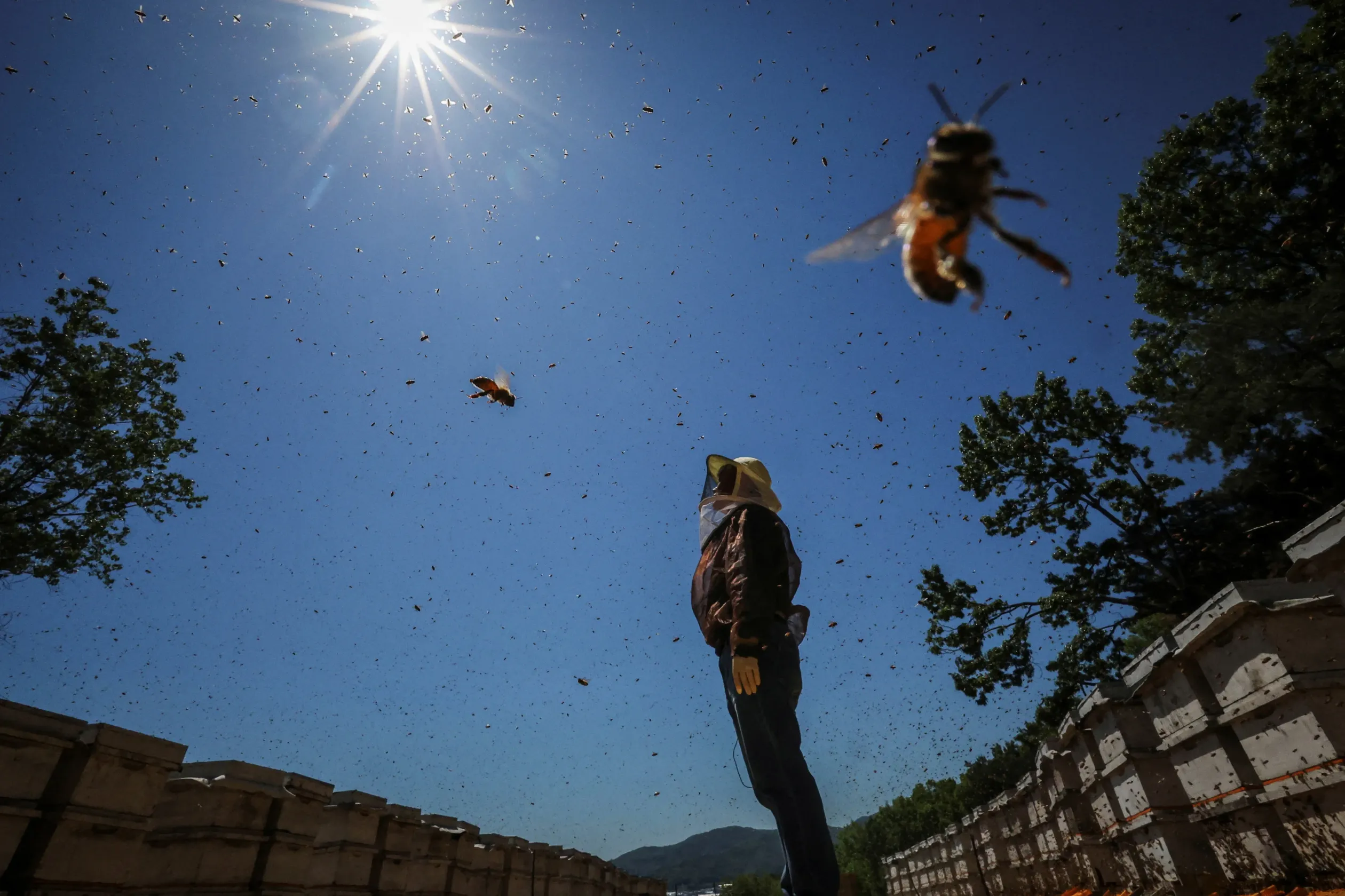
    Park Kyong-jae observes what kind of weather is expected - Photo: Kim Hong-Ji / Reuters

    Park Kyong-jae observes what kind of weather is expected – Photo: Kim Hong-Ji / Reuters

    South Koreans are big consumers of honey, and honey is seen primarily as a nutritional supplement necessary for maintaining health, rather than as an ingredient of some food. Of course, it is added to many foods as a sweetener instead of various sugars. Local producers and manufacturers cannot even serve domestic needs, South Korea imports honey in large quantities from China, the United States, New Zealand, Australia, Vietnam and Canada.

    According to a 2019 research, South Koreans would rather pay more for domestically produced honey than for imports, but the trend of recent years is that the honey market has become unstable. Climate change, bee deaths caused by diseases and pests have made production unpredictable. According to one estimate South Korean honey production fell by 30 percent in 2025 compared to 2024, they could only produce 14,000 tons instead of 20,000.
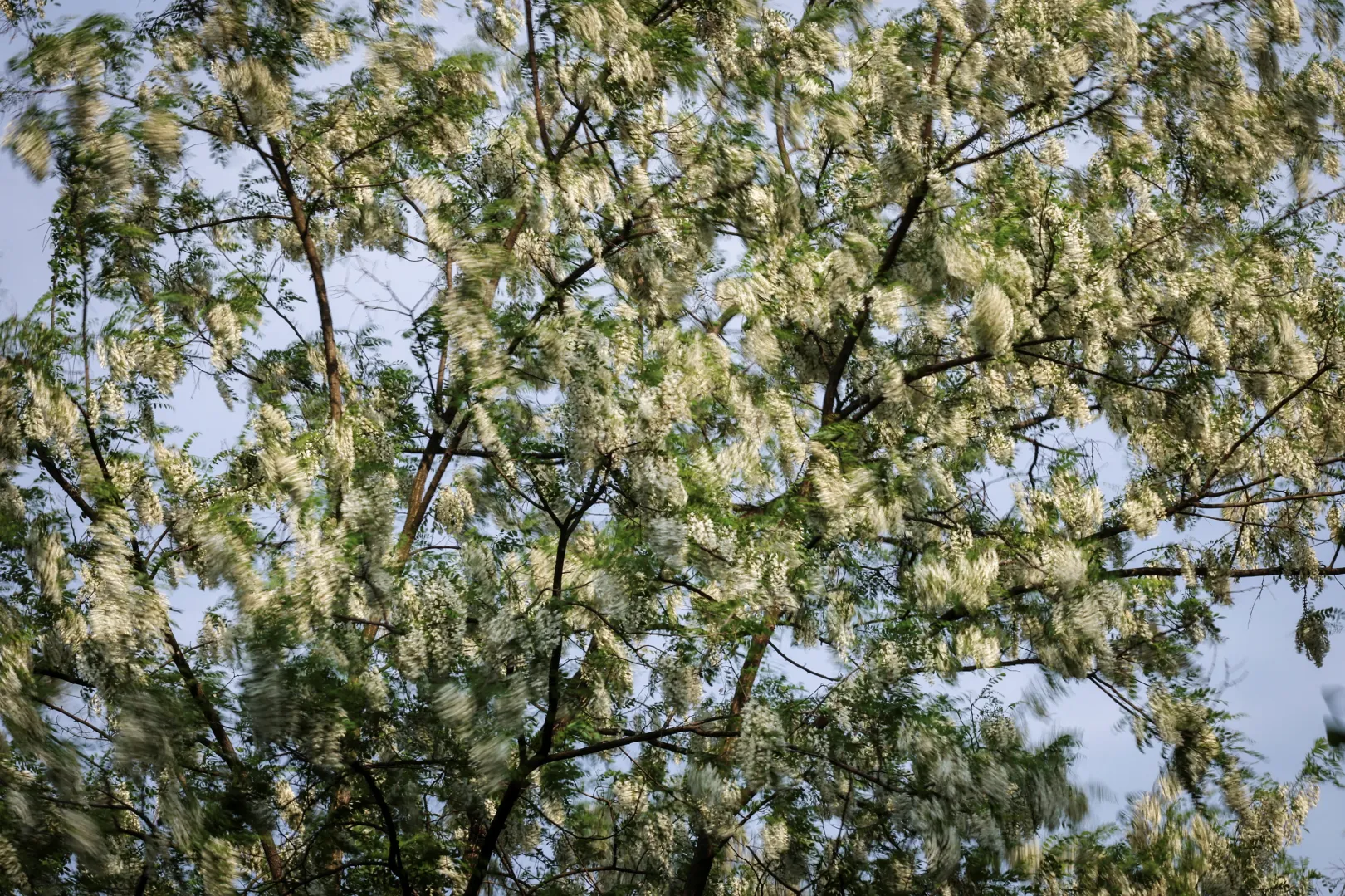
    White acacia is also an important honey plant in South Korea - Photo: Kim Hong-Ji / Reuters

    White acacia is also an important honey plant in South Korea – Photo: Kim Hong-Ji / Reuters

    As in Hungary, so in South Korea, the white acacia is considered one of the important honey plants, of course this invasive tree, which tolerates poor growing conditions, is not native there either. About 70 percent of the honey produced in South Korea is acacia, and even wild chestnut honey is produced in large quantities.
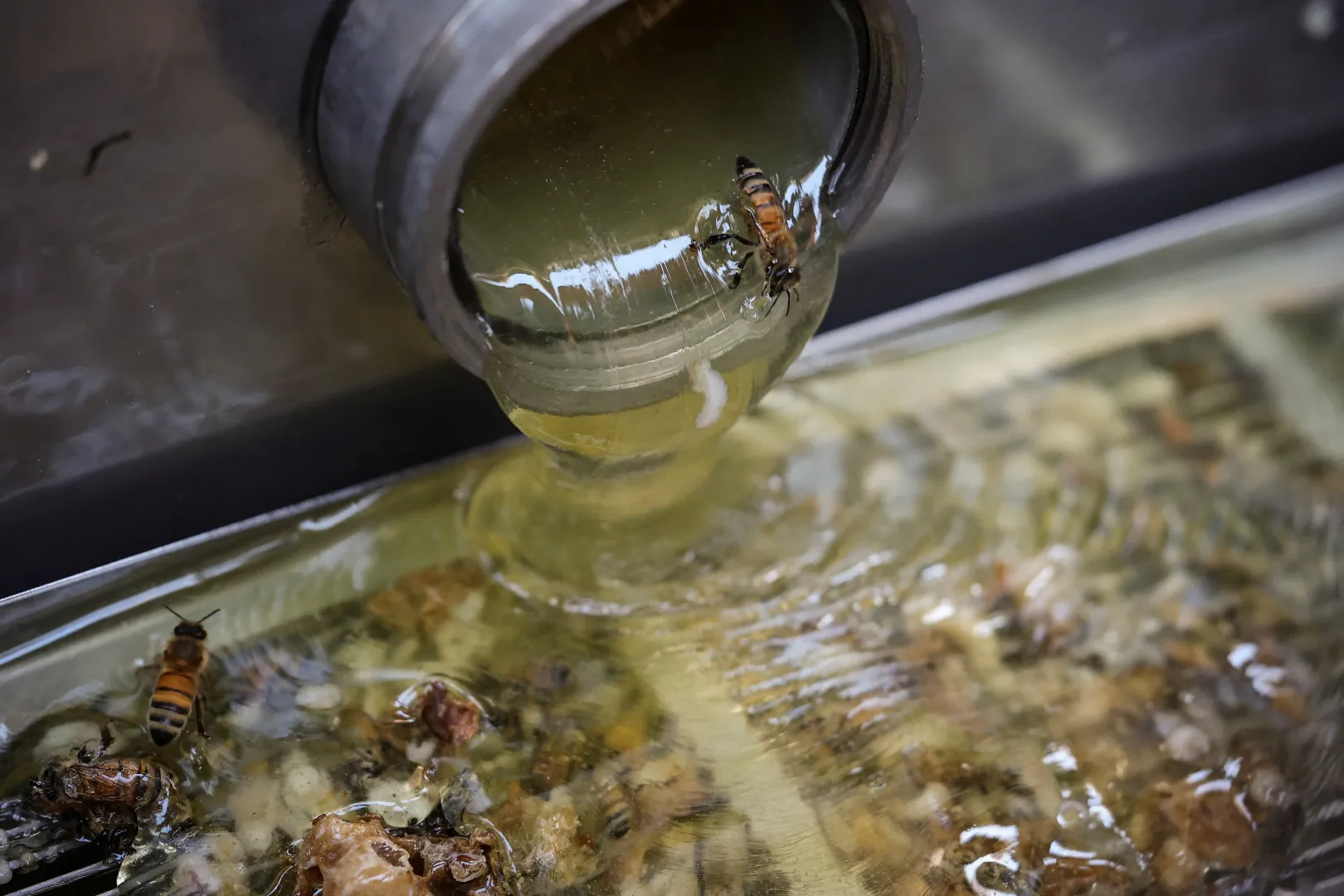
    Harvested honey flows from the spinner during the first honey harvest - Photo: Kim Hong-Ji / Reuters

    Harvested honey flows from the spinner during the first honey harvest – Photo: Kim Hong-Ji / Reuters

    In South Korea, beekeepers used 146,000 hectares of land in 2020, but this is a significant drop of about 70 percent compared to the 1970s and 1980s, according to data from the National Forestry Institute. The decline of migratory beekeeping is also supported by data from the Ministry of Agriculture: between 2014 and 2023, the number of beehives installed decreased by 14 percent.
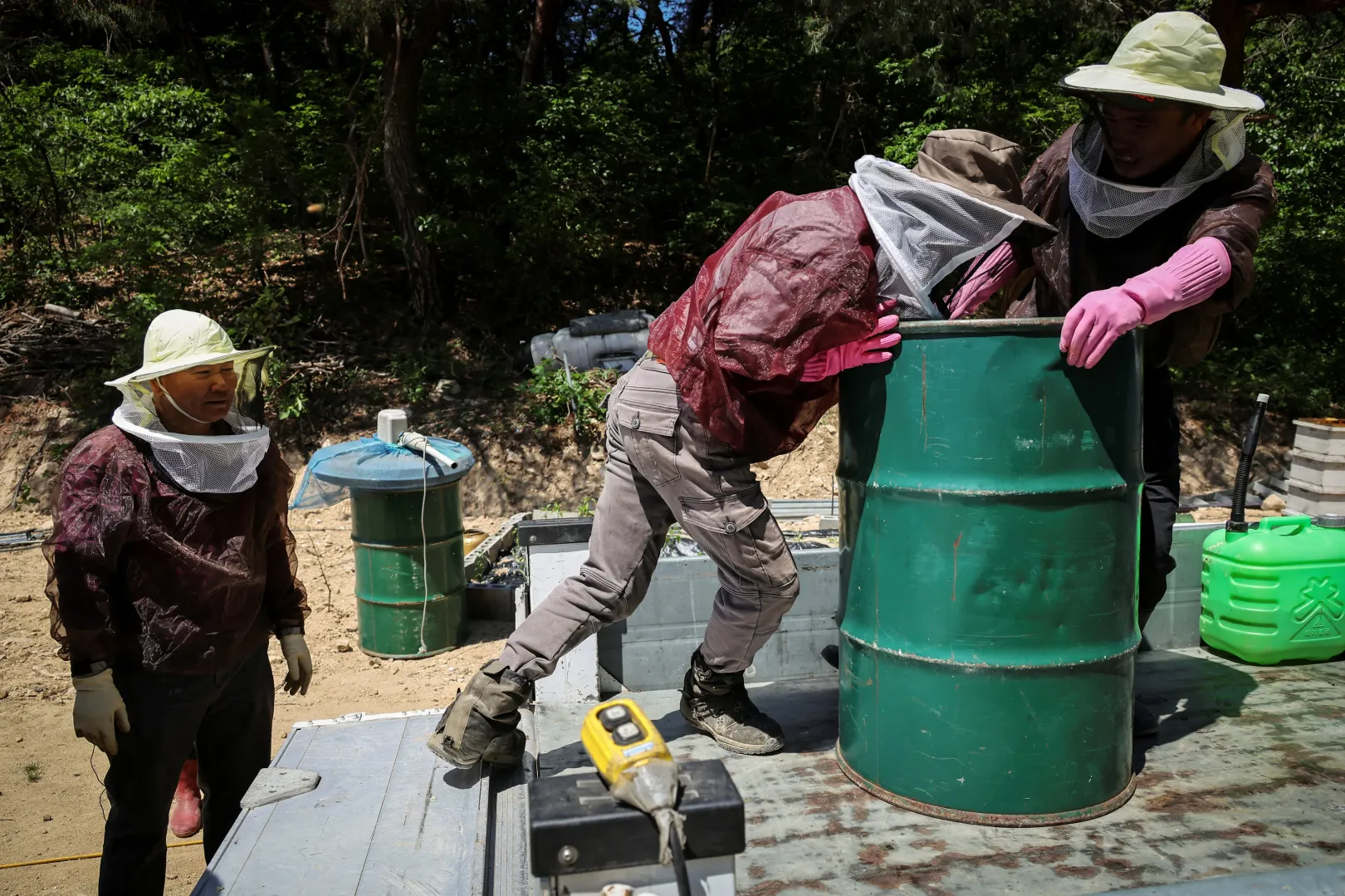
    Park Kyong-jae and his workers are digging a barrel full of honey - Photo: Kim Hong-Ji / Reuters

    Park Kyong-jae and his workers are digging a barrel full of honey – Photo: Kim Hong-Ji / Reuters

    In January, Kangwon National University researchers warned in a study that the pollination activity of South Korean bees could decline by an average of 53.5 percent between 2040 and 2060 compared to current levels if climate change continues.
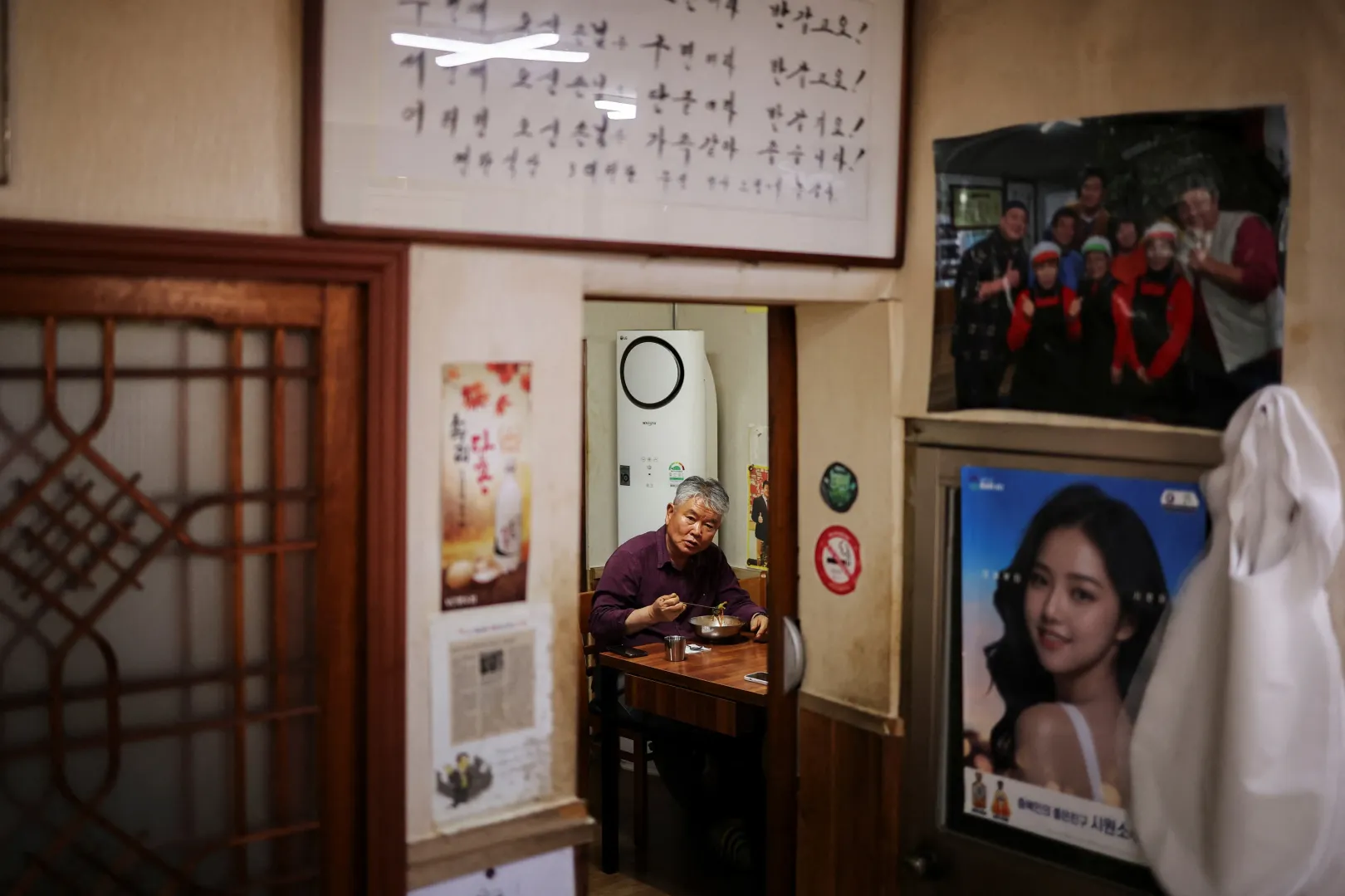
    Park Kyong-jae has dinner on his scouting tour, during which he maps where there are already promising blooming acacia trees - Photo: Kim Hong-Ji / Reuters

    Park Kyong-jae has dinner on his scouting tour, during which he maps where there are already promising blooming acacia trees – Photo: Kim Hong-Ji / Reuters
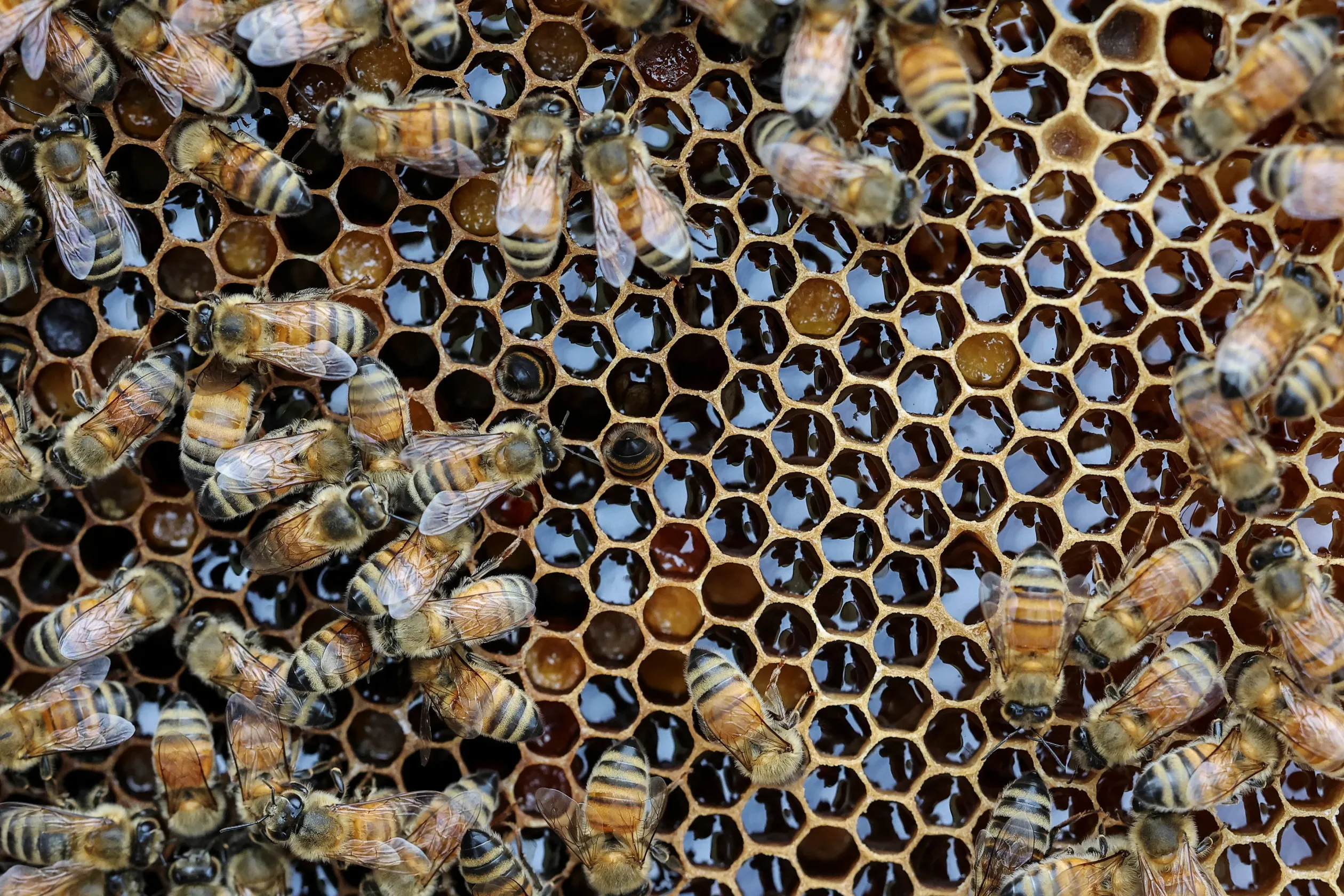
    Honey partially replenishes the cells of the honeycomb - Photo: Kim Hong-Ji / Reuters

    Honey partially replenishes the cells of the honeycomb – Photo: Kim Hong-Ji / Reuters

    Parallel to the destruction of bees’ natural habitats, more and more projects are trying to boost urban beekeeping. There are also examples in Germany, Greece and Hungary where beehives are placed in roof gardens.

    South Korea’s Rural Development Administration planned to breed bees that are more resistant to climate change and plant trees with abundant nectar to keep the bees in place. In addition, they plan to introduce smart beekeeping technologies. The Ministry of Agriculture will spend approximately 32 million won (9.7 billion forints) until 2030 on research aimed at a healthy bee population.
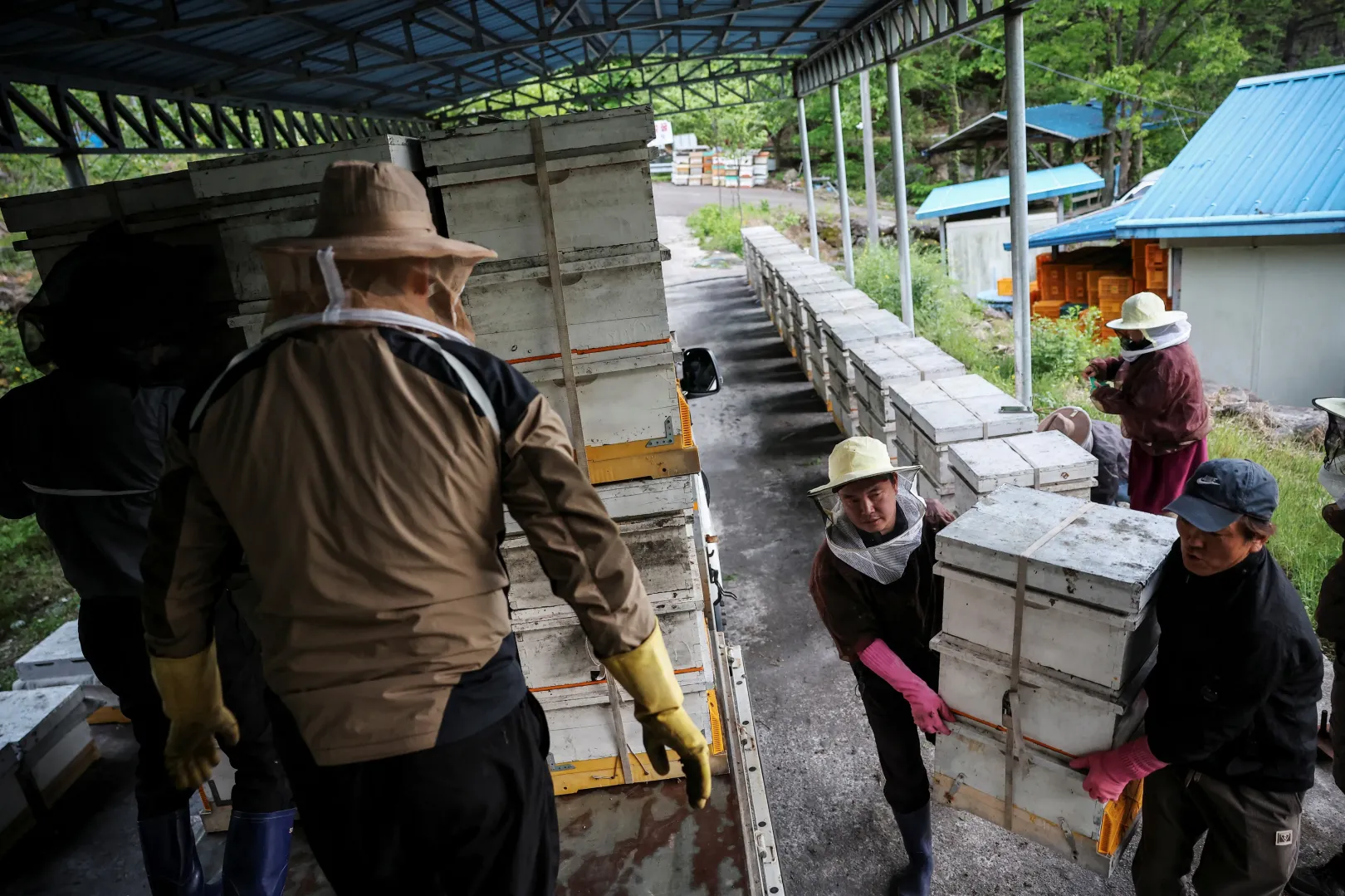
    Park Kyongje and his workers prepare the hives - Photo: Kim Hong-Ji / Reuters

    Park Kyongje and his workers prepare the hives – Photo: Kim Hong-Ji / Reuters

    Farmers have used artificial methods to increase the bee population, but Park hopes that research by institutions such as South Korea’s Ministry of Agriculture will lead to technologies that can help bees survive the winter or overcome sudden temperature changes.
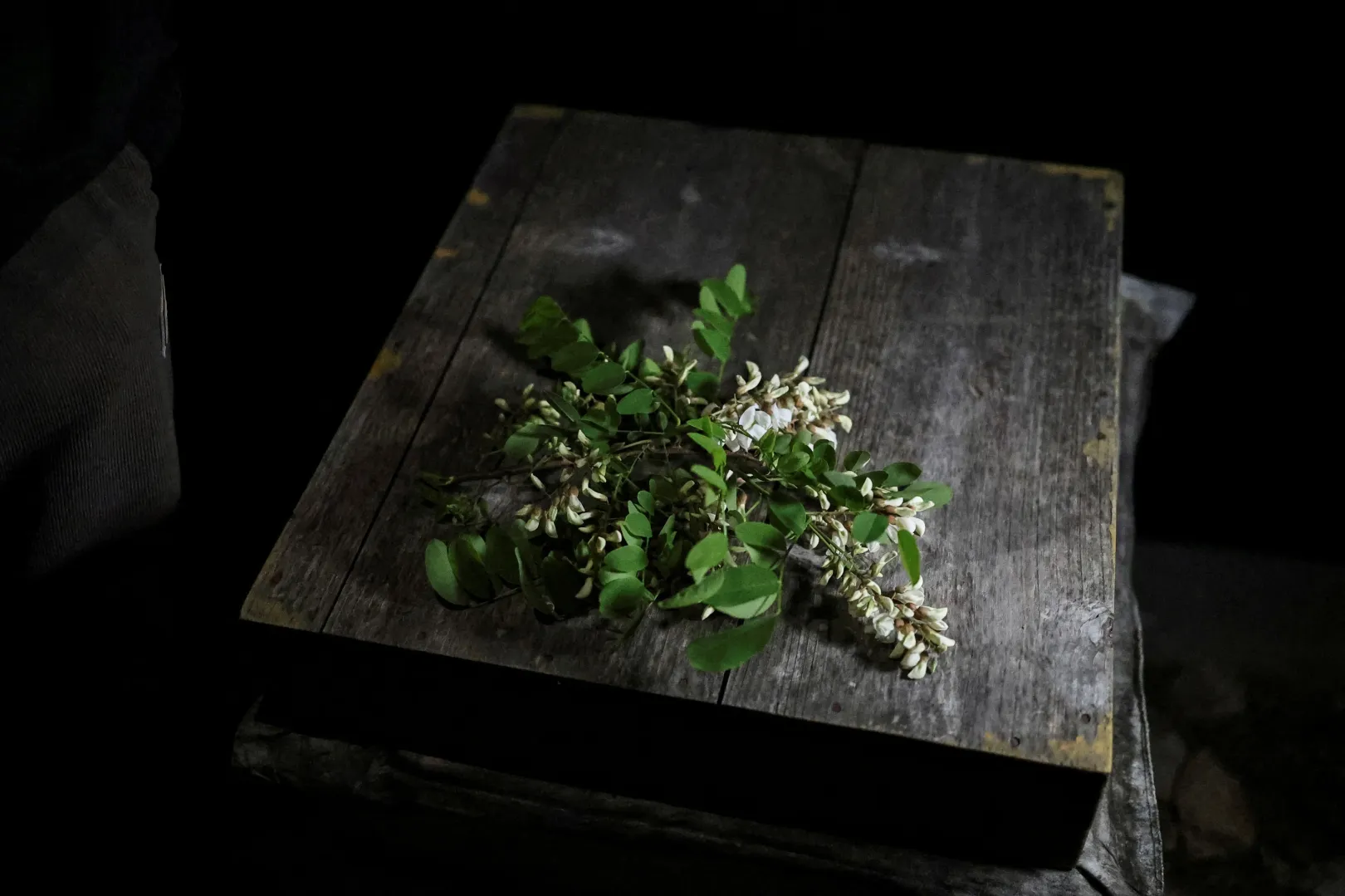
    Acacia flower on top of a beehive - Photo: Kim Hong-Ji / Reuters

    Acacia flower on top of a beehive – Photo: Kim Hong-Ji / Reuters

    READ ALSO

    National Team on the Rise in FIFA World Rankings

    Telex: Switzerland played their group match against Qatar to a draw

    The number of hives in use in backyard beekeeping has also decreased by more than a third in two decades, between 2005 and 2024, but Park is still sticking to his profession. He even wants to improve it by introducing intelligent management methods. For example, you would build cameras into the hives to monitor the health and growth of bee colonies in real time. One of his daughters is also interested in beekeeping, he is trying to teach her everything so that she can one day take over the farm.
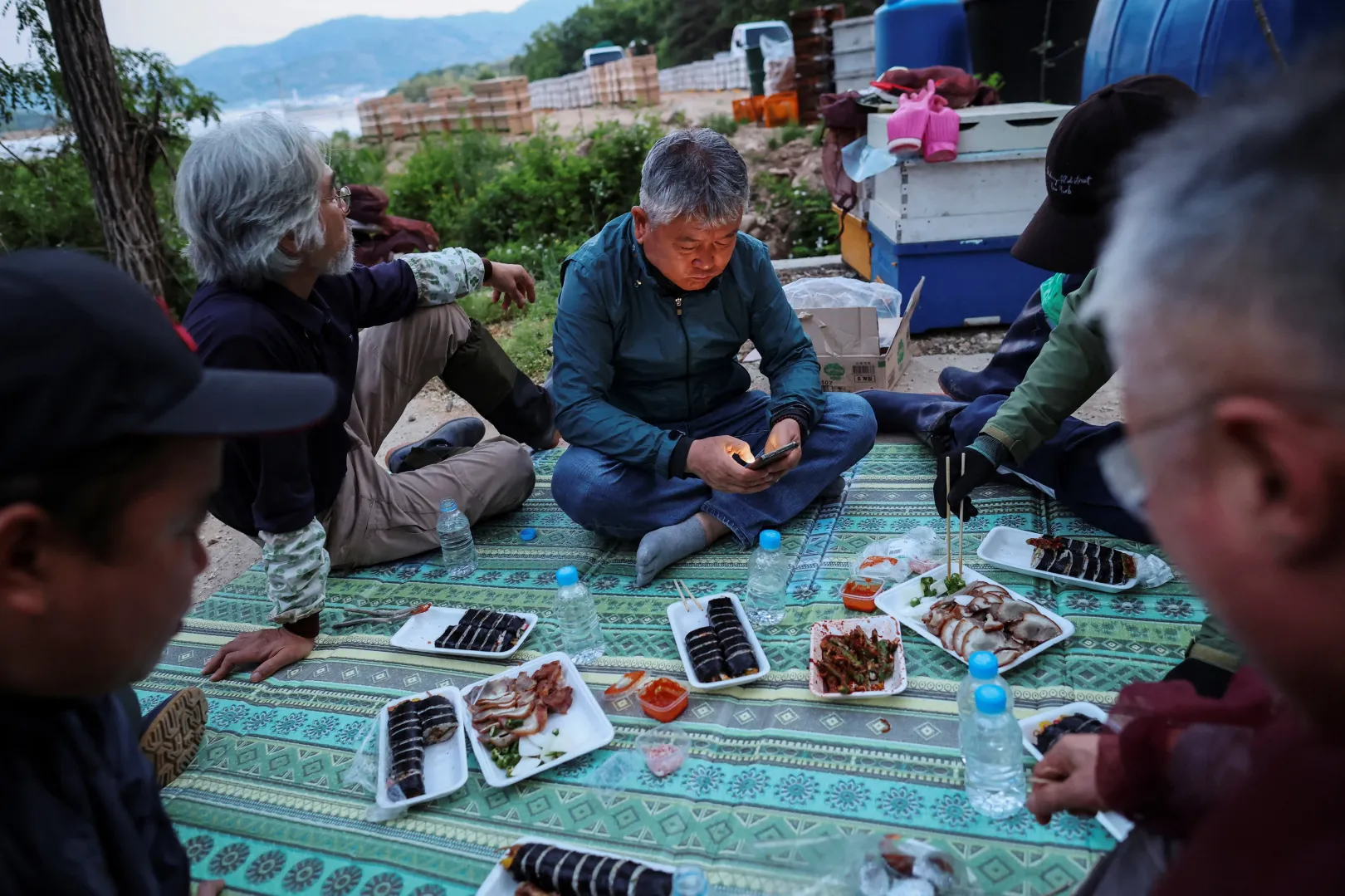
    Park Kyong-jae has dinner with his workers before moving their hives to another bee pasture - Photo: Kim Hong-Ji / Reuters

    Park Kyong-jae has dinner with his workers before moving their hives to another bee pasture – Photo: Kim Hong-Ji / Reuters

    “As long as I’m healthy, I’ll continue beekeeping until the day I die. If I die and I’m reborn as a human, I still want to be a beekeeper,” Park said.



    Source link

    Related Posts

    National Team on the Rise in FIFA World Rankings
    Hungary

    National Team on the Rise in FIFA World Rankings

    June 14, 2026
    Telex: Switzerland played their group match against Qatar to a draw
    Hungary

    Telex: Switzerland played their group match against Qatar to a draw

    June 14, 2026
    Cherry Orchards Mostly Escape Frost Damage
    Hungary

    Cherry Orchards Mostly Escape Frost Damage

    June 14, 2026
    Brazil-Morocco 1-1
    Hungary

    Brazil-Morocco 1-1

    June 14, 2026
    Viktor Orbán Turns His Office into a Fortress for Hungary’s National Creed
    Hungary

    Viktor Orbán Turns His Office into a Fortress for Hungary’s National Creed

    June 14, 2026
    Haiti-Scotland 0-1
    Hungary

    Haiti-Scotland 0-1

    June 13, 2026
    Next Post
    Football World Cup 2026: National coach Julian Nagelsmann between courage and displeasure

    Football World Cup 2026: National coach Julian Nagelsmann between courage and displeasure

    POPULAR NEWS

    Kuwait Airport Radar Targeted Again, Files Third Complaint to ICAO

    Kuwait Airport Radar Targeted Again, Files Third Complaint to ICAO

    June 14, 2026
    Mourners line Bangkok streets to pay respects to Thailand’s Princess Bha | Thailand

    Mourners line Bangkok streets to pay respects to Thailand’s Princess Bha | Thailand

    June 13, 2026
    Trump calls off latest threats to strike Iran, cites breakthrough in talks to end the war

    Trump calls off latest threats to strike Iran, cites breakthrough in talks to end the war

    June 13, 2026
    Resultados ONPE al 98.327%: Keiko Fujimori y Roberto Sánchez disputan voto a voto la Presidencia del Perú

    Resultados ONPE al 98.327%: Keiko Fujimori y Roberto Sánchez disputan voto a voto la Presidencia del Perú

    June 13, 2026
    US judge invalidates Trump policies targeting people from Haiti

    US judge invalidates Trump policies targeting people from Haiti

    June 14, 2026

    EDITOR'S PICK

    Warning issued to those consuming chia seeds

    Warning issued to those consuming chia seeds

    June 13, 2026
    Amid years of war, these Israelis are still pushing for peace

    Amid years of war, these Israelis are still pushing for peace

    June 14, 2026

    Sports

    June 13, 2026

    Layne strikes but Bandara, Perera resist as Sri Lanka emerges leading by 148

    June 13, 2026

    Recent Posts

    • US judge invalidates Trump policies targeting people from Haiti
    • Guyana and Haiti have shortest life expectancy among Caribbean countries
    • Saint Lucia updates Ebola preparedness plan as Caribbean strengthens border screening
    • The new gastronomic proposal of Oli’s Room

      © 2026 Agentially - Navigating shifting sovereignties and global risk .

      Welcome Back!

      Login to your account below

      Forgotten Password?

      Retrieve your password

      Please enter your username or email address to reset your password.

      Log In
      No Result
      View All Result

        © 2026 Agentially - Navigating shifting sovereignties and global risk .

        This website uses cookies. By continuing to use this website you are giving consent to cookies being used. Visit our Privacy and Cookie Policy.